
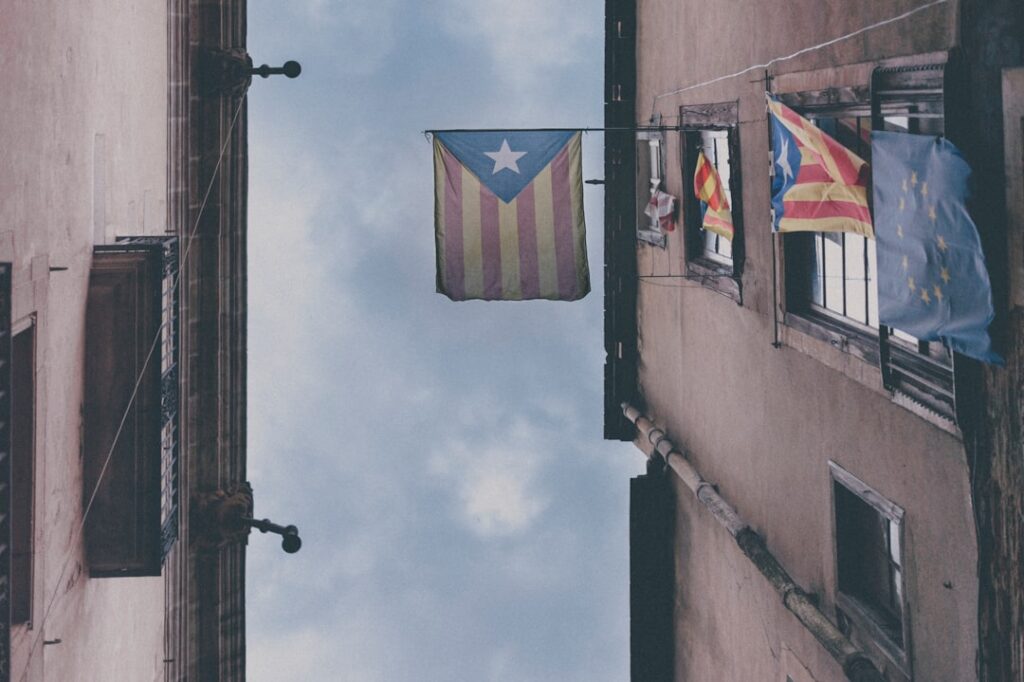
“Homage to Catalonia,” published in 1938, stands as one of George Orwell’s most significant works, encapsulating his experiences and observations during the Spanish Civil War. This book is not merely a recounting of events; it is a profound exploration of the complexities of political ideologies, the nature of war, and the human condition. Orwell, who was deeply influenced by his time in Spain, sought to provide a firsthand account of the conflict that engulfed the nation from 1936 to 1939.
His narrative is imbued with a sense of urgency and a desire to unveil the truth behind the romanticized notions of war and revolution. Orwell’s writing is characterized by its clarity and directness, which serves to engage readers while simultaneously challenging their perceptions of political movements. “Homage to Catalonia” is not just a historical document; it is a critical examination of the ideological battles that took place both on the battlefield and within the broader political landscape.
Through his experiences, Orwell sheds light on the struggles between various factions, including anarchists, communists, and fascists, revealing the often chaotic and contradictory nature of revolutionary movements. This work remains relevant today as it prompts readers to reflect on the implications of political ideologies and the moral dilemmas faced by individuals in times of conflict.
Key Takeaways
- “Homage to Catalonia” is George Orwell’s personal account of his experiences during the Spanish Civil War, where he fought as a member of the POUM militia.
- Orwell’s time in Spain exposed him to the complexities of the political landscape, including the power struggles between the Republicans, Communists, and Anarchists.
- Orwell’s reflections on socialism and communism in “Homage to Catalonia” highlight his disillusionment with the Soviet-backed Communists and their suppression of other leftist factions.
- The role of propaganda and censorship in the Spanish Civil War is a central theme in Orwell’s book, as he witnessed firsthand the manipulation of information by both sides of the conflict.
- Orwell’s critique of the international response to the Spanish Civil War emphasizes the betrayal of the Republican cause by Western democracies and the Soviet Union.
George Orwell’s Experience in the Spanish Civil War
George Orwell arrived in Spain in December 1936, initially intending to report on the civil war for the British press. However, he quickly became disillusioned with the media’s portrayal of the conflict and decided to take a more active role by joining the POUM (Partido Obrero de Unificación Marxista), a Marxist anti-Stalinist group. His experiences on the front lines were transformative; he witnessed firsthand the brutality of war and the complexities of revolutionary politics.
Orwell fought in Catalonia, where he was exposed to both the valor and the disillusionment that characterized the struggle against fascism.
He observed how different groups interpreted socialism and communism, often leading to infighting that undermined their collective efforts against Franco’s forces.
The experience left an indelible mark on Orwell, shaping his views on totalitarianism and the nature of political power. His vivid descriptions of life in the trenches, coupled with his reflections on camaraderie and betrayal, provide readers with an intimate understanding of what it meant to be a soldier in a war that was as much about ideology as it was about territory.
The Political Landscape of Spain during the Civil War
The Spanish Civil War was not merely a conflict between two opposing sides; it was a battleground for competing ideologies that reflected broader global tensions. On one side stood the Republicans, a coalition that included anarchists, socialists, and communists, united in their opposition to Francisco Franco’s Nationalist forces. The Republicans sought to establish a more egalitarian society, but their internal divisions often hampered their effectiveness.
The presence of various factions led to a lack of cohesion, which ultimately weakened their position against Franco’s well-organized military. Conversely, Franco’s Nationalists were supported by fascist regimes in Italy and Germany, which provided military aid and strategic guidance. This external support bolstered Franco’s forces and allowed them to implement brutal tactics against their opponents.
The war became emblematic of a larger ideological struggle between fascism and democracy, drawing international attention and involvement. Many foreign volunteers flocked to Spain, motivated by a desire to fight against fascism, yet they often found themselves caught in the crossfire of conflicting ideologies within the Republican camp itself.
Orwell’s Reflections on Socialism and Communism
Orwell’s experiences in Spain profoundly influenced his understanding of socialism and communism. Initially drawn to these ideologies as vehicles for social justice and equality, he became increasingly critical of their implementation in practice. In “Homage to Catalonia,” he articulates his disillusionment with the Soviet-backed factions within the Republican side, particularly the Communist Party’s attempts to suppress rival groups like the POUM and anarchists.
This suppression was not merely tactical; it represented a fundamental betrayal of the revolutionary ideals that had initially inspired many fighters. Orwell’s reflections reveal a deep concern for the purity of socialist ideals when confronted with realpolitik. He recognized that while socialism held promise for creating a more equitable society, its practice often devolved into authoritarianism.
The infighting among leftist factions during the Spanish Civil War illustrated how power struggles could corrupt noble intentions. Orwell’s critique serves as a cautionary tale about the dangers of dogmatism within political movements, emphasizing that ideological purity can sometimes lead to moral compromise and betrayal.
The Role of Propaganda and Censorship in the Civil War
Propaganda played a crucial role in shaping public perception during the Spanish Civil War, influencing both domestic and international opinions about the conflict. Each side employed propaganda to rally support for their cause, often distorting facts to suit their narratives.
This manipulation of information created an environment where truth became malleable, complicating efforts to understand the war’s realities. Censorship further exacerbated these issues, as both sides sought to control information flow to maintain morale and suppress dissent. Orwell himself experienced censorship firsthand; he noted how certain events were downplayed or misrepresented in reports back home.
This manipulation extended beyond mere reporting; it infiltrated literature and art as well, with creators pressured to conform to prevailing narratives. Orwell’s observations highlight how propaganda can shape collective memory and influence political discourse long after conflicts have ended.
Orwell’s Critique of the International Response to the Spanish Civil War
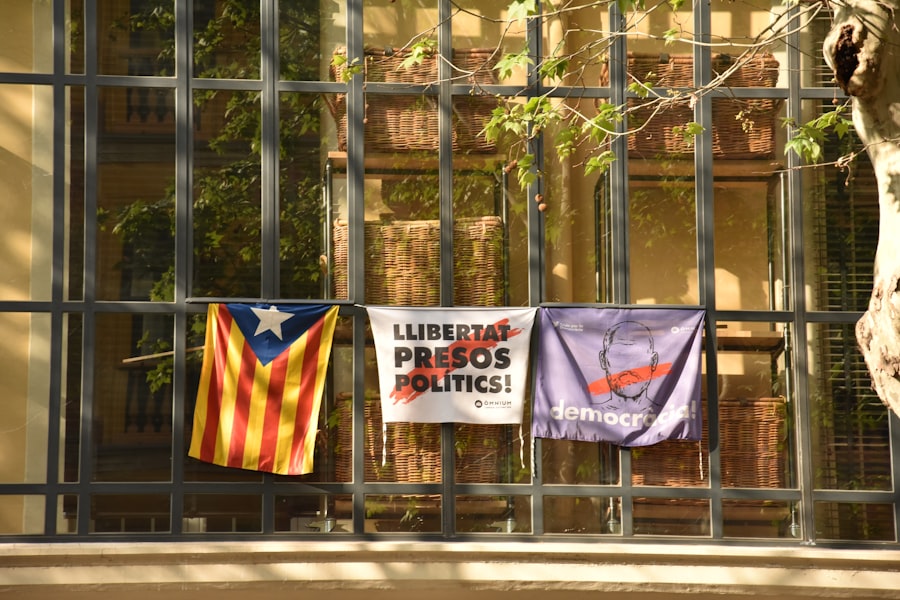
Orwell was acutely aware of the international implications of the Spanish Civil War and was critical of how foreign powers responded to the conflict. While many intellectuals and activists rallied to support the Republican cause, governments largely remained indifferent or actively hostile. The non-intervention policy adopted by Western democracies allowed fascist forces to gain an upper hand while leaving those fighting for democracy without adequate support.
Orwell lamented this lack of action, arguing that it represented a failure of moral responsibility on the part of nations that claimed to uphold democratic values. Moreover, Orwell criticized how leftist intellectuals romanticized the conflict without fully grasping its complexities. Many were quick to idealize the Republican cause while overlooking its internal divisions and contradictions.
This tendency led to a skewed understanding of what was at stake in Spain, reducing a multifaceted struggle into simplistic narratives that failed to capture its essence. Orwell’s critique serves as a reminder that political engagement requires nuance and an awareness of underlying realities rather than blind allegiance to ideologies.
The Legacy of Homage to Catalonia
“Homage to Catalonia” has left an enduring legacy in both literary and political spheres. Its candid portrayal of war and its unflinching examination of ideological conflicts resonate with readers seeking deeper insights into human behavior during times of crisis. The book has become essential reading for those interested in understanding not only the Spanish Civil War but also broader themes related to power dynamics, propaganda, and moral ambiguity in political movements.
Orwell’s work has inspired generations of writers and activists who grapple with similar issues in contemporary contexts. His insistence on truth-telling amidst propaganda has become increasingly relevant in an age marked by misinformation and polarized political landscapes. “Homage to Catalonia” serves as both a historical document and a timeless exploration of human nature, urging readers to confront uncomfortable truths about ideology, power, and responsibility.
Orwell’s Influence on Modern Political Writing
George Orwell’s impact on modern political writing cannot be overstated; his works have shaped how subsequent generations approach issues related to power, ideology, and social justice. His clear prose style and commitment to truth have set a standard for political commentary that prioritizes clarity over obfuscation. Writers today continue to draw inspiration from Orwell’s ability to distill complex ideas into accessible language while maintaining intellectual rigor.
Moreover, Orwell’s exploration of totalitarianism has become increasingly relevant in contemporary discussions about surveillance, censorship, and authoritarianism. His insights into how language can be manipulated for political ends resonate strongly in today’s media landscape, where misinformation can spread rapidly through digital platforms. As such, Orwell’s legacy endures not only through his literary contributions but also through his role as a moral compass for those engaged in political discourse today.
His works challenge us to remain vigilant against tyranny in all its forms while advocating for truth and justice in our societies.
In George Orwell’s “Homage to Catalonia,” the author’s vivid portrayal of the Spanish Civil War offers a profound insight into the complexities of political ideologies and the human experience during times of conflict. For those interested in exploring similar themes, a related article can be found at this link, which delves into the impact of war on society and individual perspectives.
FAQs
What is “Homage to Catalonia” by George Orwell about?
“Homage to Catalonia” is George Orwell’s personal account of his experiences during the Spanish Civil War. He describes his time fighting with the POUM militia and his observations of the political and social dynamics in Catalonia during the war.
When was “Homage to Catalonia” published?
“Homage to Catalonia” was first published in 1938.
What is the significance of “Homage to Catalonia”?
“Homage to Catalonia” is significant for its firsthand account of the Spanish Civil War and its critical analysis of the political factions involved. It also explores Orwell’s disillusionment with the Soviet-backed communist forces and his growing skepticism of political ideologies.
Is “Homage to Catalonia” considered a work of non-fiction?
Yes, “Homage to Catalonia” is a work of non-fiction. It is based on Orwell’s personal experiences and observations during the Spanish Civil War.
How has “Homage to Catalonia” been received by critics?
“Homage to Catalonia” has been widely praised for its honesty, vivid storytelling, and insightful commentary on the political climate of the time. It is considered one of Orwell’s most important works.




