
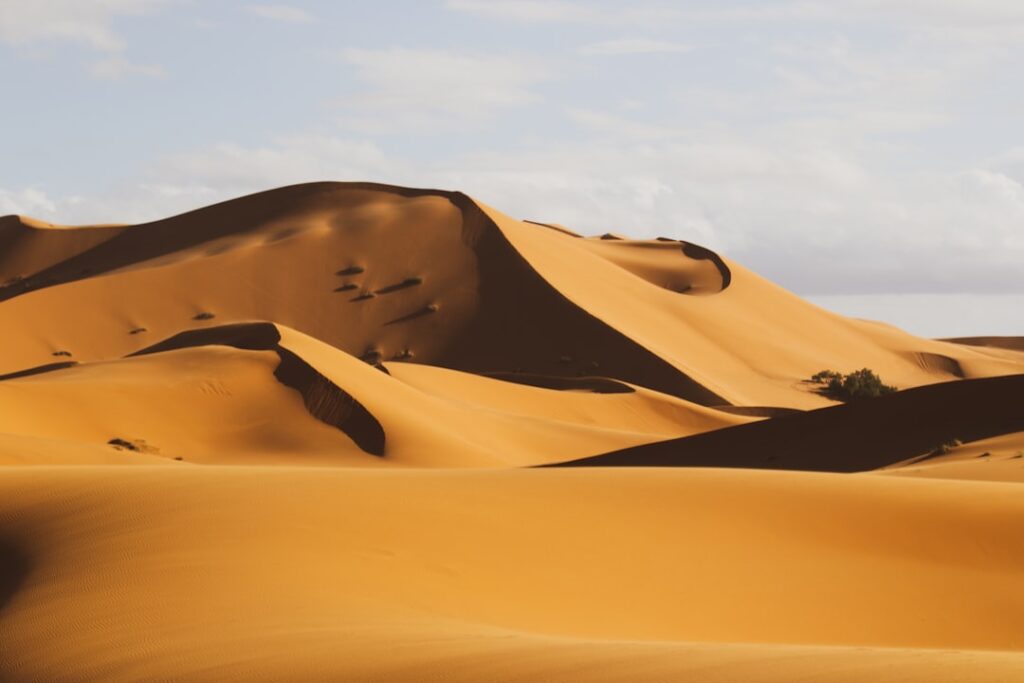
The Sahara Desert, often romanticized in literature and film, is not merely a vast expanse of sand; it is a complex ecosystem with a rich natural history that has evolved over millions of years. Spanning approximately 9.2 million square kilometers, the Sahara is the largest hot desert in the world, covering much of North Africa. Its name, derived from the Arabic word “ṣaḥrāʾ,” meaning “desert,” evokes images of endless dunes, scorching sun, and a stark yet beautiful landscape.
However, beneath this surface lies a tapestry of geological formations, diverse flora and fauna, and a deep human history that intertwines with the natural environment. The Sahara’s formation is a story of geological upheaval and climatic shifts. Once a lush region teeming with life, it has undergone significant transformations due to changes in the Earth’s climate over millennia.
The desert’s history is marked by periods of aridity interspersed with phases of increased rainfall, which allowed for the flourishing of vegetation and wildlife. This dynamic interplay between climate and geography has shaped not only the physical landscape but also the cultures and societies that have emerged in and around this formidable environment.
Key Takeaways
- The Sahara is a vast desert with a rich natural history shaped by unique geology and geography.
- Despite harsh conditions, the Sahara hosts diverse flora and fauna adapted to its environment.
- Human cultures have thrived in the Sahara, leaving a deep historical and cultural legacy.
- The Sahara’s climate is extreme, with significant environmental challenges requiring conservation efforts.
- The desert plays a crucial role in influencing global climate patterns and ecosystems.
The Geology and Geography of the Sahara
The Sahara’s geology is as diverse as its landscape, characterized by a variety of landforms including mountains, plateaus, and vast sand dunes. The northern region features the Atlas Mountains, which rise dramatically from the surrounding plains and are composed primarily of limestone and sandstone. These mountains are not only significant for their geological composition but also for their role in influencing local weather patterns and providing a habitat for unique species.
In contrast, the southern part of the Sahara is dominated by expansive sand seas known as ergs, where towering dunes can reach heights of over 250 meters. The Great Sand Sea in Libya is one of the most famous examples, showcasing the intricate patterns formed by wind erosion and deposition. Between these sandy expanses lie gravel plains, rocky plateaus, and salt flats known as chotts, which further contribute to the desert’s geological diversity.
The interplay of these various landforms creates microclimates that support different ecosystems within the Sahara. The geography of the Sahara is also marked by its proximity to other significant geographical features. To the north lies the Mediterranean Sea, which influences the climate of the northern fringes of the desert.
The Niger River, one of Africa’s major rivers, flows through the southwestern edge of the Sahara, providing vital water resources to both humans and wildlife. This geographical context is crucial for understanding how life persists in such an extreme environment.
The Flora and Fauna of the Sahara
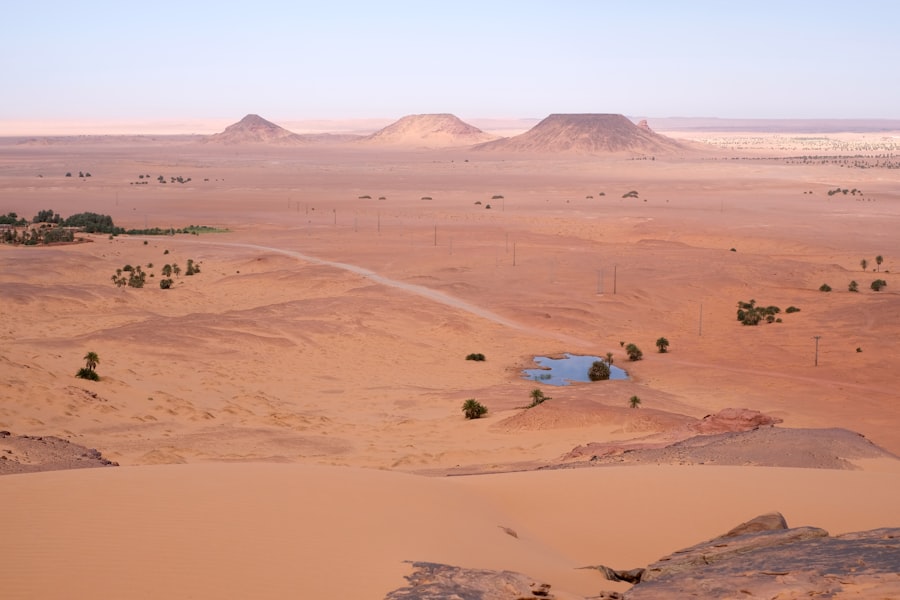
Despite its harsh conditions, the Sahara is home to a surprising array of flora and fauna that have adapted to survive in this arid landscape. Vegetation is primarily concentrated in areas where water is available, such as oases and riverbanks. The most common plant species include acacia trees, date palms, and various types of grasses that have developed deep root systems to access underground water sources.
These plants not only provide shelter and food for wildlife but also play a critical role in preventing soil erosion. The fauna of the Sahara is equally remarkable, featuring a range of species that have evolved unique adaptations to thrive in extreme conditions. Among the most iconic animals are the dromedary camel, known for its ability to go long periods without water, and the fennec fox, which has large ears that dissipate heat.
Other notable species include the Saharan silver antelope and various reptiles such as snakes and lizards that have developed camouflage to blend into their surroundings. The migratory patterns of birds also highlight the ecological significance of the Sahara; many species travel thousands of kilometers across this desert during their seasonal migrations. The interactions between flora and fauna create a delicate balance within this ecosystem.
For instance, certain plants provide food for herbivores, which in turn serve as prey for carnivores. This intricate web of life underscores the importance of biodiversity in maintaining ecological stability in such an unforgiving environment.
The Human History and Culture of the Sahara
The human history of the Sahara is as rich and varied as its natural landscape. For thousands of years, nomadic tribes have traversed its vast expanses, adapting their lifestyles to the challenges posed by the desert environment. The Tuareg people, known for their distinctive blue clothing and mastery of camel herding, are one such group that has thrived in this arid region.
Their culture is deeply intertwined with the land; they possess extensive knowledge of navigation using stars and natural landmarks to traverse the desert. Archaeological evidence suggests that human habitation in the Sahara dates back to prehistoric times when it was a much wetter region supporting diverse wildlife and human settlements.
As climate changes transformed the Sahara into a desert, these communities adapted by developing trade routes that connected them with other cultures across Africa and beyond. The cultural significance of the Sahara extends beyond its indigenous peoples; it has served as a crossroads for various civilizations throughout history. The trans-Saharan trade routes facilitated exchanges between North Africa and sub-Saharan regions, allowing for the movement of goods such as gold, salt, and textiles.
This exchange not only enriched local economies but also fostered cultural interactions that shaped art, music, and language across diverse communities.
Climate and Weather Patterns in the Sahara
The climate of the Sahara is characterized by extreme temperatures and minimal rainfall, making it one of the harshest environments on Earth. Average annual precipitation ranges from less than 25 millimeters in some areas to about 200 millimeters in others, primarily along its northern edges. This scarcity of water is a defining feature that influences both the flora and fauna as well as human activities within the desert.
Temperature fluctuations are another hallmark of Sahara’s climate. During summer months, daytime temperatures can soar above 50 degrees Celsius (122 degrees Fahrenheit), while nights can be surprisingly cool due to rapid heat loss after sunset. This diurnal temperature variation poses challenges for both wildlife and human inhabitants who must adapt their behaviors accordingly.
For example, many animals are crepuscular or nocturnal, becoming active during cooler hours to avoid daytime heat. Wind patterns also play a significant role in shaping the Sahara’s climate. The prevailing winds can create dust storms that sweep across vast distances, impacting air quality and visibility.
These storms can carry fine particles across continents, affecting weather patterns far beyond the desert itself. Understanding these climatic dynamics is crucial for predicting future changes in both local ecosystems and global weather systems.
Environmental Challenges and Conservation Efforts in the Sahara
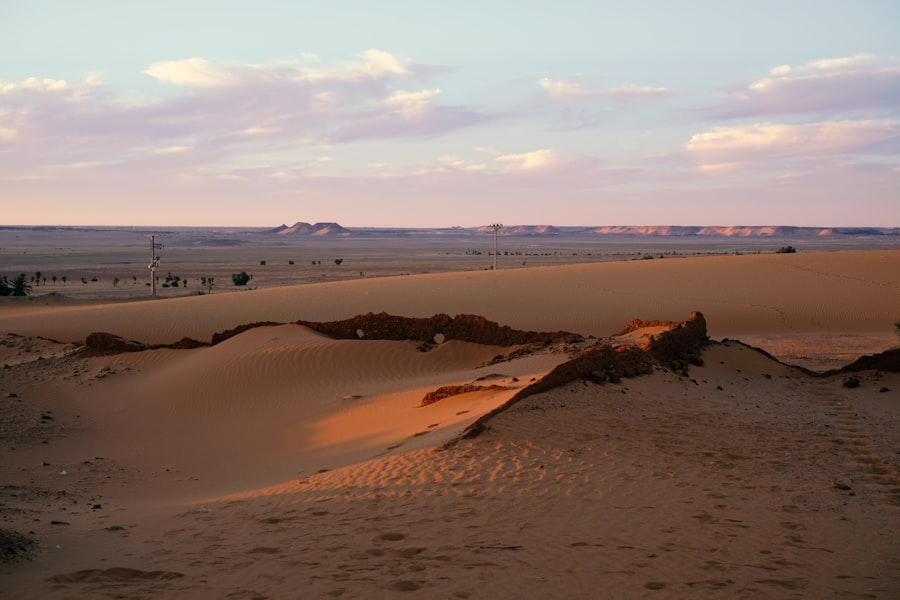
The Sahara faces numerous environmental challenges that threaten its delicate ecosystems and human populations. Desertification is one of the most pressing issues; as climate change exacerbates aridity, previously fertile areas are increasingly becoming barren wastelands. This process not only impacts biodiversity but also jeopardizes food security for communities reliant on agriculture and livestock herding.
Overgrazing by livestock further compounds these challenges, leading to soil degradation and loss of vegetation cover. As nomadic tribes seek grazing land for their herds, they often push into more fragile ecosystems, creating a cycle of environmental degradation that can be difficult to reverse. Additionally, mining activities for minerals such as phosphates and oil extraction have led to habitat destruction and pollution in certain regions.
In response to these challenges, various conservation efforts are underway aimed at preserving both biodiversity and traditional ways of life in the Sahara. Initiatives such as establishing protected areas help safeguard critical habitats from exploitation while promoting sustainable practices among local communities. Organizations are also working to raise awareness about climate change impacts on desert ecosystems and advocating for policies that support sustainable land management practices.
The Sahara’s Influence on Global Climate and Ecosystems
The Sahara’s influence extends far beyond its borders; it plays a significant role in shaping global climate patterns and ecosystems. Dust storms originating from the Sahara can travel thousands of kilometers across oceans, impacting air quality and even contributing to nutrient cycling in distant regions such as the Amazon rainforest. These dust particles carry essential minerals that fertilize soils far from their source, highlighting an interconnectedness between ecosystems.
Moreover, research has shown that changes in vegetation cover within the Sahara can affect atmospheric circulation patterns. Deforestation or land degradation can alter local climates by reducing moisture availability and changing heat distribution across regions. This phenomenon underscores how actions taken within one part of the world can have cascading effects on global weather systems.
The Sahara also serves as a critical habitat for migratory species whose movements are influenced by seasonal changes in climate. Birds traveling between Europe and Africa rely on stopover sites within or near the desert for rest and nourishment during their long journeys. Protecting these migratory pathways is essential not only for maintaining biodiversity but also for ensuring ecological resilience against climate change.
The Future of the Sahara and Its Impact on the World
As we look toward the future, understanding the complexities of the Sahara becomes increasingly important in addressing global environmental challenges. Climate change poses significant threats to this already fragile ecosystem; rising temperatures and shifting precipitation patterns could exacerbate desertification processes while impacting local communities dependent on its resources. Efforts to mitigate these impacts must prioritize sustainable development practices that balance ecological preservation with human needs.
Engaging local populations in conservation initiatives ensures that traditional knowledge is integrated into modern strategies aimed at protecting both biodiversity and cultural heritage. The Sahara’s vastness may seem remote from urban centers around the world; however, its ecological significance reverberates globally through interconnected systems that influence climate patterns and biodiversity far beyond its borders. As stewards of our planet’s future, we must recognize our shared responsibility to protect this remarkable desert landscape while fostering resilience among its inhabitants against an uncertain future.
In “Sahara: A Natural History,” Marq de Villiers explores the intricate ecosystems and rich history of one of the world’s most fascinating deserts.
You can read it [here](https://hellread.com/2024/12/04/hello-world/).
FAQs
What is the main focus of “Sahara: A Natural History” by Marq de Villiers?
The book explores the natural history of the Sahara Desert, covering its geology, climate, flora, fauna, and human history.
Who is the author of “Sahara: A Natural History”?
The author is Marq de Villiers, a Canadian writer known for his works on environmental and natural history topics.
Does the book discuss the wildlife found in the Sahara Desert?
Yes, it provides detailed information about the diverse animal species that inhabit the Sahara, including adaptations that allow them to survive in harsh desert conditions.
Is the geological history of the Sahara covered in the book?
Yes, the book delves into the geological formation and evolution of the Sahara Desert over millions of years.
Does “Sahara: A Natural History” include information about human interaction with the desert?
Yes, it discusses the history of human settlement, migration, and cultural adaptations in the Sahara region.
Is the book suitable for readers without a scientific background?
The book is written in an accessible style, making it suitable for general readers interested in natural history and the Sahara Desert.
Are there illustrations or photographs included in the book?
Yes, the book contains photographs and illustrations that complement the text and provide visual context.
When was “Sahara: A Natural History” published?
The book was first published in 1997.
Does the book address environmental challenges facing the Sahara?
Yes, it touches on issues such as desertification, climate change, and human impact on the Sahara ecosystem.
Can “Sahara: A Natural History” be used as an educational resource?
Yes, it is often used as a reference for students and educators interested in desert ecology and natural history.




