“Shadow Divers,” a gripping narrative penned by Robert Kurson, chronicles the extraordinary journey of a group of deep-sea divers who embark on a quest to uncover the secrets of a sunken German U-boat off the coast of New Jersey. This true story not only delves into the technical aspects of wreck diving but also explores the emotional and psychological dimensions of the divers involved. The book captures the essence of adventure, camaraderie, and the relentless pursuit of knowledge, all set against the backdrop of a haunting maritime mystery.
As the divers plunge into the depths of the ocean, they confront not only the physical challenges posed by the underwater environment but also their own fears and motivations. The narrative is rich with vivid descriptions and personal anecdotes that bring to life the world of wreck diving. Kurson’s storytelling weaves together the thrill of exploration with the somber realities of history, as the divers grapple with the remnants of World War II and the lives lost in its wake.
The U-boat, a symbol of German naval power during the war, becomes a focal point for understanding not just the technicalities of submarine warfare but also the human stories intertwined with its legacy. Through their journey, the divers not only seek to uncover the identity of the U-boat but also to confront their own shadows—fears, regrets, and aspirations that lie beneath the surface.
Key Takeaways
- Shadow Divers is a book that explores the discovery and investigation of a World War II German U-boat off the coast of New Jersey.
- The U-boat was discovered by a group of deep-water wreck divers, who faced numerous challenges in exploring the wreck at extreme depths.
- The book delves into the personal dynamics and relationships among the divers, as well as their individual motivations and backgrounds.
- The historical significance of the U-boat discovery sheds light on a little-known aspect of World War II and adds to our understanding of the conflict.
- The investigation and controversy surrounding the U-boat discovery raise questions about the identity of the submarine and the fate of its crew, leaving a lasting legacy in the world of deep-sea exploration.
The Discovery of the U-boat
The discovery of the U-boat, later identified as U-869, was a serendipitous event that unfolded in 1991 when a group of recreational divers stumbled upon its wreckage at a depth of approximately 230 feet. Initially, they were drawn to the site by rumors and local lore about a sunken submarine, but what they found was far more significant than they had anticipated. The wreck was largely intact, lying on its side and covered in marine growth, yet it bore unmistakable signs of its violent past.
The divers were captivated by the eerie beauty of the submerged vessel, which had become a time capsule of history, frozen in its final moments. As they explored the wreck, they uncovered artifacts that hinted at the submarine’s identity and its tragic fate. Among these were personal belongings, navigational equipment, and remnants of its crew’s life aboard.
The divers’ initial excitement quickly transformed into a deeper quest for knowledge as they sought to piece together the narrative surrounding U-869. They were not merely diving for sport; they were engaging in an archaeological endeavor that would require extensive research and collaboration with historians and experts in maritime warfare.
The Challenges of Deep-Water Wreck Diving
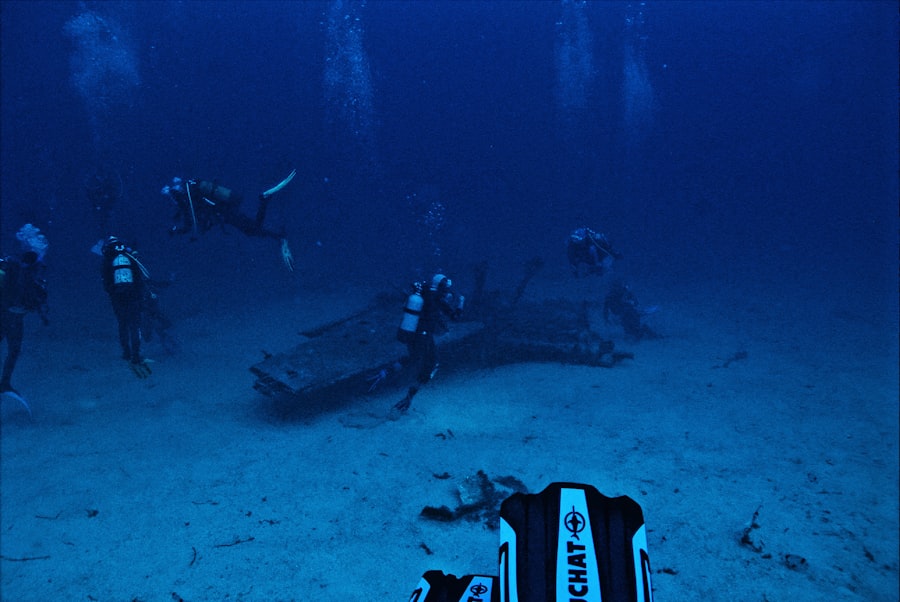
Deep-water wreck diving presents a unique set of challenges that can test even the most experienced divers. The physical demands are significant; at depths exceeding 200 feet, divers must contend with increased pressure, reduced visibility, and colder temperatures. These factors necessitate specialized training and equipment, including advanced diving techniques such as mixed-gas diving and decompression procedures.
The risks associated with deep diving are compounded by the unpredictable nature of underwater environments, where currents can shift rapidly and visibility can diminish to mere inches. Moreover, navigating a wreck site like U-869 requires not only technical skill but also an acute awareness of safety protocols. The divers must be vigilant about their air supply and monitor their ascent rates to avoid decompression sickness, commonly known as “the bends.” The psychological aspects of deep-water diving cannot be overlooked either; divers often face anxiety and claustrophobia when submerged in dark, confined spaces.
The wreck itself can be disorienting, with twisted metal and debris creating potential hazards. Each dive becomes a delicate balance between exploration and caution, as divers must respect both their own limits and the historical significance of what they are uncovering.
The Personalities and Relationships of the Divers
The team of divers involved in the exploration of U-869 was as diverse as their backgrounds and motivations for diving. Among them were seasoned professionals and passionate amateurs, each bringing their own unique skills and perspectives to the project. Their relationships evolved throughout their shared experiences underwater, fostering a sense of camaraderie that transcended individual differences.
This bond was crucial as they faced not only physical challenges but also emotional trials during their dives. One prominent figure in this narrative is Chris Rahn, whose relentless determination and enthusiasm for diving often inspired his teammates. His passion for uncovering the mysteries of U-869 was infectious, driving others to push their limits alongside him.
Conversely, there were moments of tension among team members as differing opinions on dive strategies and safety protocols emerged. These conflicts highlighted the complexities of teamwork in high-stakes environments where trust is paramount. Ultimately, it was through these interpersonal dynamics that the divers forged lasting friendships, united by their shared commitment to honoring the history encapsulated within the wreck.
The Historical Significance of the U-boat
The historical significance of U-869 extends far beyond its physical presence on the ocean floor; it serves as a poignant reminder of the broader context of World War II naval warfare. Launched in 1944, U-869 was part of Germany’s extensive submarine fleet that sought to disrupt Allied shipping routes in the Atlantic Ocean. Its mission was fraught with danger, as Allied forces developed increasingly effective countermeasures against submarine threats.
The eventual sinking of U-869 in 1945 marked not only a loss for Germany but also underscored the shifting tides of war. The wreck itself became a focal point for historians seeking to understand submarine warfare tactics and technology during this tumultuous period. Artifacts recovered from U-869 provided invaluable insights into life aboard a German U-boat, revealing details about crew living conditions, operational procedures, and even personal stories through items like letters and photographs.
Each artifact serves as a tangible connection to history, allowing researchers to piece together narratives that might otherwise remain lost to time. The discovery of U-869 thus contributes significantly to our understanding of maritime history and serves as a testament to the human experiences intertwined with global conflict.
The Investigation and Controversy Surrounding the U-boat
As divers delved deeper into their investigation of U-869, they encountered not only technical challenges but also ethical dilemmas surrounding shipwreck exploration. The discovery sparked controversy regarding ownership rights over artifacts recovered from wreck sites and raised questions about how best to honor those who lost their lives during wartime. Some argued that salvaging items from U-869 could be seen as disrespectful to the memory of its crew members, while others contended that such efforts were essential for preserving history.
The debate intensified when it became clear that U-869 was not merely an abandoned relic; it was a grave site for many sailors who perished during its final mission. This realization prompted discussions about how to approach underwater archaeology with sensitivity and respect for those who had died in service. The divers found themselves grappling with their own motivations—were they explorers seeking adventure or stewards tasked with preserving history?
This internal conflict added layers to their journey as they navigated both physical depths and moral complexities.
The Legacy of Shadow Divers
The legacy of “Shadow Divers” extends beyond its gripping narrative; it has inspired a new generation of divers and historians alike to engage with underwater exploration in meaningful ways. The book has brought attention to the importance of preserving maritime heritage while fostering an appreciation for the complexities involved in wreck diving. It serves as a reminder that every dive carries with it not just an opportunity for adventure but also a responsibility to honor those who came before.
Moreover, “Shadow Divers” has sparked interest in underwater archaeology as a legitimate field of study, encouraging academic institutions to develop programs focused on maritime history and conservation efforts. The story has resonated with audiences worldwide, highlighting how personal narratives can illuminate broader historical themes. As readers immerse themselves in Kurson’s account, they are invited to reflect on their own relationships with history—how it shapes identities and informs our understanding of humanity’s shared past.
The Impact of the U-boat Discovery
The discovery of U-869 has left an indelible mark on both maritime history and popular culture through “Shadow Divers.” It serves as a powerful reminder that beneath the surface lies not just water but stories waiting to be uncovered—stories that connect us to our past and challenge us to confront our present. As divers continue to explore wrecks around the world, they carry forward the lessons learned from U-869: that exploration is not merely about adventure but also about respect for history and those who lived it. In essence, “Shadow Divers” encapsulates a journey that transcends time—a journey into the depths where shadows linger but also where light can break through.
If you enjoyed reading “Shadow Divers” by Robert Kurson, you may also be interested in checking out this article on Hellread titled Hello World. This article explores the concept of new beginnings and the excitement of starting fresh in a world full of possibilities. It may provide a refreshing perspective on life and inspire you to embark on your own adventures, much like the divers in Kurson’s thrilling book.
FAQs
What is “Shadow Divers” by Robert Kurson about?
“Shadow Divers” by Robert Kurson is a non-fiction book that tells the story of a group of deep-sea wreck divers who discovered a World War II German U-boat off the coast of New Jersey in 1991.
When was “Shadow Divers” by Robert Kurson published?
“Shadow Divers” by Robert Kurson was first published in 2004.
What is the significance of the discovery of the German U-boat in “Shadow Divers”?
The discovery of the German U-boat in “Shadow Divers” was significant because it was a previously unknown wreck and the identity of the U-boat was a mystery. The book details the efforts of the divers to identify the U-boat and the challenges they faced in doing so.
What are some of the themes explored in “Shadow Divers” by Robert Kurson?
Some of the themes explored in “Shadow Divers” include the dangers and thrills of deep-sea wreck diving, the camaraderie and conflicts among the divers, the history of World War II and the U-boat warfare, and the pursuit of discovery and truth.
Has “Shadow Divers” by Robert Kurson received any awards or recognition?
Yes, “Shadow Divers” by Robert Kurson was a New York Times bestseller and received critical acclaim for its gripping storytelling and meticulous research.