
In the contemporary discourse surrounding democracy and governance, “On Tyranny: Twenty Lessons from the Twentieth Century” by Timothy Snyder stands as a pivotal work that distills the lessons of history into actionable insights for modern citizens. Snyder, a historian with a profound understanding of totalitarian regimes, draws from the experiences of the 20th century to illuminate the mechanisms through which tyranny can emerge and flourish. His work serves not only as a warning but also as a guide, urging individuals to remain vigilant in the face of encroaching authoritarianism.
The book’s structure, comprising twenty concise lessons, provides a framework for understanding the subtle and overt ways in which democratic institutions can be undermined. Snyder’s exploration is particularly relevant in an era marked by political polarization, misinformation, and the erosion of civil liberties. He emphasizes that tyranny does not always arrive with the dramatic flair of a coup d’état; rather, it often creeps in through seemingly innocuous changes in societal norms and governmental practices.
His call to action is not merely theoretical; it is grounded in the belief that every citizen has a role to play in defending democracy against the forces that seek to dismantle it.
Key Takeaways
- On Tyranny is a book that explores the historical context, tactics, and consequences of tyranny, and emphasizes the role of citizens and institutions in resisting and preventing it.
- The historical context of tyranny is important to understand in order to recognize its patterns and prevent its recurrence.
- The tactics of tyranny include undermining the truth, promoting division, and attacking institutions that uphold democracy.
- Citizens play a crucial role in resisting tyranny by staying informed, participating in democratic processes, and speaking out against injustice.
- Institutions such as the judiciary, media, and civil society are essential in preventing tyranny and upholding democratic values.
The Historical Context of Tyranny
To fully grasp the implications of Snyder’s lessons, one must first understand the historical context from which they arise. The 20th century was marked by the rise and fall of various totalitarian regimes, including those led by Adolf Hitler in Germany and Joseph Stalin in the Soviet Union. These regimes did not emerge overnight; rather, they capitalized on existing societal fractures, economic instability, and widespread discontent.
Snyder meticulously details how these historical contexts shaped the tactics employed by tyrants. In Germany, the Treaty of Versailles created a sense of humiliation and resentment that Hitler exploited to rally support for his nationalist agenda.
Similarly, in Russia, the chaos following the Bolshevik Revolution allowed Lenin and later Stalin to consolidate power through fear and repression. By examining these historical examples, Snyder illustrates that tyranny often arises from a confluence of social, economic, and political factors, making it imperative for citizens to remain aware of their own contexts to prevent similar outcomes.
The Tactics of Tyranny

The tactics employed by tyrants are as varied as they are insidious. Snyder identifies several key strategies that have been historically effective in dismantling democratic institutions and consolidating power. One such tactic is the manipulation of language and truth.
Tyrants often employ propaganda to distort reality, creating an alternate narrative that serves their interests. This manipulation can lead to a populace that is confused about what constitutes truth, making it easier for authoritarian leaders to impose their will without significant opposition. Another tactic is the systematic dismantling of democratic norms and institutions.
This can manifest in various ways, such as undermining the judiciary, attacking the press, or eroding civil liberties. For instance, Snyder points to how authoritarian regimes often target independent media outlets to control the narrative and suppress dissenting voices. By creating an environment where only state-sanctioned information is disseminated, tyrants can effectively isolate citizens from alternative viewpoints and critical discourse.
This tactic not only stifles opposition but also fosters an atmosphere of fear and compliance among the populace.
The Role of Citizens in Resisting Tyranny
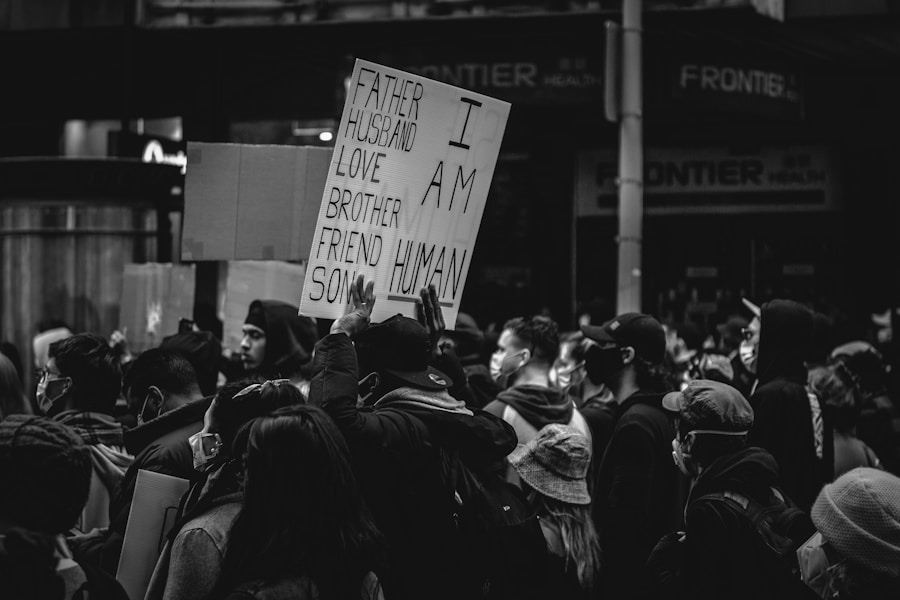
Citizens play a crucial role in resisting tyranny, as their collective actions can serve as a formidable counterforce against authoritarianism. Snyder emphasizes that individual engagement is essential; apathy or complacency can create a vacuum that allows tyranny to flourish unchecked. He advocates for active participation in civic life, whether through voting, community organizing, or simply staying informed about political developments.
By fostering a culture of engagement, citizens can create a resilient society that is less susceptible to authoritarian encroachments. Moreover, Snyder highlights the importance of solidarity among citizens in resisting tyranny. Historical examples demonstrate that collective action can be powerful in challenging oppressive regimes.
The civil rights movement in the United States serves as a poignant illustration of how grassroots organizing and community solidarity can effect change even in the face of overwhelming odds. By standing together and supporting one another, citizens can amplify their voices and create a formidable front against tyranny’s advances.
The Importance of Institutions in Preventing Tyranny
While individual citizens play a vital role in resisting tyranny, robust institutions are equally essential in safeguarding democracy. Snyder underscores that strong democratic institutions—such as an independent judiciary, free press, and accountable government—act as bulwarks against authoritarianism. These institutions provide checks and balances that prevent any single entity from amassing unchecked power.
When these systems function effectively, they create an environment where democratic norms can thrive. However, Snyder warns that institutions themselves are not immune to manipulation. Authoritarian leaders often seek to undermine these structures from within by appointing loyalists or enacting policies that erode their independence.
For example, in Hungary under Viktor Orbán, the government has systematically weakened judicial independence and curtailed press freedoms, demonstrating how institutions can be co-opted to serve tyrannical ends. This reality underscores the necessity for citizens to remain vigilant not only about their own rights but also about the health and integrity of their institutions.
Lessons from History

Recognizing Early Warning Signs
One significant lesson is the importance of recognizing early warning signs—such as increased polarization, attacks on the press, or attempts to undermine electoral integrity—that can signal an impending slide into authoritarianism. By being attuned to these indicators, citizens can mobilize before it is too late.
The Value of Historical Memory
Another critical lesson is the value of historical memory. Snyder emphasizes that understanding past atrocities and the mechanisms through which they occurred can empower individuals to resist similar patterns today.
Cultivating Resilience Against Future Tyrannies
For instance, remembering the Holocaust serves not only as a tribute to its victims but also as a reminder of the dangers posed by unchecked hatred and bigotry. By fostering a culture of remembrance and education about history’s darker chapters, societies can cultivate resilience against future tyrannies.
Applying the Lessons of On Tyranny to Today’s World
In applying Snyder’s lessons to today’s world, one must consider the unique challenges posed by modern technology and globalization. The digital age has transformed how information is disseminated and consumed, creating both opportunities for engagement and avenues for manipulation. Social media platforms can amplify voices advocating for democracy but can also serve as tools for spreading disinformation and fostering division.
Citizens must navigate this complex landscape with discernment, critically evaluating sources and seeking out diverse perspectives. Moreover, contemporary political climates across various nations reflect many of the warning signs Snyder outlines. From rising nationalism to increasing hostility toward marginalized communities, there are echoes of historical patterns that demand attention.
Citizens today must remain vigilant against these trends while actively promoting inclusivity and dialogue within their communities. Engaging in local politics, supporting independent journalism, and advocating for civil rights are all ways individuals can apply Snyder’s lessons in their daily lives.
The Urgency of Defending Democracy
The urgency of defending democracy cannot be overstated; it requires constant vigilance and active participation from all citizens. As Timothy Snyder articulates in “On Tyranny,” history offers invaluable lessons about the fragility of democratic institutions and the tactics employed by those who seek power at any cost. In an age where misinformation spreads rapidly and political divisions deepen, it is imperative for individuals to engage thoughtfully with their civic responsibilities.
By understanding the historical context of tyranny, recognizing its tactics, and actively participating in democratic processes, citizens can forge a path toward resilience against authoritarianism. The lessons gleaned from history serve not only as warnings but also as calls to action—reminding us that democracy is not merely a system of governance but a collective commitment to uphold human dignity and freedom for all. In this ongoing struggle for democracy, every voice matters; every action counts.
If you enjoyed reading On Tyranny by Timothy Snyder, you may also be interested in exploring the article “Hello World” on Hellread.com. This article delves into the concept of power dynamics and the impact of individual actions on society. It offers a thought-provoking perspective on how small acts of resistance can make a significant difference in the face of tyranny. Check it out here.
FAQs
What is the book “On Tyranny” by Timothy Snyder about?
The book “On Tyranny” by Timothy Snyder is a non-fiction book that explores the history of tyranny and offers twenty lessons from the 20th century to help readers resist the rise of authoritarianism in the 21st century.
Who is Timothy Snyder?
Timothy Snyder is an American author and historian who is known for his work on the history of Central and Eastern Europe, as well as his writings on the rise of authoritarianism and tyranny.
What are some of the lessons from “On Tyranny”?
Some of the lessons from “On Tyranny” include the importance of defending institutions, being wary of paramilitaries, and standing out. The book offers practical advice for resisting the erosion of democracy and the rise of authoritarianism.
Is “On Tyranny” a political book?
Yes, “On Tyranny” is a political book that addresses the rise of authoritarianism and the erosion of democracy. It offers historical insights and practical advice for individuals living in a time of political upheaval.
Is “On Tyranny” a bestseller?
Yes, “On Tyranny” became a bestseller after its release in 2017. It received widespread attention and acclaim for its timely and important message about the dangers of tyranny and the importance of defending democracy.




