
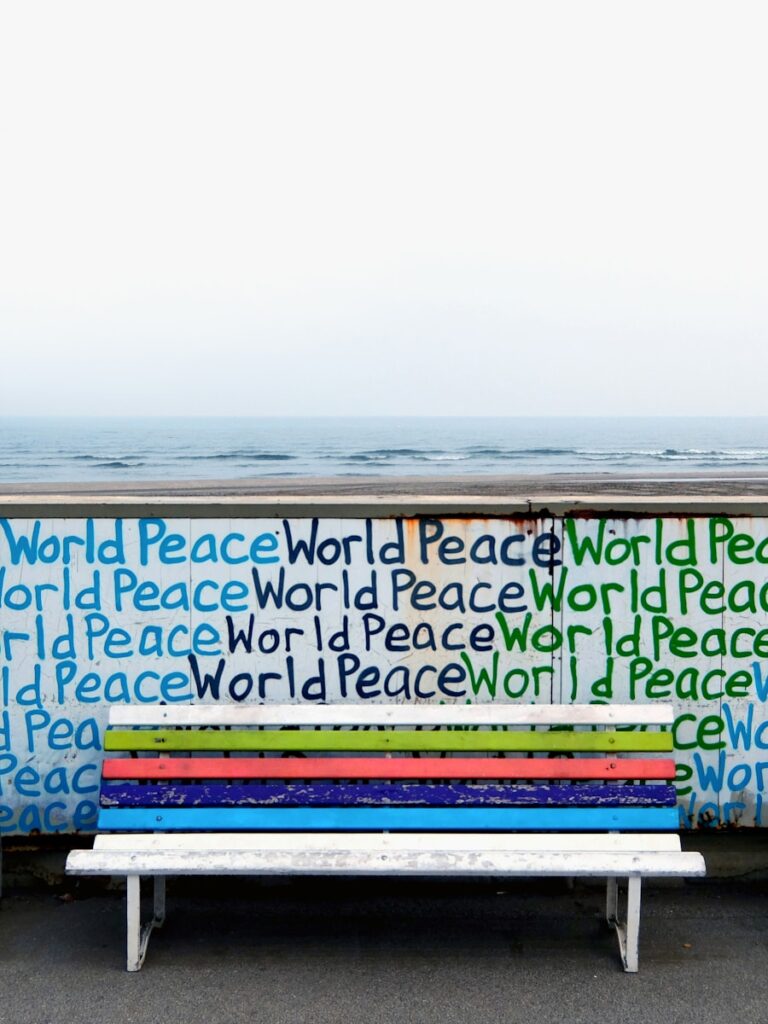
Peaceland, a term that encapsulates the complex interplay of international intervention and local dynamics in conflict resolution, serves as a critical lens through which we can examine the multifaceted nature of peacebuilding efforts. In an era where conflicts are increasingly protracted and multifarious, the role of international actors—be they states, non-governmental organizations, or multilateral institutions—has become paramount. These entities often intervene in regions beset by violence, seeking to mediate disputes, provide humanitarian assistance, and foster conditions conducive to sustainable peace.
However, the effectiveness of these interventions is frequently contingent upon the intricate web of local politics, cultural contexts, and historical grievances that characterize the societies in which they operate. The concept of Peaceland also highlights the everyday politics that unfold in the wake of international intervention. It underscores how peacebuilding is not merely a top-down process dictated by external actors but rather a dynamic interaction involving local communities, leaders, and institutions.
The success of peace initiatives often hinges on the ability of international actors to navigate these local landscapes, understanding the nuances of power relations and social dynamics that shape conflict and resolution. This article will delve into the roles played by international organizations, the influence of local actors, the challenges faced in intervention efforts, and the everyday politics that define peacebuilding in various contexts.
Key Takeaways
- Peaceland explores the everyday politics of international intervention in conflict resolution, shedding light on the role of local actors and the impact of international organizations.
- International organizations play a crucial role in conflict resolution by providing resources, expertise, and legitimacy, but their interventions can also be limited by political constraints and power dynamics.
- Local actors have a significant impact on international intervention, as their agency and perspectives shape the success or failure of peacebuilding efforts.
- Challenges and limitations of international intervention include issues of sovereignty, legitimacy, and the potential for unintended consequences and backlash.
- The everyday politics of peacebuilding emphasizes the importance of understanding local dynamics, power structures, and social relationships in conflict resolution efforts.
The Role of International Organizations in Conflict Resolution
International organizations have emerged as pivotal players in the realm of conflict resolution, often acting as mediators, facilitators, and providers of resources in conflict-affected regions.
The UN, for instance, has established peacekeeping missions that deploy personnel to maintain ceasefires, protect civilians, and support the implementation of peace agreements.
These missions are often accompanied by political missions that engage in dialogue with conflicting parties to foster reconciliation. Moreover, international organizations play a crucial role in coordinating humanitarian assistance and development aid in post-conflict settings. They mobilize resources from member states and other stakeholders to address urgent needs such as food security, healthcare, and infrastructure rebuilding.
The World Bank and various development agencies often collaborate with local governments to implement programs aimed at economic recovery and social cohesion. However, the effectiveness of these interventions can be hampered by bureaucratic inefficiencies, lack of local knowledge, and sometimes a disconnect between international priorities and local needs.
The Impact of Local Actors on International Intervention

Local actors are indispensable to the success of international interventions in conflict resolution. These actors include community leaders, civil society organizations, grassroots movements, and even former combatants who possess intimate knowledge of the local context. Their involvement can significantly enhance the legitimacy and effectiveness of peacebuilding efforts.
For instance, local NGOs often serve as vital conduits for information between international organizations and affected communities, ensuring that interventions are culturally sensitive and aligned with local priorities. Furthermore, local actors can facilitate dialogue among conflicting parties by leveraging their established relationships and trust within communities. In many cases, they are better positioned than external actors to mediate disputes and propose solutions that resonate with local populations.
The role of women in peacebuilding is particularly noteworthy; studies have shown that when women are included in peace processes, the likelihood of sustainable peace increases significantly. Initiatives like UN Security Council Resolution 1325 emphasize the importance of women’s participation in conflict resolution, recognizing their unique perspectives and contributions to building lasting peace.
Challenges and Limitations of International Intervention
Despite the potential benefits of international intervention in conflict resolution, numerous challenges and limitations persist. One significant issue is the question of sovereignty; many states view external intervention as an infringement on their autonomy. This perception can lead to resistance from local governments or factions within a country, complicating efforts to mediate conflicts.
Additionally, interventions may inadvertently exacerbate tensions if they are perceived as biased or favoring one side over another. Another challenge lies in the coordination among various international actors. The proliferation of NGOs and multilateral organizations can lead to overlapping mandates and competition for resources, resulting in fragmented approaches to conflict resolution.
This lack of coherence can undermine the effectiveness of interventions and create confusion among local populations regarding who is responsible for what aspects of peacebuilding. Moreover, the reliance on short-term funding cycles often means that interventions are not sustained long enough to achieve meaningful change, leaving communities vulnerable once international attention shifts elsewhere.
The Everyday Politics of Peacebuilding
The everyday politics of peacebuilding refers to the ongoing negotiations, compromises, and power dynamics that shape the implementation of peace initiatives at the community level. Peacebuilding is not a linear process; it involves continuous engagement with various stakeholders who may have differing interests and agendas. Local power structures often influence how peace agreements are interpreted and enacted on the ground.
For example, traditional leaders may hold significant sway over community decisions, making their involvement crucial for any peace initiative’s success. Moreover, everyday politics can manifest in informal networks that operate outside formal institutions. These networks may include community-based organizations or informal groups that work towards reconciliation and social cohesion.
Their grassroots efforts can complement formal peace processes by addressing underlying grievances and fostering dialogue among divided communities. However, these informal dynamics can also pose challenges; power struggles within communities may lead to exclusionary practices that marginalize certain groups or voices.
Case Studies of Successful Conflict Resolution

Examining successful case studies provides valuable insights into effective conflict resolution strategies that integrate both international support and local engagement. One notable example is the peace process in South Africa during the 1990s. The transition from apartheid to a democratic society was facilitated by a combination of international pressure, particularly from sanctions imposed by foreign governments, and robust internal negotiations led by figures such as Nelson Mandela and F.W.
de Klerk. The involvement of civil society organizations played a crucial role in advocating for human rights and fostering dialogue among diverse groups. Another compelling case is the peacebuilding efforts in Colombia following decades of armed conflict involving guerrilla groups like FARC (Revolutionary Armed Forces of Colombia).
The Colombian government engaged in negotiations with FARC that culminated in a historic peace agreement in 2016.
The agreement included provisions for land reform, political participation for former combatants, and mechanisms for transitional justice—elements that were essential for addressing root causes of conflict.
Critiques and Controversies Surrounding International Intervention
While international intervention is often framed as a necessary response to humanitarian crises or violent conflicts, it is not without its critiques and controversies. One major concern is the potential for “mission creep,” where initial humanitarian interventions evolve into more extensive military engagements without clear objectives or exit strategies. This phenomenon raises ethical questions about the responsibility of intervening actors to protect civilians while also respecting national sovereignty.
Additionally, there are criticisms regarding the effectiveness of international interventions in achieving lasting peace. Some scholars argue that interventions can create dependency on external aid or undermine local governance structures by sidelining indigenous solutions to conflict resolution. The imposition of Western models of democracy or governance may not align with local cultural contexts or historical experiences, leading to resistance or failure to implement reforms effectively.
Moving Forward in Conflict Resolution and Peacebuilding
As we navigate the complexities of conflict resolution and peacebuilding in an increasingly interconnected world, it is essential to recognize the importance of both international support and local agency. Future interventions must prioritize collaboration with local actors to ensure that peace initiatives are contextually relevant and sustainable. By fostering inclusive dialogue that respects diverse perspectives and power dynamics within communities, we can enhance the prospects for lasting peace.
Moreover, ongoing evaluation and adaptation of intervention strategies are crucial for addressing emerging challenges in conflict-affected regions. Learning from past successes and failures will enable international organizations to refine their approaches while remaining responsive to the evolving needs of local populations. Ultimately, a more nuanced understanding of Peaceland—one that embraces both global frameworks and local realities—will be vital for advancing effective conflict resolution strategies in an ever-changing geopolitical landscape.
If you are interested in exploring more about conflict resolution and international intervention, you may want to check out the article “Hello World” on hellread.com. This article may provide additional insights and perspectives on the topic discussed in Séverine Autesserre’s book “Peaceland: Conflict Resolution and the Everyday Politics of International Intervention.”
FAQs
What is the book “Peaceland: Conflict Resolution and the Everyday Politics of International Intervention” about?
The book “Peaceland” by Séverine Autesserre explores the everyday practices of international interveners in conflict zones and the impact of their actions on local dynamics.
Who is the author of “Peaceland: Conflict Resolution and the Everyday Politics of International Intervention”?
The author of “Peaceland” is Séverine Autesserre, a professor of political science at Barnard College, Columbia University.
What are some key themes discussed in “Peaceland: Conflict Resolution and the Everyday Politics of International Intervention”?
Some key themes in the book include the disconnect between international interveners and local populations, the impact of everyday practices on intervention outcomes, and the need for a more nuanced understanding of conflict resolution.
What are some of the main arguments presented in “Peaceland: Conflict Resolution and the Everyday Politics of International Intervention”?
The book argues that international interveners often focus on formal peace processes and neglect the everyday practices that shape local dynamics. It also highlights the importance of understanding the perspectives and experiences of local actors in conflict zones.
What are some of the criticisms of “Peaceland: Conflict Resolution and the Everyday Politics of International Intervention”?
Critics have argued that the book oversimplifies the complexities of international intervention and fails to adequately address the challenges and constraints faced by interveners in conflict zones.
How has “Peaceland: Conflict Resolution and the Everyday Politics of International Intervention” been received by the academic community?
The book has received mixed reviews, with some scholars praising its insights into the everyday practices of international interveners, while others have raised concerns about its generalizations and lack of empirical evidence.




