
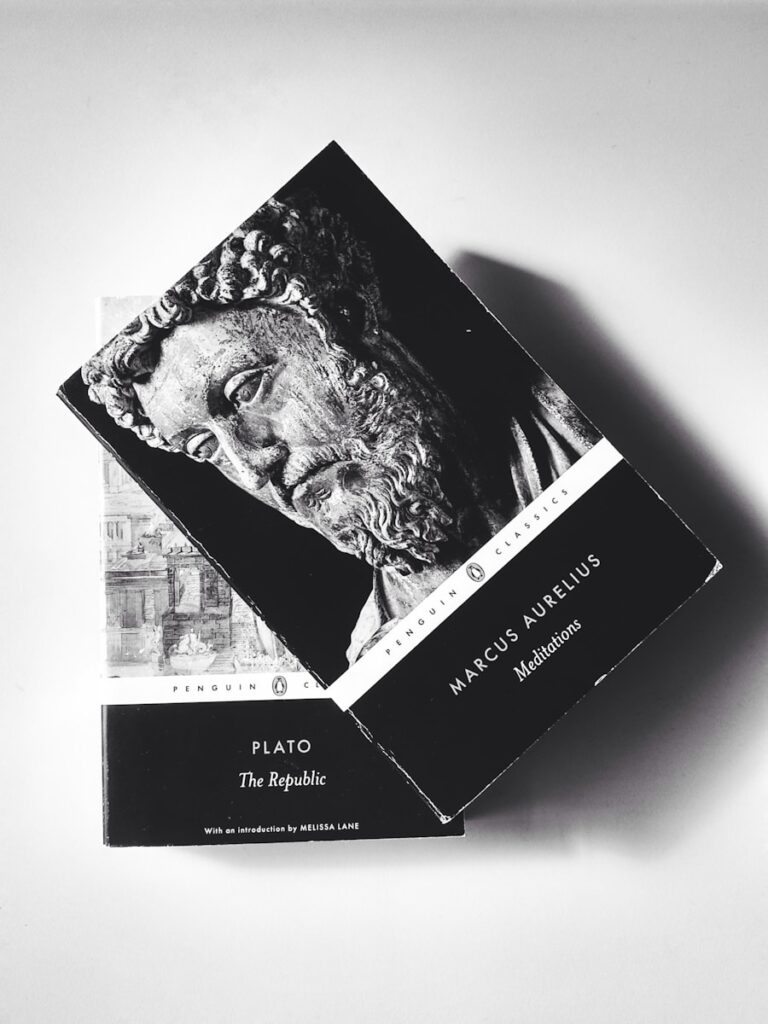
In the realm of Western philosophy, few texts have had as profound an impact as Plato’s “The Republic.
As we explore its pages, we find ourselves grappling with fundamental questions about morality, governance, and the pursuit of truth. Plato, through the character of Socrates, invites us to engage in a dialectical examination of our beliefs and assumptions, challenging us to consider what it means to live a just life.
“The Republic” is not merely a philosophical treatise; it is a rich tapestry woven with dialogues that reflect the complexities of human existence. In our journey through this text, we encounter various themes that resonate with contemporary issues, such as the balance between individual rights and collective responsibility. As we delve deeper into Plato’s vision, we recognize that his insights continue to shape our understanding of ethics and politics, urging us to reflect on our own societal structures and the principles that underpin them.
Key Takeaways
- “The Republic” by Plato is a philosophical work that explores the nature of justice, the ideal state, and the role of education in creating a just society.
- The Allegory of the Cave is a powerful metaphor used by Plato to illustrate the journey from ignorance to enlightenment, and the philosopher’s duty to return to the cave and enlighten others.
- Plato’s concept of the ideal state is one where each individual fulfills their role in society, and justice is achieved through a harmonious balance of the three classes: the rulers, the auxiliaries, and the producers.
- The Philosopher-King is a central figure in Plato’s ideal state, representing the wise and just ruler who governs with knowledge and virtue.
- Plato’s theory of the three parts of the soul – reason, spirit, and desire – explores the internal struggle for harmony and balance within the individual.
- Education plays a crucial role in Plato’s ideal state, as it is through proper education that individuals can develop the virtues necessary to contribute to a just society.
- Plato critiques democracy as a flawed system that can lead to tyranny and the rule of the uneducated and unvirtuous over the wise and just.
- “The Republic” has had a lasting influence on Western philosophy and political thought, shaping ideas about justice, governance, and the role of the philosopher in society.
The Allegory of the Cave
One of the most compelling elements of “The Republic” is the Allegory of the Cave, a powerful metaphor that illustrates the journey from ignorance to enlightenment. In this allegory, we find prisoners chained inside a dark cave, facing a blank wall. Their only reality consists of shadows cast by objects behind them, manipulated by unseen puppeteers.
This vivid imagery serves as a poignant reminder of how easily we can become ensnared in our limited perceptions of reality. As we contemplate this allegory, we are compelled to question our own beliefs and the sources from which they arise. As we reflect on the implications of the Allegory of the Cave, we recognize that it speaks to the transformative power of knowledge.
The journey of one prisoner who escapes the cave symbolizes the philosopher’s quest for truth and understanding. Upon emerging into the light, he is initially blinded by the sun but gradually comes to see the world in its true form. This process mirrors our own intellectual and spiritual awakenings, as we strive to break free from the confines of ignorance and embrace a broader perspective.
Plato’s allegory challenges us to seek knowledge beyond mere appearances and to confront the uncomfortable truths that lie beyond our immediate understanding.
The Ideal State and Justice
At the heart of “The Republic” lies Plato’s vision of the ideal state, a society governed by justice and harmony. He posits that a just society is one where individuals fulfill their roles according to their natural abilities and inclinations. In this ideal state, each person contributes to the common good, creating a balanced and cohesive community.
As we explore this concept, we are invited to consider our own roles within society and how our actions align with the greater good. Plato’s conception of justice extends beyond mere legalistic definitions; it encompasses a moral dimension that requires individuals to act in accordance with virtue. He argues that justice is achieved when each class—rulers, warriors, and producers—performs its designated function without overstepping its bounds.
This hierarchical structure reflects Plato’s belief in the importance of specialization and expertise in governance. As we engage with these ideas, we are prompted to reflect on contemporary societal structures and whether they promote justice or perpetuate inequality.
The Philosopher-King
Central to Plato’s vision of the ideal state is the concept of the philosopher-king, a ruler who possesses both wisdom and virtue. Unlike traditional leaders driven by power or wealth, philosopher-kings are guided by their love for knowledge and their commitment to justice. As we consider this notion, we are reminded of the importance of ethical leadership in our own political systems.
Plato argues that only those who truly understand the nature of justice should be entrusted with power, as they are best equipped to make decisions that benefit society as a whole. The philosopher-king embodies the ideal balance between intellect and morality, serving as a model for effective governance. In our exploration of this concept, we recognize that true leadership requires more than mere technical skills; it demands a deep understanding of human nature and a commitment to the common good.
As we reflect on contemporary leaders, we may find ourselves questioning whether they embody these qualities or if they fall short of Plato’s lofty ideals.
The Three Parts of the Soul
In “The Republic,” Plato introduces a tripartite model of the soul, dividing it into three distinct parts: the rational, the spirited, and the appetitive. Each part corresponds to different aspects of human nature and influences our thoughts and actions. The rational part seeks truth and knowledge; the spirited part embodies courage and ambition; while the appetitive part is driven by desires and physical needs.
As we delve into this framework, we gain insight into our own motivations and conflicts. Understanding these three parts allows us to recognize the internal struggles we face in our pursuit of a just life. When these elements are in harmony, we experience inner peace and fulfillment; however, when they are in conflict, we may find ourselves torn between competing desires.
Plato emphasizes that achieving balance among these parts is essential for personal well-being and societal harmony. As we reflect on our own lives, we may find parallels in our struggles to align our rational aspirations with our emotional impulses.
The Role of Education
The Ideal Educational System
In “The Republic,” Plato proposes an educational system that nurtures future leaders who possess both knowledge and moral integrity. This system is designed to cultivate virtues such as wisdom, courage, and temperance.
A Holistic Approach to Education
Plato advocates for a comprehensive education that encompasses not only intellectual pursuits but also physical training and moral development. This approach resonates with contemporary discussions about the purpose of education in fostering well-rounded individuals who can contribute positively to society.
Reflecting on Our Educational Experiences
As we reflect on our own educational experiences, we may find ourselves considering how well they have prepared us for ethical decision-making and civic engagement.
The Critique of Democracy
While Plato’s vision for an ideal state is compelling, he also offers a critical perspective on democracy. He argues that democratic systems can lead to chaos and instability when individuals prioritize personal desires over collective well-being. In “The Republic,” he expresses concern that democracy can devolve into mob rule, where decisions are made based on popular opinion rather than informed judgment.
As we engage with this critique, we are prompted to reflect on the strengths and weaknesses of democratic governance in our own societies. Plato’s skepticism towards democracy stems from his belief that not all individuals possess the knowledge or wisdom necessary for effective decision-making. He warns against allowing those driven by self-interest or ignorance to wield power over others.
This critique challenges us to consider how well our democratic systems promote informed participation and whether they adequately safeguard against populism or demagoguery. As we navigate contemporary political landscapes, Plato’s insights serve as a cautionary reminder of the potential pitfalls inherent in democratic governance.
Legacy and Influence of The Republic
The legacy of “The Republic” extends far beyond its historical context; it continues to influence philosophical thought, political theory, and ethical discourse today. As we examine its enduring relevance, we recognize how Plato’s ideas have shaped discussions about justice, governance, and human nature throughout history. From Renaissance thinkers to modern political philosophers, “The Republic” has served as a foundational text that invites critical reflection on our values and institutions.
Moreover, Plato’s exploration of concepts such as justice, education, and leadership resonates with contemporary challenges faced by societies around the world. As we grapple with issues such as inequality, political corruption, and ethical leadership, we find ourselves returning to Plato’s insights for guidance. His call for a just society governed by wise leaders remains a powerful vision that inspires us to strive for a better world.
In engaging with “The Republic,” we not only honor its historical significance but also reaffirm its relevance as we seek to navigate the complexities of our own lives and communities.
One related article to The Republic by Plato can be found on Hellread.com. The article titled “Hello World” delves into the concept of societal structure and governance, much like Plato’s exploration of justice and the ideal state in his famous work. To read more about this thought-provoking topic, check out the article here.
FAQs
What is The Republic by Plato?
The Republic is a philosophical work by the ancient Greek philosopher Plato. It is one of the most influential works in the history of Western philosophy and political theory.
When was The Republic written?
The Republic was written around 380 BCE.
What is the main theme of The Republic?
The main theme of The Republic is the nature of justice, the ideal state, and the philosopher-king.
What is the structure of The Republic?
The Republic is written in the form of a dialogue between Socrates and several other characters. It is divided into ten books.
What are some of the key ideas in The Republic?
Some key ideas in The Republic include the allegory of the cave, the theory of forms, the tripartite theory of the soul, and the idea of the philosopher-king.
What is the allegory of the cave in The Republic?
The allegory of the cave is a metaphor used by Plato to illustrate his theory of forms. It describes prisoners who are chained in a cave and can only see shadows on the wall, mistaking them for reality.
What is the theory of forms in The Republic?
The theory of forms is the idea that there are abstract, unchanging, and perfect forms or ideas that exist beyond the physical world. These forms are the true reality, and the physical world is just a reflection of them.
What is the tripartite theory of the soul in The Republic?
The tripartite theory of the soul divides the soul into three parts: reason, spirit, and appetite. Plato uses this theory to explain the nature of justice and the ideal state.
What is the idea of the philosopher-king in The Republic?
The idea of the philosopher-king is the concept that the ideal ruler of the state should be a philosopher who has knowledge of the forms and is guided by reason.




