

“The Songlines,” a seminal work by British author Bruce Chatwin, was published in 1987 and has since become a cornerstone in the understanding of Aboriginal culture and spirituality. The book intertwines travel narrative, philosophical musings, and anthropological insights, all while exploring the intricate relationship between the land and the people who inhabit it. Chatwin’s journey through Australia serves as a backdrop for a deeper examination of the concept of songlines—an Aboriginal tradition that encapsulates the very essence of their connection to the earth.
Through his vivid storytelling, Chatwin invites readers to consider not only the physical landscape of Australia but also the metaphysical dimensions that shape the lives of its Indigenous peoples. Chatwin’s narrative is not merely a travelogue; it is an exploration of identity, belonging, and the ways in which stories are woven into the fabric of existence. The author’s fascination with nomadism and the idea of movement as a form of understanding is evident throughout the text.
He posits that songlines are more than just songs; they are pathways that connect people to their ancestors, their history, and their environment. This exploration raises profound questions about how cultures articulate their relationship with the world around them and how these articulations can be both a source of strength and a means of survival.
Key Takeaways
- The Songlines is a book by Bruce Chatwin that explores the concept of songlines in Aboriginal culture.
- Songlines are paths across the land that are sung into existence by Aboriginal ancestors and are used for navigation, storytelling, and cultural preservation.
- Songlines hold great significance in Aboriginal culture as they connect the people to their land, ancestors, and spiritual beliefs.
- Bruce Chatwin’s exploration of the songlines in his book has had a significant impact on literature and anthropology, sparking interest and research in Aboriginal culture.
- The Songlines has also faced criticisms and controversies, particularly regarding Chatwin’s interpretation and representation of Aboriginal culture.
The concept of songlines
Songlines, or “dreaming tracks,” are a fundamental aspect of Aboriginal culture, representing a complex system of navigation and storytelling that has been passed down through generations. These lines are not merely geographical; they are imbued with spiritual significance, serving as a map of the land that is interwoven with the songs, stories, and rituals of the Aboriginal people. Each songline corresponds to a specific route across the landscape, often following natural features such as rivers, mountains, and other landmarks.
As individuals traverse these paths, they sing the songs associated with them, thereby reinforcing their connection to both the land and their cultural heritage. The songs themselves are rich in meaning, often recounting the creation stories of ancestral beings who shaped the land and its inhabitants. For instance, a songline might tell the story of a particular animal or plant, detailing its journey across the landscape and its significance to the people who inhabit that area.
The act of singing these songs while traveling along songlines reinforces communal ties and ensures that knowledge is shared among generations.
The significance of songlines in Aboriginal culture

In Aboriginal culture, songlines are integral to understanding identity and belonging. They serve as a living testament to the interconnectedness of people, land, and spirituality. Each individual has a unique relationship with specific songlines, often tied to their clan or family group.
This connection fosters a sense of responsibility toward the land and its preservation, as well as an obligation to pass on knowledge to future generations. The songs encapsulate not only geographical information but also moral teachings and cultural values that guide behavior within the community. Moreover, songlines play a crucial role in ceremonies and rituals, where they are performed to invoke ancestral spirits and seek guidance or blessings.
These performances can take place during significant life events such as births, deaths, or initiations, reinforcing social cohesion and cultural continuity. The act of singing and performing songlines is thus both an artistic expression and a spiritual practice, highlighting the deep reverence Aboriginal people have for their heritage and environment. In this way, songlines are not static relics of the past; they are dynamic expressions of living culture that adapt to contemporary contexts while remaining rooted in tradition.
Bruce Chatwin’s exploration of the songlines
Bruce Chatwin’s journey into the heart of Australia was not just a physical expedition; it was an intellectual quest to understand the essence of nomadic life and its implications for human existence. His exploration of songlines was deeply influenced by his fascination with travel and movement as fundamental aspects of human experience. In “The Songlines,” Chatwin presents himself as both an observer and participant in Aboriginal culture, weaving together personal anecdotes with broader reflections on the nature of storytelling and memory.
Chatwin’s narrative is marked by a sense of wonder and curiosity as he encounters various Aboriginal communities and learns about their traditions. He engages with local elders who share their knowledge about songlines, revealing how these pathways serve as both spiritual guides and practical navigational tools. Through his interactions, Chatwin captures the richness of Aboriginal life while also grappling with his own perceptions of modernity and displacement.
His writing reflects a longing for connection to something deeper—a yearning for a sense of place that transcends the transient nature of contemporary existence.
The impact of The Songlines on literature and anthropology
“The Songlines” has had a profound impact on both literature and anthropology since its publication. In literary circles, Chatwin’s work is often celebrated for its lyrical prose and innovative narrative structure, blending fiction with non-fiction in a way that challenges traditional genre boundaries. His exploration of themes such as wanderlust, identity, and cultural memory resonates with readers across diverse backgrounds, prompting them to reflect on their own relationships with place and belonging.
In anthropology, Chatwin’s work has sparked renewed interest in Indigenous knowledge systems and oral traditions. By bringing attention to songlines, he has encouraged scholars to consider how such cultural practices can inform our understanding of human geography and social organization. His portrayal of Aboriginal culture has also prompted discussions about representation and ethics in anthropological research, particularly regarding the responsibilities researchers have toward Indigenous communities.
While some have praised Chatwin for his ability to convey complex ideas in an accessible manner, others have critiqued his romanticized view of nomadism and questioned whether he adequately represented Aboriginal voices.
Criticisms and controversies surrounding The Songlines
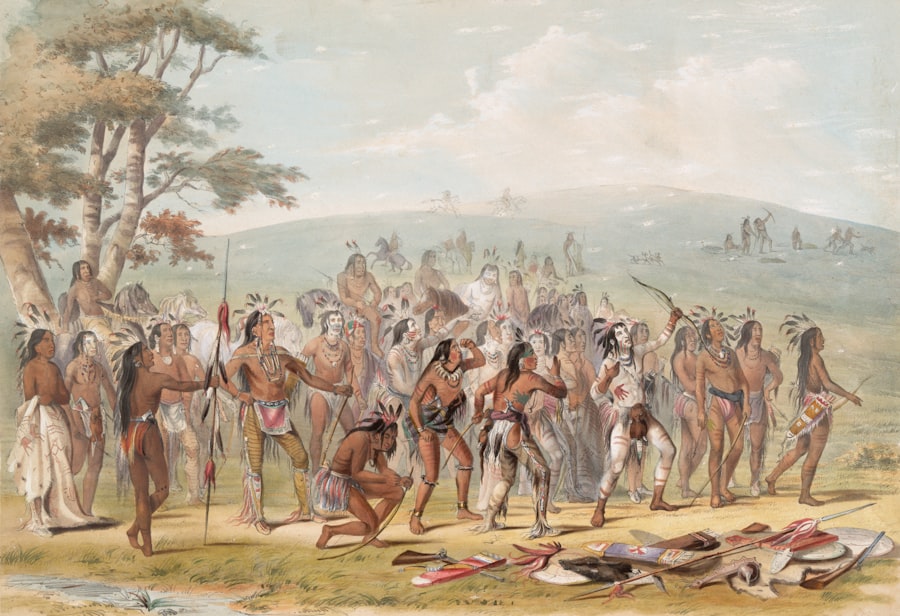
Despite its acclaim, “The Songlines” has not been without its criticisms and controversies. Some scholars argue that Chatwin’s interpretation of songlines oversimplifies a complex cultural phenomenon that cannot be fully understood through an outsider’s lens. Critics contend that his narrative risks commodifying Aboriginal culture by presenting it as an exotic curiosity rather than acknowledging its depth and significance within Indigenous communities.
This perspective raises important questions about cultural appropriation and the ethics of representing marginalized voices in literature. Additionally, there are concerns regarding Chatwin’s portrayal of Aboriginal people as “noble savages,” which can perpetuate stereotypes that undermine their agency and contemporary realities. While he sought to highlight the beauty and wisdom inherent in Indigenous traditions, some argue that his romanticized depiction may obscure the challenges faced by Aboriginal communities today, including issues related to land rights, social justice, and cultural preservation.
This tension between admiration for Indigenous culture and the potential for misrepresentation underscores the complexities involved in cross-cultural dialogue.
The legacy of The Songlines in contemporary society
The legacy of “The Songlines” extends beyond literature into contemporary discussions about Indigenous rights, environmental stewardship, and cultural preservation. As awareness grows regarding the importance of Indigenous knowledge systems in addressing pressing global issues such as climate change and biodiversity loss, songlines have emerged as symbols of sustainable living practices rooted in deep ecological understanding. Many Indigenous activists draw upon the principles embodied in songlines to advocate for land rights and environmental justice, emphasizing the need for holistic approaches that honor traditional ecological knowledge.
Moreover, “The Songlines” has inspired a new generation of writers, artists, and scholars who seek to engage with Indigenous cultures in respectful and meaningful ways. This engagement often involves collaborative projects that prioritize Indigenous voices and perspectives while fostering mutual understanding between cultures. In this context, songlines serve not only as cultural artifacts but also as living expressions of resilience and adaptability in an ever-changing world.
The enduring relevance of The Songlines
The enduring relevance of “The Songlines” lies in its ability to provoke thought about our relationship with place, identity, and culture. Bruce Chatwin’s exploration invites readers to reflect on their own narratives while considering how stories shape our understanding of ourselves and our surroundings. As contemporary society grapples with issues related to globalization, displacement, and environmental degradation, the lessons embedded within songlines resonate more than ever.
In an age where rapid change often leads to disconnection from heritage and land, songlines remind us of the importance of maintaining ties to our roots while navigating new paths forward. They challenge us to listen deeply—to the land, to each other, and to the stories that bind us together across time and space. In this way, “The Songlines” continues to inspire dialogue about cultural identity, environmental stewardship, and the power of storytelling as we seek to forge connections in an increasingly fragmented world.
If you enjoyed reading The Songlines by Bruce Chatwin, you may also be interested in exploring the article “The Power of Storytelling: How Narratives Shape Our Lives” on hellread.com. This article delves into the significance of storytelling in shaping our identities and understanding of the world around us, which resonates with the themes of cultural storytelling and connection to the land explored in Chatwin’s book.
FAQs
What is The Songlines by Bruce Chatwin about?
The Songlines is a book written by Bruce Chatwin that explores the concept of songlines, which are paths across the Australian landscape that are believed to have been created by the mythic beings of the Aboriginal people. Chatwin delves into the cultural and spiritual significance of these songlines and their connection to the Aboriginal people’s understanding of the land.
When was The Songlines published?
The Songlines was first published in 1987.
What is the significance of songlines in Aboriginal culture?
Songlines are an integral part of Aboriginal culture as they are believed to contain the stories and songs of the Dreamtime, the period of creation in Aboriginal mythology. These songlines are used for navigation, passing down cultural knowledge, and connecting the Aboriginal people to their ancestral lands.
How did The Songlines contribute to the understanding of Aboriginal culture?
The Songlines brought attention to the importance of songlines in Aboriginal culture and helped to raise awareness about the spiritual and cultural significance of these paths. Chatwin’s book also sparked interest in the broader concept of indigenous knowledge and the relationship between people and the land.
Was The Songlines well-received by critics and readers?
The Songlines received positive reviews from critics and readers alike, with many praising Chatwin’s exploration of Aboriginal culture and his lyrical writing style. The book has since become a classic in the genre of travel literature and cultural anthropology.




