
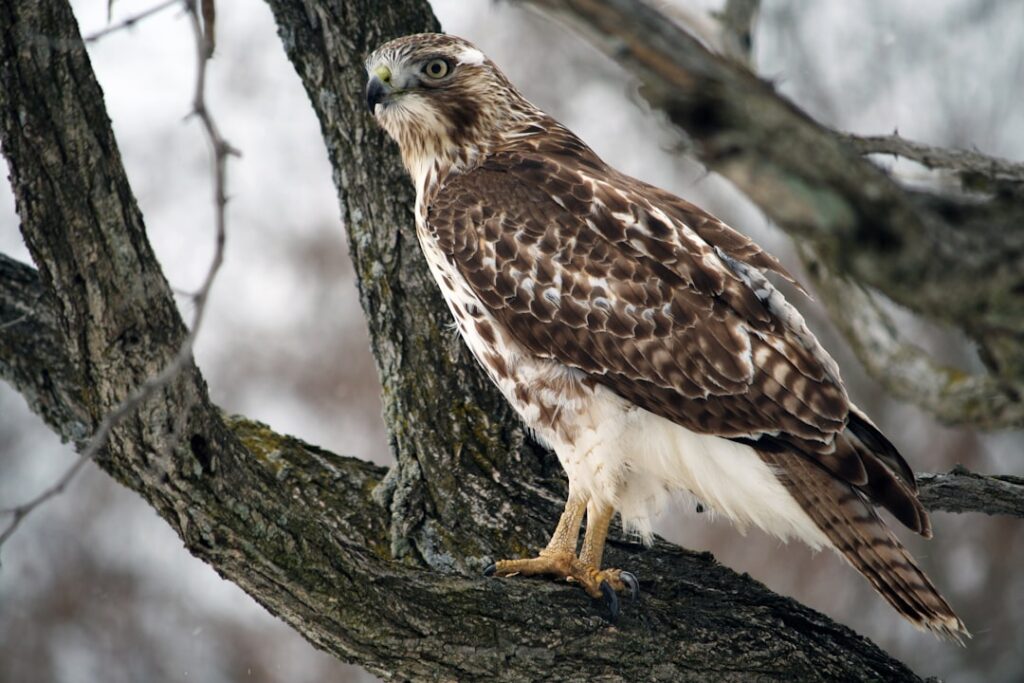
Helen Macdonald’s exploration of falconry emerged from her experience of grief following her father’s death. This loss motivated her to pursue the practice of training a goshawk as a means of processing her emotional response to bereavement. Macdonald documents her psychological state during this period, describing the disorientation and emptiness that characterized her mourning process.
Unable to find adequate support through conventional approaches, she directed her attention toward falconry and the training of a goshawk. Macdonald’s engagement with falconry involved training a goshawk she named Mabel. The training process demanded both technical proficiency and emotional stability.
Her relationship with the bird developed from initial acquisition to an established working partnership. Macdonald used the structured requirements of falconry training as a framework for addressing her grief. Her account examines the intersection between the practical aspects of bird training and her personal process of psychological recovery following loss.
Key Takeaways
- The author’s personal journey is deeply intertwined with the practice and symbolism of falconry.
- The goshawk serves as a powerful symbol reflecting themes of control, freedom, and transformation.
- Falconry is portrayed as both an art and a discipline requiring patience, training, and a deep bond between human and bird.
- Themes of grief and loss are explored through the healing power of nature and the human-animal relationship.
- The book blends memoir and nature writing, receiving critical acclaim and resonating strongly with readers.
The Goshawk as a Symbol
The goshawk itself emerges as a powerful symbol throughout Macdonald’s narrative, representing both the wildness of nature and the complexities of human emotion. This bird, known for its fierce hunting prowess and striking appearance, embodies the duality of beauty and brutality inherent in the natural world. For Macdonald, the goshawk becomes a reflection of her own tumultuous feelings—its sharp talons and piercing gaze echoing her pain and anger.
The bird’s instinctual behavior serves as a reminder of the primal forces that govern life and death, mirroring Macdonald’s struggle to come to terms with her father’s passing. Moreover, the goshawk symbolizes freedom and autonomy, qualities that Macdonald yearns for in her own life. As she trains Mabel, she grapples with the tension between control and surrender, both in falconry and in her emotional landscape.
The act of training a wild creature requires an understanding of its nature, demanding respect for its instincts while simultaneously imposing human will.
The goshawk thus becomes not only a companion in her healing journey but also a representation of the wildness within herself that she must embrace.
The Art of Falconry
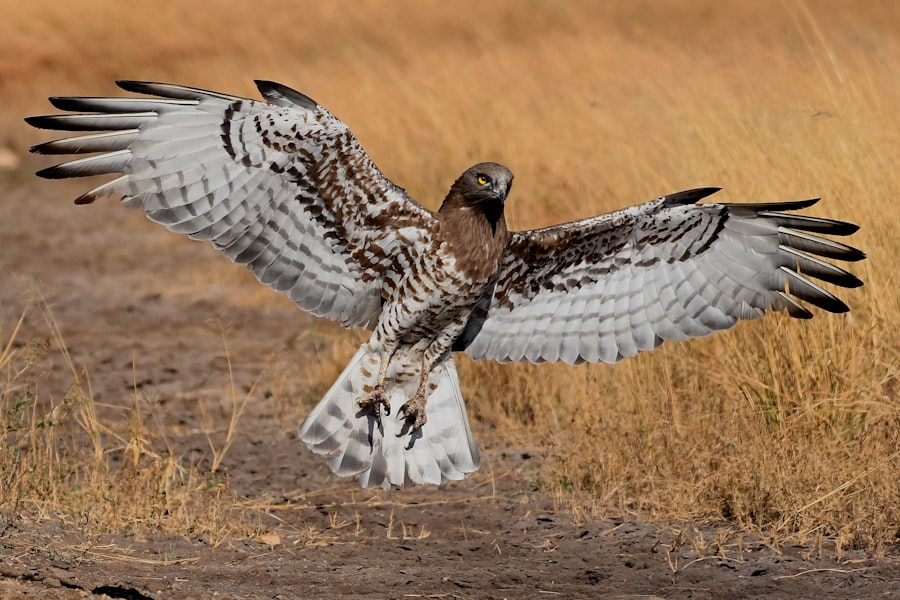
Falconry is an ancient practice steeped in tradition and skill, requiring a deep understanding of avian behavior and an unwavering commitment to the art form. Macdonald immerses herself in this world, detailing the intricate techniques involved in training a goshawk. From the initial stages of building trust to the more advanced aspects of hunting together, she provides readers with an intimate look at what it means to be a falconer.
The meticulous nature of falconry demands patience and precision; every movement is calculated, every interaction laden with significance. Macdonald’s descriptions are vivid and evocative, allowing readers to feel the weight of Mabel perched on her glove or the rush of wind as they take flight together. The art of falconry also serves as a metaphor for control and surrender in Macdonald’s life.
As she trains Mabel, she learns that true mastery comes not from domination but from understanding and partnership. This realization resonates deeply with her emotional journey; just as she must adapt to Mabel’s instincts and needs, she must also learn to navigate her own grief. The discipline required in falconry becomes a form of therapy for Macdonald, providing structure in a time when her life feels chaotic.
Through this lens, falconry transcends mere hobby or sport; it becomes a profound exploration of connection—between human and animal, between past and present.
T.H. White’s work significantly influences Macdonald’s narrative, particularly his book “The Goshawk,” which chronicles his own experiences with falconry and his struggles with personal demons. White’s writing serves as both inspiration and cautionary tale for Macdonald as she embarks on her journey with Mabel.
His portrayal of falconry is imbued with a sense of melancholy and introspection that resonates with Macdonald’s own experiences. She draws parallels between White’s life and her own, recognizing how both authors grapple with themes of loss, identity, and the search for meaning through their relationships with birds of prey. Macdonald’s reflections on White’s work reveal a complex relationship with his legacy.
While she admires his literary prowess and his ability to articulate the nuances of falconry, she is also acutely aware of his struggles—his failures as a falconer and his personal battles with depression. This duality prompts Macdonald to consider what it means to be a falconer in contemporary society compared to White’s time. She acknowledges the weight of history while carving out her own path, ultimately seeking to redefine what falconry means to her in light of both White’s influence and her own unique experiences.
The Themes of Grief and Loss
Grief permeates every aspect of Macdonald’s narrative, shaping her experiences and interactions as she navigates life after her father’s death. The rawness of her emotions is palpable; she writes candidly about the disorientation that accompanies such profound loss. Macdonald explores how grief manifests in various forms—anger, confusion, longing—and how it can be both isolating and transformative.
Her relationship with Mabel becomes a conduit for processing these feelings; through their bond, she finds moments of clarity amidst the chaos. The theme of loss extends beyond personal grief; it also encompasses broader reflections on mortality and the fragility of life. As Macdonald observes Mabel’s hunting instincts and interactions with nature, she is reminded of the cycle of life and death that governs all living beings.
This realization deepens her understanding of grief—not merely as an end but as part of a larger continuum. In training Mabel, she confronts her own vulnerabilities while simultaneously embracing the beauty inherent in life’s transience. The interplay between grief and acceptance becomes central to her journey, illustrating how loss can lead to profound personal growth.
The Natural World as a Source of Healing
The natural world emerges as a sanctuary for Macdonald throughout her narrative—a place where she can escape the confines of her grief and reconnect with herself. Nature offers solace in its raw beauty; it becomes a backdrop against which she can explore her emotions without judgment or constraint. The act of being outdoors, observing wildlife, and engaging with Mabel allows Macdonald to immerse herself in experiences that transcend language and societal expectations.
In these moments, she finds clarity and peace that elude her in everyday life. Macdonald’s relationship with nature is not merely passive; it is an active engagement that fosters healing. She describes how spending time outdoors helps ground her during turbulent times, providing perspective on her grief while reminding her of life’s inherent rhythms.
The sights and sounds of the natural world serve as reminders that existence continues despite personal loss. Through this lens, nature becomes more than just a backdrop; it transforms into an essential partner in her healing journey—one that encourages resilience and fosters connection.
The Relationship Between Humans and Animals
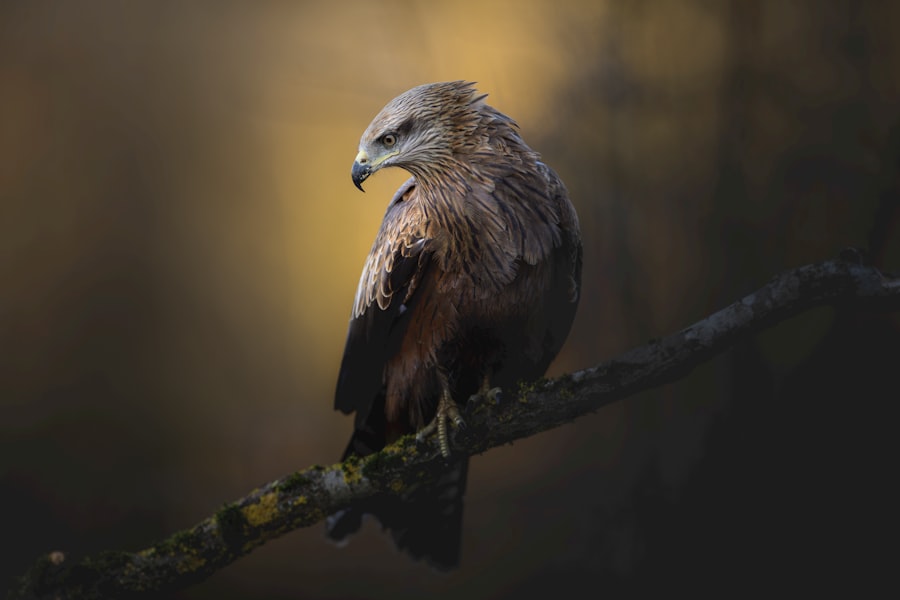
At its core, Macdonald’s narrative explores the intricate relationship between humans and animals—a bond characterized by mutual respect, understanding, and sometimes conflict. Her connection with Mabel exemplifies this dynamic; it is not simply one of ownership but rather a partnership built on trust and communication. As Macdonald trains Mabel, she learns to read the bird’s body language and instincts, recognizing that true companionship requires empathy and patience.
This relationship challenges traditional notions of dominance in human-animal interactions, emphasizing instead the importance of collaboration. Moreover, Macdonald reflects on how this bond mirrors broader themes within human relationships—how we navigate love, loss, and connection with others. Just as she must adapt to Mabel’s needs as a wild creature, so too must humans learn to navigate their relationships with one another through understanding and compromise.
The interplay between human emotion and animal instinct becomes a lens through which Macdonald examines not only her own grief but also the universal quest for connection amidst life’s challenges.
The Intersection of Memoir and Nature Writing
Macdonald’s work occupies a unique space at the intersection of memoir and nature writing, blending personal narrative with observations about the natural world. This fusion allows for a rich exploration of both individual experience and broader ecological themes. By weaving together her personal journey with detailed accounts of falconry and wildlife observation, Macdonald creates a tapestry that invites readers into her world while simultaneously encouraging them to reflect on their own relationships with nature.
The memoir aspect provides an intimate glimpse into Macdonald’s psyche as she grapples with grief; it is through this lens that readers can fully appreciate the depth of her experiences. Meanwhile, the nature writing component elevates these personal reflections by situating them within larger ecological contexts—highlighting themes such as conservation, biodiversity, and humanity’s place within the natural order. This duality enriches the narrative, allowing readers to engage with both emotional resonance and intellectual inquiry.
The Role of Training and Discipline in Falconry
Training a goshawk requires immense discipline—a quality that resonates deeply within Macdonald’s narrative as she navigates her own emotional landscape. The process is rigorous; it demands consistency, patience, and an unwavering commitment to understanding Mabel’s behavior. Each training session becomes an exercise in focus—Macdonald must remain attuned not only to Mabel’s needs but also to her own emotional state as she grapples with grief.
This discipline serves as both challenge and refuge; it provides structure during chaotic times while fostering personal growth.
As Macdonald encounters setbacks—moments when Mabel refuses to cooperate or when external circumstances disrupt their progress—she learns valuable lessons about perseverance.
These experiences mirror her journey through grief; just as training requires flexibility in approach, so too does navigating loss demand an openness to change. Through this lens, falconry becomes more than just an art form; it transforms into a metaphor for life itself—a continuous process of learning, adapting, and growing.
The Book’s Critical Reception
Macdonald’s work has garnered significant critical acclaim since its publication, praised for its lyrical prose and profound insights into both falconry and human emotion. Critics have lauded her ability to weave together personal narrative with rich descriptions of nature, creating a compelling tapestry that resonates on multiple levels. Reviewers have noted how Macdonald’s exploration of grief is both deeply personal yet universally relatable—a quality that has struck a chord with readers from diverse backgrounds.
The book has also sparked discussions about the ethics of falconry and humanity’s relationship with nature more broadly. Critics have engaged with Macdonald’s reflections on conservation issues while examining how they intersect with personal narratives about loss and healing. This multifaceted reception highlights not only the literary merit of Macdonald’s work but also its capacity to provoke meaningful conversations about our place within the natural world.
The Book’s Impact on Readers
The impact of Macdonald’s narrative extends far beyond its pages; it has resonated deeply with readers who find solace in her exploration of grief and connection to nature. Many have reported feeling seen in their own experiences with loss—Macdonald’s candid reflections provide validation for emotions often left unspoken or misunderstood. Her journey serves as a reminder that healing is not linear; rather, it is an ongoing process marked by moments of clarity interspersed with periods of struggle.
Furthermore, readers have expressed newfound appreciation for the natural world after engaging with Macdonald’s work—her vivid descriptions inspire curiosity about wildlife while encouraging mindfulness in everyday interactions with nature. This ripple effect underscores how literature can serve as a catalyst for change—prompting individuals to reflect on their relationships not only with their own emotions but also with the environment around them. Through this lens, Macdonald’s narrative transcends personal experience; it becomes part of a larger conversation about healing through connection—both human-to-human and human-to-nature.




