
Broth has long been revered in various cultures for its remarkable healing properties. This humble liquid, often made from simmering bones, meat, and vegetables, serves as a cornerstone of traditional culinary practices. Its significance transcends mere sustenance; it embodies a rich tapestry of history, culture, and health benefits.
The act of preparing broth is not just about creating a flavorful base for soups and stews; it is an age-old ritual that connects us to our ancestors who relied on these nourishing concoctions for both physical and emotional well-being. The healing power of broth lies in its ability to provide comfort and nourishment during times of illness or distress. Many people turn to chicken soup when feeling under the weather, a practice that has been validated by modern science.
The warmth of the broth, combined with its nutrient-dense composition, can help soothe sore throats, alleviate congestion, and provide hydration. Beyond its immediate effects, broth is also a source of essential nutrients that support overall health, making it a staple in many households around the world.
Key Takeaways
- Broth has significant healing properties, especially for gut health and immune support.
- Traditional preparation methods enhance the nutritional value and flavor of broth.
- Rich in minerals, collagen, and amino acids, broth offers numerous nutritional benefits.
- Incorporating broth into daily meals can boost overall wellness and support a nourishing diet.
- Broth serves as a versatile elixir that promotes digestion, immunity, and general health.
Traditional Methods of Broth Preparation
The preparation of broth is steeped in tradition, with methods varying widely across cultures. In many households, the process begins with the selection of high-quality ingredients. For instance, in French cuisine, a classic stock is made by roasting bones to enhance their flavor before simmering them with mirepoix—a mixture of onions, carrots, and celery.
This technique not only extracts the rich flavors from the bones but also infuses the broth with the aromatic qualities of the vegetables. In contrast, Asian cultures often employ different techniques that highlight the unique flavors of their ingredients. For example, in Chinese cuisine, broth is frequently prepared using a combination of bones and herbs such as ginger and scallions.
The simmering process can last for hours, allowing the flavors to meld and develop into a deeply satisfying liquid. These traditional methods not only yield a delicious broth but also reflect the cultural significance of food as a means of nurturing both body and spirit.
Nutritional Benefits of Broth
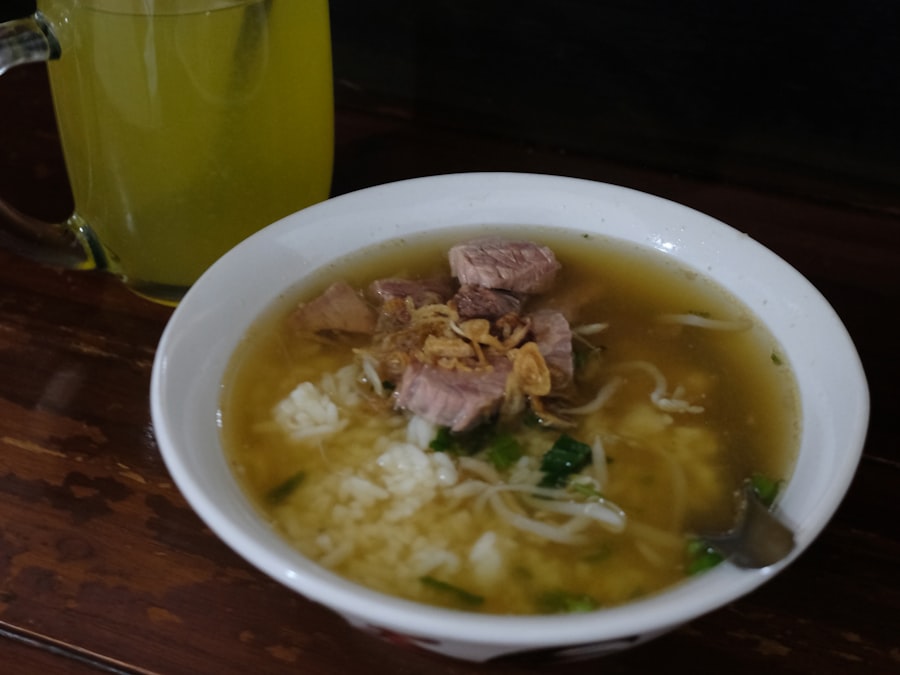
The nutritional profile of broth is impressive, making it a valuable addition to any diet. Rich in collagen, gelatin, and amino acids, broth supports joint health and aids in digestion. Collagen, derived from the connective tissues in bones, is essential for maintaining healthy skin, hair, and nails.
As we age, our bodies produce less collagen, leading to signs of aging such as wrinkles and joint pain. Consuming broth regularly can help replenish this vital protein and promote overall skin elasticity. Moreover, broth is an excellent source of minerals such as calcium, magnesium, and phosphorus.
These minerals play crucial roles in bone health and metabolic functions. The slow simmering process allows for the extraction of these nutrients from the bones and vegetables, resulting in a nutrient-dense liquid that can be easily absorbed by the body. Additionally, the presence of amino acids like glycine and proline supports gut health by promoting the integrity of the intestinal lining.
Broth Recipes for Health and Wellness
Creating nourishing broth at home is both an art and a science. A simple yet effective recipe involves using chicken bones, which are rich in flavor and nutrients. Begin by roasting the bones in the oven until they are golden brown; this step enhances the depth of flavor in the final product.
Once roasted, transfer the bones to a large pot and cover them with cold water. Add aromatics such as garlic, onions, carrots, and herbs like thyme or bay leaves for added complexity. Simmer the mixture gently for several hours—ideally 12 to 24 hours—to allow the flavors to fully develop.
The longer you simmer, the richer your broth will become. After cooking, strain the liquid through a fine mesh sieve to remove any solids. The resulting broth can be stored in jars in the refrigerator for up to a week or frozen for later use.
This versatile base can be enjoyed on its own or used as a foundation for soups, sauces, or risottos. Another popular recipe involves beef bones, particularly those with marrow. Start by blanching the bones in boiling water for a few minutes to remove impurities.
After draining them, roast the bones until they are well-browned before adding them to a pot with water and your choice of vegetables and herbs. This beef broth can be particularly hearty and satisfying, making it an excellent choice for cold winter days.
Broth as a Gut-Healing Elixir
The gut plays a pivotal role in overall health, influencing everything from digestion to immune function. Broth has gained recognition as a gut-healing elixir due to its high content of gelatin and collagen. These components are known to support the integrity of the gut lining, which is essential for preventing conditions such as leaky gut syndrome.
When consumed regularly, broth can help soothe inflammation in the digestive tract and promote healing. In addition to its structural benefits, broth also provides essential amino acids that aid in digestion. Glycine, for instance, has been shown to support bile production and improve nutrient absorption.
This makes broth an ideal addition to meals for those looking to enhance their digestive health. Incorporating broth into your diet can be as simple as sipping it on its own or using it as a base for soups that include gut-friendly ingredients like fermented vegetables or prebiotic-rich foods.
Incorporating Broth into Everyday Cooking

Integrating broth into everyday cooking can elevate meals while providing additional nutritional benefits. One easy way to do this is by using broth instead of water when cooking grains such as rice or quinoa. This simple substitution infuses the grains with flavor while enhancing their nutritional profile.
For instance, cooking quinoa in chicken broth not only adds depth but also increases its protein content. Broth can also serve as a flavorful base for sauces and gravies. By deglazing a pan with broth after sautéing vegetables or meats, you can create a rich sauce that captures all the flavors from your cooking process.
Additionally, using broth in place of oil or butter when sautéing vegetables can reduce calorie intake while still delivering delicious results. For those who enjoy slow cooking or pressure cooking, broth can be an essential ingredient in stews and casseroles. It adds moisture and flavor while ensuring that meats become tender and succulent during the cooking process.
Whether you’re making a classic beef stew or a vegetable curry, incorporating broth will enhance both taste and nutrition.
Broth for Immune Support
The immune system is our body’s defense against illness and infection, and certain foods can bolster its function. Broth is one such food that has been linked to immune support due to its nutrient-dense composition.
Moreover, the minerals extracted from bones during the simmering process play a vital role in maintaining immune health. Calcium and magnesium are essential for various cellular functions within the immune system. Additionally, consuming warm broth can provide comfort during illness while keeping you hydrated—an important factor when fighting off infections.
Incorporating immune-boosting ingredients into your broth can further enhance its benefits. Adding garlic and ginger not only imparts flavor but also provides antimicrobial properties that can help ward off illness. Turmeric is another excellent addition; its active compound curcumin has been shown to have anti-inflammatory effects that support immune function.
Broth as a Key Component of a Nourishing Diet
Incorporating broth into your diet can transform your meals into nourishing experiences that promote health and wellness. As a versatile ingredient, it can be adapted to suit various dietary preferences—whether you follow a vegetarian lifestyle or prefer meat-based options. The key lies in sourcing high-quality ingredients that align with your values while maximizing nutritional benefits.
For those seeking plant-based alternatives, vegetable broth made from simmering an array of vegetables—such as carrots, celery, onions, and herbs—can provide a flavorful base rich in vitamins and minerals without animal products.
Ultimately, broth serves as more than just an ingredient; it embodies a philosophy of nourishment that prioritizes health through wholesome foods.
By embracing this ancient culinary tradition and incorporating it into daily meals, individuals can cultivate a deeper connection to their food while reaping the myriad benefits that come from consuming this healing elixir regularly.
In “Nourishing Broth,” Sally Fallon Morell and Kaayla T. Daniel explore the health benefits of traditional broths and their role in a nutrient-dense diet. For readers interested in further insights on nutrition and wellness, a related article can be found at this link, which delves into the importance of whole foods and their impact on overall health.
FAQs
What is “Nourishing Broth” by Sally Fallon Morell and Kaayla T. Daniel about?
“Nourishing Broth” is a comprehensive guide to making traditional bone broths and stocks. The book emphasizes the health benefits of broth, provides recipes, and explains the nutritional value of various ingredients used in broth-making.
Who are the authors of “Nourishing Broth”?
The book is co-authored by Sally Fallon Morell, founder of the Weston A. Price Foundation, and Kaayla T. Daniel, a certified nutritionist and expert in traditional diets.
What types of broths are covered in the book?
The book covers a variety of broths including beef, chicken, fish, and vegetable broths. It also includes recipes for specialized broths such as those made from different animal parts and bones.
Why is broth considered nourishing according to the book?
According to the authors, broth is rich in minerals, amino acids, and collagen, which support joint health, digestion, and overall wellness. The book explains how traditional preparation methods maximize these nutrients.
Does the book provide recipes for broth-based dishes?
Yes, “Nourishing Broth” includes recipes not only for making broth but also for using broth in soups, stews, sauces, and other dishes.
Is “Nourishing Broth” suitable for beginners?
Yes, the book is designed to be accessible for both beginners and experienced cooks, with clear instructions and explanations of techniques.
Does the book discuss the health benefits of broth?
Yes, it details the scientific and traditional perspectives on how broth supports health, including benefits for the immune system, gut health, and skin.
Are there any dietary considerations mentioned in the book?
The book addresses various dietary needs and preferences, including guidance for those following traditional diets, paleo, or nutrient-dense eating plans.
Where can I purchase “Nourishing Broth”?
“Nourishing Broth” is available through major bookstores, online retailers, and the Weston A. Price Foundation website.
Does the book include information on sourcing ingredients?
Yes, the authors emphasize the importance of using high-quality, organic, and pasture-raised ingredients to maximize the nutritional benefits of broth.