
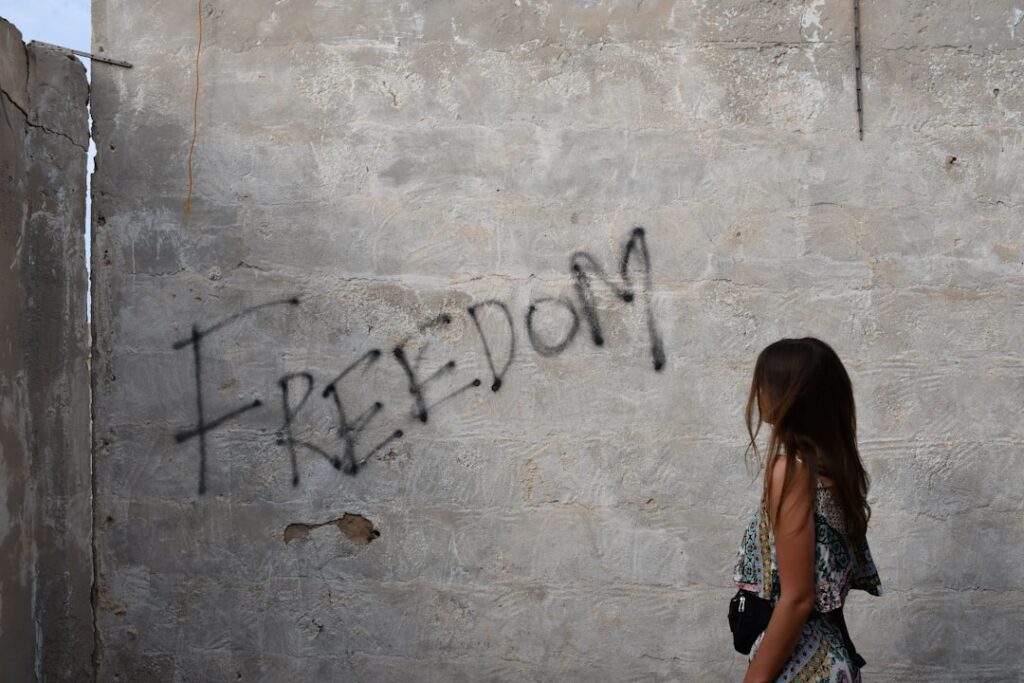
In his thought-provoking work, “The Future of Freedom,” Fareed Zakaria delves into the intricate relationship between democracy and liberty, offering a nuanced perspective that challenges conventional wisdom. As we embark on this exploration, we find ourselves grappling with the fundamental question: what does it truly mean to be free in a world that is constantly evolving? Zakaria’s insights compel us to reconsider our assumptions about democracy, freedom, and the forces that shape them.
He argues that while democracy is a vital component of freedom, it is not the sole determinant. This distinction is crucial as we navigate the complexities of modern governance and societal structures. Zakaria’s analysis is particularly relevant in today’s context, where the ideals of democracy are often conflated with the notion of freedom itself.
He emphasizes that freedom encompasses more than just the right to vote; it includes the protection of individual rights, the rule of law, and the presence of robust institutions. As we delve deeper into his arguments, we will uncover how these elements interact and influence one another, shaping our understanding of what it means to live in a free society. By examining the evolution of democracy and the challenges it faces in the 21st century, we can better appreciate Zakaria’s vision for a future where freedom is not merely an ideal but a lived reality for all.
Key Takeaways
- Fareed Zakaria’s “The Future of Freedom” explores the evolving nature of democracy and freedom in the modern world.
- The evolution of democracy and freedom has been marked by a shift from a focus on political rights to a broader emphasis on economic and social rights.
- Challenges to freedom in the 21st century include the rise of illiberal democracies, the erosion of civil liberties in the name of security, and the impact of populism on democratic institutions.
- Technology plays a significant role in shaping freedom, with both positive and negative implications for privacy, free speech, and political participation.
- Globalization has both expanded and constrained freedom, creating new opportunities for economic growth and cultural exchange while also contributing to inequality and the erosion of national sovereignty.
The Evolution of Democracy and Freedom
The journey of democracy is a rich tapestry woven through centuries of struggle, triumph, and transformation. As we reflect on its evolution, we recognize that democracy has not always been synonymous with freedom. Historically, many societies have embraced democratic principles while simultaneously denying fundamental rights to certain groups.
This paradox invites us to consider how democracy has evolved over time and how it has been shaped by cultural, social, and political forces. From ancient Athens to modern-day democracies, we see a gradual expansion of the concept of citizenship and participation, yet this journey has been fraught with challenges. In examining the evolution of democracy, we must also acknowledge the role of revolutions and movements that have sought to redefine freedom.
The Enlightenment era brought forth ideas that championed individual rights and questioned authoritarian rule. These philosophical underpinnings laid the groundwork for democratic revolutions across the globe. However, as Zakaria points out, the mere establishment of democratic institutions does not guarantee freedom for all citizens.
As we explore this evolution, we are reminded that democracy is a dynamic process that requires constant vigilance and adaptation to ensure that it serves the interests of all members of society.
Challenges to Freedom in the 21st Century

As we navigate the complexities of the 21st century, we encounter a myriad of challenges that threaten the very fabric of freedom. One of the most pressing issues is the rise of authoritarianism in various parts of the world. In recent years, we have witnessed a disturbing trend where leaders exploit democratic processes to consolidate power and undermine civil liberties.
This phenomenon raises critical questions about the resilience of democratic institutions and their ability to safeguard freedom in an increasingly polarized political landscape. Moreover, we must confront the impact of economic inequality on freedom. As wealth becomes concentrated in the hands of a few, access to opportunities and resources diminishes for many.
This disparity not only undermines social cohesion but also erodes trust in democratic systems. When citizens feel disenfranchised and marginalized, their ability to participate meaningfully in governance diminishes, leading to a cycle of disillusionment and apathy. Zakaria’s analysis prompts us to consider how these challenges intersect and compound one another, creating a complex web that threatens to unravel the progress made in advancing freedom.
The Role of Technology in Shaping Freedom
In our increasingly interconnected world, technology plays a pivotal role in shaping our understanding and experience of freedom. The digital age has transformed how we communicate, access information, and engage with one another. On one hand, technology has empowered individuals by providing platforms for expression and activism.
Social media has become a powerful tool for mobilizing movements and amplifying voices that were once marginalized. We can see this dynamic at play in various social movements around the globe, where technology has facilitated grassroots organizing and raised awareness about pressing issues. However, as Zakaria cautions, technology also presents significant challenges to freedom.
The same platforms that enable expression can also be used for surveillance, censorship, and manipulation. Governments and corporations wield immense power over digital spaces, often prioritizing control over individual rights. The rise of misinformation and echo chambers further complicates our understanding of truth and accountability in public discourse.
As we grapple with these dualities, we must critically assess how technology can be harnessed to promote freedom while also safeguarding against its potential abuses.
Globalization and its Impact on Freedom
Globalization has fundamentally altered the landscape of freedom in profound ways. As nations become increasingly interconnected through trade, communication, and cultural exchange, we find ourselves navigating a complex web of influences that shape our understanding of liberty. On one hand, globalization has facilitated economic growth and lifted millions out of poverty, creating opportunities for individuals to pursue their aspirations.
This interconnectedness can foster greater awareness of human rights issues and promote solidarity across borders. Yet, globalization also presents challenges that can undermine freedom. The rapid movement of capital and labor can exacerbate inequalities within and between nations.
As multinational corporations gain unprecedented power, they often prioritize profit over social responsibility, leading to exploitative practices that infringe upon workers’ rights. Additionally, cultural homogenization can threaten local identities and traditions, raising questions about autonomy and self-determination. In this context, Zakaria’s insights prompt us to consider how we can navigate the complexities of globalization while ensuring that freedom remains at the forefront of our collective aspirations.
The Importance of Institutions in Safeguarding Freedom

At the heart of Zakaria’s argument lies the critical role that institutions play in safeguarding freedom. Strong institutions are essential for upholding the rule of law, protecting individual rights, and ensuring accountability in governance. As we reflect on historical examples, we recognize that democracies with robust institutions are better equipped to withstand challenges from authoritarianism and populism.
These institutions provide a framework for checks and balances that prevent the concentration of power in any one entity. Moreover, institutions foster trust among citizens by promoting transparency and fairness in decision-making processes. When individuals believe that their rights are protected by impartial institutions, they are more likely to engage actively in civic life and hold their leaders accountable.
Zakaria emphasizes that building resilient institutions requires ongoing commitment from both citizens and leaders alike. As we consider our own roles in this process, we must advocate for reforms that strengthen democratic institutions and promote inclusivity in governance.
Zakaria’s Vision for the Future of Freedom
In envisioning a future where freedom flourishes, Zakaria offers a compelling framework that emphasizes the need for balance between democracy and liberty. He argues that while democratic governance is essential for promoting individual rights, it must be accompanied by strong institutions that uphold those rights effectively. This vision calls for a renewed commitment to fostering civic engagement and encouraging active participation in democratic processes.
Furthermore, Zakaria highlights the importance of education in cultivating informed citizens who can navigate the complexities of modern governance. By equipping individuals with critical thinking skills and an understanding of their rights, we empower them to advocate for their freedoms effectively. In this future vision, technology is harnessed as a force for good—promoting transparency, facilitating dialogue, and amplifying diverse voices rather than stifling them.
Navigating the Complexities of Freedom in the Modern World
As we conclude our exploration of Fareed Zakaria’s “The Future of Freedom,” we are left with a profound understanding of the complexities surrounding freedom in our modern world. The interplay between democracy, technology, globalization, and institutions presents both opportunities and challenges that require our collective attention.
Ultimately, Zakaria’s insights remind us that freedom is not a static concept but an ongoing journey that demands active participation from all members of society. As we confront the challenges ahead—whether they be authoritarianism, economic inequality, or technological abuses—we must draw upon our shared values to forge a path toward a future where freedom is not merely an aspiration but a lived reality for all individuals across the globe. In doing so, we honor the legacy of those who have fought for freedom before us while paving the way for generations yet to come.
In exploring the themes presented in “The Future of Freedom” by Fareed Zakaria, one can find a thought-provoking discussion on the evolution of democratic principles in the modern world. A related article that delves into similar concepts is available at this link, where the complexities of freedom and governance are examined in greater detail.
FAQs
What is “The Future of Freedom” by Fareed Zakaria about?
The article “The Future of Freedom” by Fareed Zakaria discusses the challenges and opportunities facing democracy in the 21st century, and explores the impact of globalization, technology, and political polarization on freedom and democracy.
Who is Fareed Zakaria?
Fareed Zakaria is a prominent journalist, author, and political commentator. He is the host of CNN’s Fareed Zakaria GPS and a columnist for The Washington Post. Zakaria is known for his expertise in international relations and global politics.
What are some key themes discussed in “The Future of Freedom”?
Some key themes discussed in “The Future of Freedom” include the rise of illiberal democracies, the impact of social media on political discourse, the erosion of democratic norms, and the need for a renewed commitment to liberal democratic values.
What are some of the challenges to freedom and democracy in the 21st century?
Some of the challenges to freedom and democracy in the 21st century include the rise of authoritarianism, the spread of disinformation and fake news, the erosion of trust in institutions, and the polarization of political discourse.
What are some potential solutions to the challenges facing freedom and democracy?
Some potential solutions to the challenges facing freedom and democracy include strengthening democratic institutions, promoting media literacy and critical thinking, fostering cross-cultural dialogue, and defending the rule of law and human rights.




