

“Memoirs of a Revolutionist,” penned by the Russian anarchist and geographer Peter Kropotkin, serves as both a personal narrative and a political manifesto. Written during the late 19th century, this work encapsulates Kropotkin’s life experiences, his philosophical evolution, and his fervent advocacy for anarchism. The memoir is not merely a recounting of events; it is a profound exploration of the socio-political landscape of Russia and Europe during a time of upheaval.
Kropotkin’s reflections provide insight into the motivations behind revolutionary movements and the necessity for societal change, making it a seminal text in anarchist literature. Kropotkin’s memoirs are particularly significant because they offer a first-hand account of the struggles faced by those who sought to challenge the status quo. His narrative is interwoven with historical context, detailing the oppressive conditions under the Tsarist regime and the burgeoning revolutionary sentiments that permeated society.
Through his vivid storytelling, Kropotkin not only chronicles his own journey but also illuminates the broader revolutionary spirit of his time, making “Memoirs of a Revolutionist” an essential read for anyone interested in the dynamics of social change and political philosophy.
Key Takeaways
- “Memoirs of a Revolutionist” provides a firsthand account of Peter Kropotkin’s experiences as a revolutionary and anarchist thinker.
- Kropotkin’s early life and education as a member of the Russian nobility shaped his later revolutionary beliefs and actions.
- Kropotkin’s involvement in revolutionary movements, both in Russia and internationally, solidified his reputation as a leading anarchist figure.
- Imprisonment and exile only strengthened Kropotkin’s commitment to revolutionary ideals and his critique of the Russian Tsarist regime.
- “Memoirs of a Revolutionist” continues to influence anarchist thought in the 21st century, highlighting Kropotkin’s enduring legacy in revolutionary thinking.
Early Life and Education of Peter Kropotkin
Peter Kropotkin was born on December 9, 1842, into an aristocratic family in Moscow, Russia. His early life was marked by privilege, yet it was also characterized by a deep sense of curiosity and a desire for knowledge. Kropotkin’s upbringing in a noble household afforded him access to education and cultural experiences that would shape his worldview.
He attended the prestigious School of Pages in St. Petersburg, where he received a rigorous education that included subjects such as mathematics, geography, and natural sciences. This academic foundation would later inform his scientific approach to social issues.
Kropotkin’s early exposure to the natural world played a crucial role in his intellectual development. He developed a keen interest in geography and biology, which led him to pursue studies at the University of St. Petersburg.
However, his academic journey was not solely focused on traditional scholarship; it was also influenced by his growing awareness of social injustices. The stark contrast between his privileged background and the plight of the peasantry ignited a passion for social reform within him. This internal conflict would ultimately propel Kropotkin toward revolutionary thought and activism.
Kropotkin’s Involvement in Revolutionary Movements
Kropotkin’s transition from an aristocrat to a revolutionary was catalyzed by his increasing disillusionment with the Tsarist regime and its oppressive policies. In the 1860s, he became actively involved in various revolutionary movements, aligning himself with groups that sought to challenge the autocratic rule of Tsar Alexander
During this period, Kropotkin was influenced by prominent revolutionary thinkers such as Mikhail Bakunin and Karl Marx. He began to articulate his own vision of anarchism, emphasizing the importance of mutual aid and cooperation among individuals as opposed to hierarchical structures of power. His involvement in revolutionary activities was not without risk; Kropotkin faced constant surveillance from the authorities and was eventually arrested for his political activities.
Despite these challenges, he remained steadfast in his commitment to revolutionary ideals, believing that societal transformation was not only necessary but inevitable.
Imprisonment and Exile
Kropotkin’s revolutionary fervor led to his arrest in 1874, when he was implicated in a conspiracy to overthrow the government. His imprisonment marked a significant turning point in his life; he spent nearly five years in solitary confinement in various prisons across Russia. The harsh conditions of imprisonment did not quell his spirit; rather, they intensified his resolve to fight against oppression.
During this time, Kropotkin engaged in extensive reading and reflection, further developing his ideas about anarchism and social organization. In 1879, Kropotkin managed to escape from prison with the help of fellow revolutionaries. His subsequent flight from Russia took him to Western Europe, where he continued to advocate for anarchist principles.
Living in exile allowed him to connect with other revolutionary thinkers and activists across the continent. He became involved with various anarchist groups and contributed to numerous publications, disseminating his ideas on mutual aid and social justice. This period of exile was crucial for Kropotkin; it provided him with the freedom to articulate his vision for a more equitable society without the constraints imposed by the Tsarist regime.
Influence of Memoirs of a Revolutionist on Anarchist Thought
“Memoirs of a Revolutionist” stands as a pivotal work within anarchist literature, offering insights into Kropotkin’s life experiences and philosophical evolution. The memoir serves as both an autobiographical account and a theoretical exploration of anarchism, making it an essential text for understanding the movement’s development. Kropotkin’s reflections on his personal journey resonate with readers seeking to comprehend the motivations behind revolutionary action and the quest for social justice.
The memoir’s impact on anarchist thought is profound; it challenges conventional narratives about authority and governance while advocating for a society based on voluntary cooperation and mutual aid. Kropotkin’s emphasis on grassroots organization and community solidarity has inspired generations of activists who seek to dismantle oppressive systems. His ideas about decentralized governance and self-management continue to influence contemporary anarchist movements, demonstrating the enduring relevance of “Memoirs of a Revolutionist” in shaping radical thought.
Kropotkin’s Ideas on Social Organization and Mutual Aid
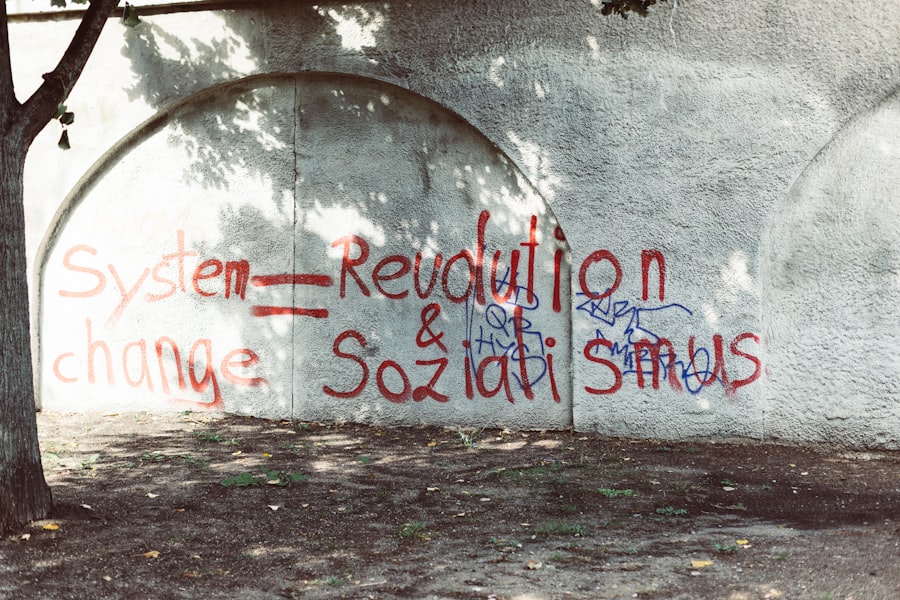
Central to Kropotkin’s philosophy is the concept of mutual aid, which he argues is a fundamental aspect of human nature. In “Memoirs of a Revolutionist,” he recounts various historical examples that illustrate how cooperation among individuals has been essential for survival and progress throughout human history. Kropotkin posits that societies thrive when individuals work together for common goals rather than competing against one another.
This perspective challenges prevailing notions of individualism and competition that dominate capitalist societies. Kropotkin’s ideas on social organization extend beyond mere theory; they are rooted in practical applications that emphasize community engagement and collective decision-making. He advocates for decentralized forms of governance that empower local communities to manage their affairs without interference from centralized authorities.
This vision aligns with contemporary movements advocating for participatory democracy and grassroots activism, highlighting Kropotkin’s relevance in discussions about social organization today.
Critique of the Russian Tsarist Regime
Kropotkin’s critique of the Russian Tsarist regime is a recurring theme throughout “Memoirs of a Revolutionist.” He vividly describes the oppressive conditions faced by the working class and peasantry under Tsar Nicholas II’s rule. The memoir provides an unflinching examination of state violence, censorship, and economic exploitation that characterized this period in Russian history. Kropotkin’s firsthand experiences with repression inform his analysis of the systemic injustices perpetuated by the autocratic government.
In addition to critiquing state power, Kropotkin also addresses the complicity of various social classes in maintaining oppressive structures. He argues that the bourgeoisie often aligned themselves with the Tsarist regime to protect their interests at the expense of the working class. This analysis underscores Kropotkin’s belief that true liberation can only be achieved through collective action against all forms of oppression, whether they arise from state authority or capitalist exploitation.
Kropotkin’s Experiences with International Revolutionary Movements
Kropotkin’s exile provided him with opportunities to engage with international revolutionary movements across Europe and beyond. He traveled extensively, meeting with fellow anarchists, socialists, and labor activists who shared his vision for societal transformation. These interactions enriched his understanding of global struggles against oppression and informed his own political philosophy.
His experiences during this period were instrumental in shaping his ideas about international solidarity among workers’ movements. Kropotkin recognized that struggles for liberation were interconnected across national boundaries; he advocated for cooperation among diverse groups fighting against imperialism, capitalism, and authoritarianism. This emphasis on internationalism remains relevant today as activists continue to forge alliances across borders in pursuit of social justice.
Legacy of Memoirs of a Revolutionist in the 21st Century
The legacy of “Memoirs of a Revolutionist” extends far beyond its initial publication; it continues to resonate with contemporary audiences grappling with issues of inequality, oppression, and state violence. As movements advocating for social justice gain momentum worldwide, Kropotkin’s insights into mutual aid and community organization offer valuable frameworks for action. His emphasis on grassroots activism serves as an inspiration for those seeking alternatives to traditional power structures.
In the 21st century, Kropotkin’s ideas have found renewed relevance within various social movements, including environmental activism, anti-capitalist protests, and efforts to combat systemic racism. The principles outlined in “Memoirs of a Revolutionist” encourage individuals to envision new possibilities for organizing society based on cooperation rather than competition. As activists draw upon Kropotkin’s work, they contribute to an ongoing dialogue about how best to achieve meaningful change in an increasingly complex world.
Reception and Impact of Memoirs of a Revolutionist
Upon its release, “Memoirs of a Revolutionist” received mixed reviews from contemporary critics; however, its impact on anarchist thought has been undeniable. The memoir has been embraced by generations of activists who view it as both an inspirational narrative and a theoretical foundation for their struggles against oppression. Its candid portrayal of Kropotkin’s life experiences resonates deeply with those who seek to understand the motivations behind revolutionary action.
The memoir has also sparked discussions within academic circles regarding its historical significance and philosophical contributions to anarchism. Scholars have examined Kropotkin’s ideas through various lenses—political theory, sociology, history—highlighting how “Memoirs of a Revolutionist” serves as a critical text for understanding not only Kropotkin himself but also broader trends within revolutionary movements throughout history.
Kropotkin’s Enduring Influence on Revolutionary Thought
Peter Kropotkin’s “Memoirs of a Revolutionist” remains an essential work within anarchist literature and revolutionary thought more broadly. Through his personal narrative, Kropotkin articulates profound insights into human nature, social organization, and the necessity for collective action against oppression. His emphasis on mutual aid continues to inspire contemporary movements seeking alternatives to hierarchical structures.
As we navigate complex social issues in today’s world—ranging from economic inequality to environmental degradation—Kropotkin’s legacy serves as both a reminder of past struggles and a guide for future action. His enduring influence on revolutionary thought underscores the importance of solidarity, cooperation, and grassroots activism in our ongoing quest for justice and liberation.
In exploring the themes of political activism and personal transformation found in Peter Kropotkin’s “Memoirs of a Revolutionist,” readers may find a related perspective in an article available on Hellread. This article delves into the broader context of revolutionary thought and its impact on modern society, offering insights that complement Kropotkin’s reflections. For those interested in further exploring these ideas, the article can be accessed through this link:


