

“Arabian Sands,” a seminal work by Wilfred Thesiger, offers an intimate glimpse into the heart of the Arabian Peninsula during the mid-20th century.
Thesiger’s narrative is steeped in rich descriptions of the landscape, the Bedouin tribes, and the intricate relationship between man and nature.
His experiences traversing the Rub’ al Khali, or the Empty Quarter, reveal not only the physical challenges of desert travel but also the spiritual and cultural dimensions of life in one of the harshest environments on Earth. The Arabian desert, with its vast stretches of sand dunes and rugged mountains, serves as both a backdrop and a character in Thesiger’s story. The author’s keen observations and vivid storytelling transport readers to a time when the Bedouin way of life was still intact, before the encroachment of modernity began to alter their traditions.
Through his eyes, we witness the beauty and brutality of the desert, a place where survival hinges on knowledge, resilience, and an understanding of the land. Thesiger’s work stands as a testament to a disappearing world, inviting readers to reflect on the complexities of cultural change and environmental stewardship.
Key Takeaways
- Wilfred Thesiger’s “Arabian Sands” provides a captivating introduction to the Arabian Desert and its people.
- Thesiger’s extensive travels and deep immersion in Bedouin culture offer a unique perspective on the desert lifestyle.
- The book vividly portrays the harsh yet stunning landscapes of the Arabian Desert, capturing its beauty and challenges.
- Thesiger’s encounters with wildlife in the desert highlight the delicate balance of life in this unforgiving environment.
- “Arabian Sands” sheds light on the challenges and dangers of desert travel, showcasing Thesiger’s resilience and determination.
The Life and Travels of Wilfred Thesiger
Wilfred Thesiger was born in 1910 in Addis Ababa, Ethiopia, to British parents, which set the stage for a life steeped in adventure and exploration. His early years were marked by a fascination with remote places and indigenous cultures, a passion that would later define his career as an explorer and writer. After being educated at Eton and later at Magdalen College, Oxford, Thesiger’s thirst for adventure led him to join the Royal Geographical Society.
His travels took him across Africa and into the heart of Arabia, where he would spend years immersing himself in Bedouin culture. Thesiger’s most notable journeys occurred between 1945 and 1950 when he undertook extensive explorations of the Arabian Peninsula. His expeditions through the Empty Quarter were not just physical challenges; they were deeply personal quests for understanding and connection.
Traveling primarily on foot or by camel, he forged bonds with Bedouin tribes, learning their customs, language, and survival techniques. His experiences were often grueling, yet they provided him with invaluable insights into a way of life that was intricately tied to the rhythms of the desert. Thesiger’s writings reflect not only his adventures but also his respect for the Bedouin people and their enduring spirit in a rapidly changing world.
The Bedouin Culture and Lifestyle
The Bedouins are traditionally nomadic Arab tribes who have inhabited the deserts of Arabia for centuries. Their culture is characterized by a deep connection to their environment, with survival skills honed over generations. Thesiger’s interactions with these tribes reveal a rich tapestry of customs, beliefs, and social structures that govern their lives.
The Bedouin way of life is centered around herding camels and goats, which provide sustenance and serve as a form of wealth. Their nomadic existence is dictated by seasonal migrations in search of water and grazing land, showcasing their profound understanding of the desert ecosystem.
Thesiger recounts numerous instances where he was welcomed into their tents, sharing meals and stories under the vast Arabian sky. This sense of community is vital for survival in such an unforgiving landscape; cooperation among tribes is essential for finding resources and navigating the challenges posed by the environment. The Bedouins’ oral traditions also play a significant role in preserving their history and values, with poetry and storytelling serving as vehicles for cultural transmission.
Through Thesiger’s eyes, readers gain insight into a world where tradition reigns supreme, even as external forces threaten to disrupt their way of life.
The Harsh and Beautiful Landscapes of the Arabian Desert
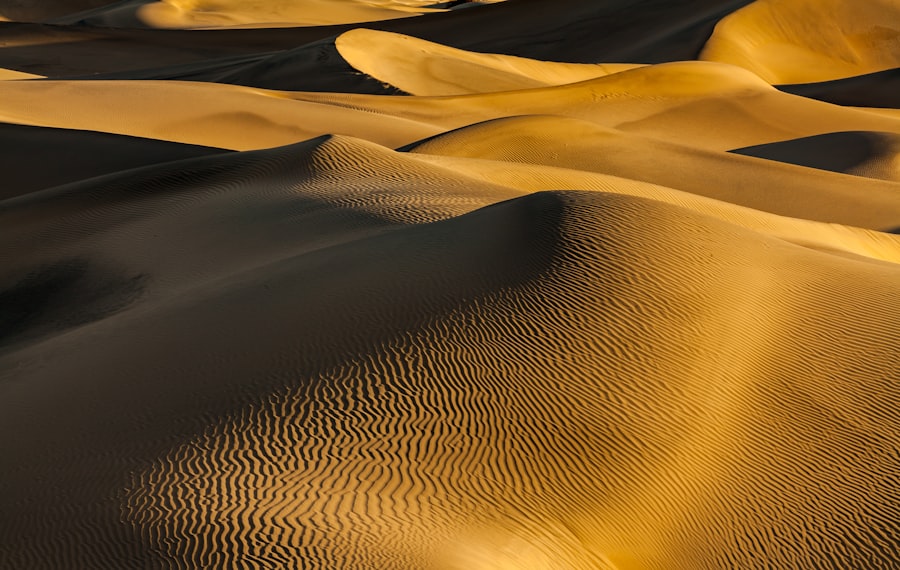
The Arabian desert is a land of stark contrasts, where beauty coexists with desolation. Thesiger’s vivid descriptions bring to life the mesmerizing landscapes that define this region. The undulating sand dunes, some reaching heights of over 250 meters, create an ever-changing panorama that captivates those who venture into their midst.
The interplay of light and shadow across the dunes at sunrise and sunset transforms the landscape into a canvas painted with hues of gold, orange, and deep red. This visual splendor is juxtaposed against the harsh realities of life in such an arid environment. Beyond the dunes lies a diverse topography that includes rocky plateaus, salt flats, and occasional oases that provide vital resources for both humans and wildlife.
Thesiger’s explorations often took him to these hidden gems, where he encountered lush vegetation sustained by underground aquifers. These oases serve as lifelines for Bedouin tribes and their livestock, illustrating the delicate balance between survival and scarcity in the desert ecosystem. The beauty of these landscapes is not merely aesthetic; it is intertwined with the very essence of Bedouin life, shaping their identity and cultural practices.
Thesiger’s Encounters with Wildlife in the Desert
In addition to its breathtaking landscapes, the Arabian desert is home to a variety of wildlife that has adapted to its extreme conditions. Thesiger’s keen observations reveal a world teeming with life beneath its seemingly barren surface. He encountered species such as gazelles, sand foxes, and various reptiles that have evolved unique survival strategies to thrive in this harsh environment.
For instance, the Arabian oryx, once on the brink of extinction due to hunting pressures, exemplifies resilience; its ability to go long periods without water makes it well-suited for desert life. Thesiger’s interactions with wildlife often served as metaphors for broader themes within his narrative. The delicate balance between predator and prey mirrors the struggles faced by Bedouin tribes as they navigate their own existence amidst changing environmental conditions.
His reflections on these encounters highlight not only the beauty of nature but also the interconnectedness of all living beings within this ecosystem. Through his eyes, readers gain an appreciation for the intricate web of life that exists in one of the world’s most unforgiving landscapes.
The Challenges and Dangers of Desert Travel
Traveling through the Arabian desert presents numerous challenges that test even the most seasoned adventurers. Thesiger’s accounts detail the physical hardships associated with navigating vast stretches of sand and rocky terrain. The extreme temperatures can swing dramatically from scorching heat during the day to frigid cold at night, demanding adaptability from those who dare to traverse this landscape.
Water scarcity is another critical concern; finding reliable sources can mean the difference between life and death in such an arid environment. Moreover, navigating without modern technology poses additional risks. Thesiger relied on traditional methods such as celestial navigation and local knowledge to guide his journeys.
This reliance on instinct and experience underscores the importance of understanding one’s surroundings—a skill that has been passed down through generations among Bedouin tribes. The dangers are not solely physical; encounters with hostile tribes or wildlife can also pose significant threats during expeditions. Thesiger’s resilience in facing these challenges speaks to his character as an explorer but also serves as a reminder of the respect one must have for nature’s power.
Thesiger’s Reflections on the Changing Desert and Bedouin Way of Life
As Thesiger journeyed through Arabia, he became acutely aware of the changes sweeping across the desert landscape and its inhabitants. The encroachment of modernity began to alter traditional Bedouin lifestyles significantly; roads were built, oil was discovered, and urbanization started to reshape once-isolated communities. Thesiger lamented these transformations, recognizing that they threatened not only the physical environment but also the cultural fabric that had defined Bedouin life for centuries.
His reflections often convey a sense of nostalgia for a simpler time when life was intimately connected to nature’s rhythms. He observed how younger generations were increasingly drawn to urban centers in search of modern conveniences, leaving behind their ancestral ways. This shift raised questions about identity and belonging in an ever-evolving world.
Thesiger’s writings serve as both a chronicle of change and a call to preserve what remains of this unique culture before it fades into history.
The Legacy of Arabian Sands
“Arabian Sands” remains an enduring work that continues to resonate with readers today. Its legacy lies not only in its vivid portrayal of desert life but also in its exploration of themes such as cultural preservation, environmental stewardship, and human resilience in the face of change. Thesiger’s ability to capture both the beauty and brutality of the Arabian desert invites reflection on our relationship with nature and our responsibility toward preserving diverse cultures.
The book has inspired countless adventurers, scholars, and conservationists who seek to understand both the physical landscape and its cultural significance. It serves as a reminder that while progress may bring convenience, it often comes at a cost—one that can lead to the erosion of traditions that have stood for millennia. As we navigate our own rapidly changing world, Thesiger’s insights into Arabian sands encourage us to appreciate our shared humanity while fostering respect for diverse ways of life that enrich our global tapestry.
Wilfred Thesiger’s “Arabian Sands” is a captivating account of his travels through the vast and unforgiving deserts of the Arabian Peninsula. For those interested in exploring similar themes of adventure and exploration, an article that complements Thesiger’s work can be found on Hellread. This article delves into the challenges and triumphs of navigating remote and inhospitable landscapes, much like Thesiger’s own experiences. To read more about these fascinating journeys, you can visit the article by clicking on this link: Exploring Remote Landscapes.
FAQs
What is the book “Arabian Sands” about?
The book “Arabian Sands” is a travelogue written by Wilfred Thesiger, detailing his experiences and journeys in the deserts of Arabia during the 1940s.
Who is Wilfred Thesiger?
Wilfred Thesiger was a British explorer and travel writer, known for his extensive travels in the Arabian Peninsula and the African continent.
When was “Arabian Sands” published?
“Arabian Sands” was first published in 1959.
What is the significance of “Arabian Sands”?
The book is considered a classic in the genre of travel literature and provides valuable insights into the culture, landscape, and people of the Arabian deserts.
What are some of the themes explored in “Arabian Sands”?
The book explores themes such as the nomadic way of life, the harshness of the desert environment, and the cultural traditions of the Bedouin tribes.
Is “Arabian Sands” based on real experiences?
Yes, “Arabian Sands” is based on Wilfred Thesiger’s real experiences and travels in the Arabian deserts.




