

The Lean Startup methodology, conceived by Eric Ries, has revolutionized the way entrepreneurs approach the development of new products and services. This innovative framework emerged from the need to create a more efficient and effective process for startups, particularly in an era where traditional business models often fell short in the face of rapid technological change and shifting consumer preferences. The Lean Startup emphasizes a systematic, scientific approach to creating and managing successful startups in an age characterized by uncertainty and volatility.
At its core, The Lean Startup is about minimizing waste and maximizing value. It challenges the conventional wisdom that startups should invest significant time and resources into developing a fully-fledged product before seeking customer feedback.
Instead, it advocates for a more agile approach, where entrepreneurs can quickly test their hypotheses and adapt based on real-world data. This shift in mindset not only accelerates the development process but also increases the likelihood of product-market fit, ultimately leading to more sustainable business models. As startups continue to emerge in various industries, the principles of The Lean Startup remain relevant, offering a framework that can be applied across diverse contexts.
Key Takeaways
- The Lean Startup is a methodology for developing businesses and products that aims to shorten product development cycles and rapidly discover if a proposed business model is viable.
- The Principles of Lean Startup include the idea of creating a minimum viable product, which is the version of a new product that allows a team to collect the maximum amount of validated learning about customers with the least effort.
- The Build-Measure-Learn feedback loop is a key component of the Lean Startup methodology, emphasizing the importance of quickly building a minimum viable product, measuring its success, and learning from the feedback to make improvements.
- Minimum Viable Product (MVP) is a version of a new product that allows a team to collect the maximum amount of validated learning about customers with the least effort.
- Validated learning and experimentation are essential to the Lean Startup methodology, as they allow businesses to test their assumptions and make data-driven decisions to drive innovation and growth.
The Principles of Lean Startup
The Lean Startup methodology is built upon several foundational principles that guide entrepreneurs in their quest for innovation. One of the most critical tenets is the idea of validated learning, which posits that startups should focus on acquiring knowledge through experimentation rather than relying solely on traditional business planning. This principle encourages entrepreneurs to test their assumptions about their business model and product offerings in real-world scenarios, allowing them to gather data that informs future decisions.
By prioritizing learning over mere execution, startups can pivot or persevere based on evidence rather than intuition. Another essential principle is the concept of iterative development. In contrast to the waterfall model of product development, which follows a linear progression from conception to launch, the Lean Startup advocates for a cyclical approach.
This involves continuously refining and improving products based on customer feedback and market insights. By embracing iteration, startups can respond more effectively to changing market conditions and customer needs, ultimately leading to a more resilient and adaptable business model. This principle underscores the importance of agility in today’s fast-paced business environment, where the ability to pivot quickly can mean the difference between success and failure.
The Build-Measure-Learn feedback loop
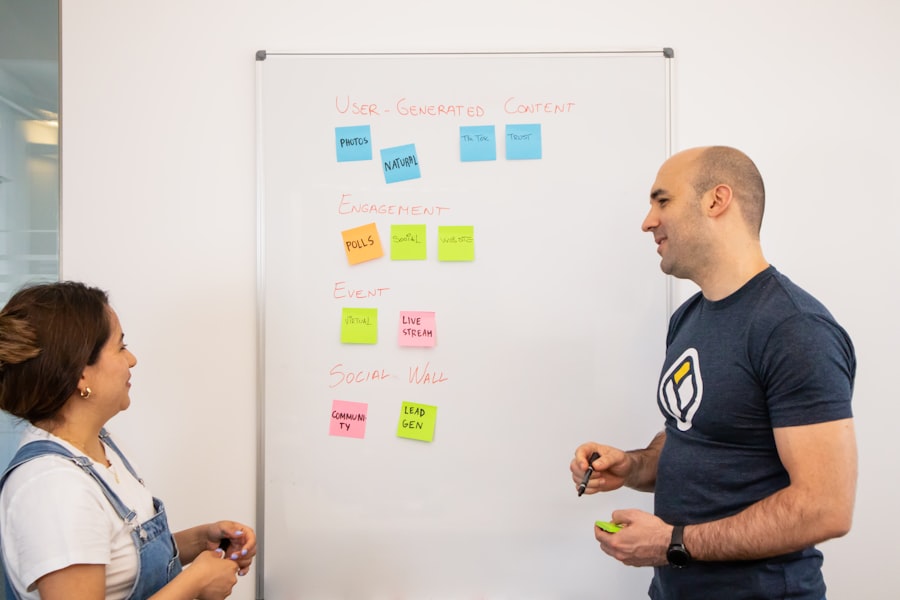
Central to the Lean Startup methodology is the Build-Measure-Learn feedback loop, a cyclical process that enables entrepreneurs to develop products in a way that is both efficient and responsive to customer needs. The first phase, “Build,” involves creating a prototype or minimum viable product (MVP) that embodies the core features necessary to test a specific hypothesis about the market or customer behavior. This initial version does not need to be perfect; rather, it should be functional enough to gather meaningful feedback from early adopters.
Once the MVP is built, the next step is “Measure.” In this phase, entrepreneurs collect data on how customers interact with the product, assessing metrics such as usage patterns, customer satisfaction, and overall engagement. This data is crucial for understanding whether the initial assumptions about the product were correct or if adjustments are needed. By employing various analytical tools and techniques, startups can gain insights into customer preferences and pain points, which can inform subsequent iterations of the product.
The final phase of the loop is “Learn.” Here, entrepreneurs analyze the data collected during the measurement phase to draw conclusions about their hypotheses. This learning process may lead to a decision to pivot—making significant changes to the product or business model—or to persevere with the current strategy if the data supports it. The Build-Measure-Learn loop emphasizes that learning is an ongoing process; each cycle provides new insights that can drive further iterations and refinements.
This continuous feedback mechanism fosters a culture of experimentation and adaptability within startups.
Minimum Viable Product (MVP)
The concept of the Minimum Viable Product (MVP) is a cornerstone of The Lean Startup methodology. An MVP is defined as the simplest version of a product that allows entrepreneurs to validate their business hypotheses with minimal resources. The goal of an MVP is not to create a perfect product but rather to test key assumptions about customer needs and preferences quickly.
By launching an MVP, startups can gather valuable feedback from early users without committing extensive time or financial resources to full-scale development. For instance, consider Dropbox’s approach when it was first launched. Instead of building a fully functional file-sharing platform with all desired features, Dropbox created a simple video demonstration that showcased how their service would work.
This video served as an MVP by allowing potential customers to understand the concept without requiring a fully developed product. The response was overwhelmingly positive, leading to significant user sign-ups even before the actual product was available. This example illustrates how an MVP can effectively gauge market interest and validate ideas before investing heavily in development.
Moreover, an MVP allows startups to engage with their target audience early in the process. By involving customers in the development journey, entrepreneurs can gain insights into what features are most valuable and what pain points need addressing. This collaborative approach not only enhances product development but also fosters a sense of community among early adopters who feel invested in shaping the final product.
Ultimately, an MVP serves as a powerful tool for reducing risk and increasing the chances of achieving product-market fit.
Validated learning and experimentation
Validated learning is a fundamental concept within The Lean Startup framework that emphasizes the importance of empirical evidence in guiding business decisions.
This approach contrasts sharply with traditional business practices that often rely on assumptions or anecdotal evidence when making strategic choices.
By prioritizing validated learning, startups can minimize uncertainty and make informed decisions based on real-world feedback. Experimentation plays a crucial role in validated learning. Startups are encouraged to design experiments that test specific hypotheses about their products or business models.
These experiments can take various forms, such as A/B testing different features or conducting surveys to gauge customer preferences. For example, an e-commerce startup might experiment with different pricing strategies by offering two versions of a product at different price points to see which one generates more sales. The results of these experiments provide concrete data that can either validate or challenge existing assumptions.
The iterative nature of validated learning means that each experiment contributes to a broader understanding of customer behavior and market dynamics. As startups gather more data through experimentation, they can refine their hypotheses and make more informed decisions about product development and marketing strategies. This continuous cycle of testing and learning fosters a culture of innovation within organizations, encouraging teams to embrace failure as an opportunity for growth rather than a setback.
Innovation accounting
Innovation accounting is another critical aspect of The Lean Startup methodology that focuses on measuring progress in a way that aligns with the unique challenges faced by startups. Traditional accounting metrics often fall short when evaluating early-stage ventures because they typically rely on financial performance indicators such as revenue or profit margins. In contrast, innovation accounting emphasizes metrics that reflect learning and growth potential rather than just financial outcomes.
One key component of innovation accounting is establishing actionable metrics that provide insights into customer behavior and engagement. These metrics should be tied directly to specific hypotheses being tested within the Build-Measure-Learn feedback loop. For instance, instead of merely tracking website traffic as a vanity metric, startups might focus on metrics such as conversion rates or customer retention rates—indicators that provide deeper insights into how well their product meets customer needs.
Additionally, innovation accounting encourages startups to set clear milestones that reflect progress toward achieving product-market fit or other strategic goals. These milestones should be based on validated learning rather than arbitrary timelines or financial projections. By establishing meaningful benchmarks for success, entrepreneurs can better assess whether their current strategies are effective or if adjustments are necessary.
This approach not only enhances accountability but also fosters a culture of continuous improvement within organizations.
The Lean Startup in practice
The application of The Lean Startup methodology has been observed across various industries and sectors, demonstrating its versatility and effectiveness in fostering innovation. One notable example is Airbnb, which initially struggled to gain traction in its early days. Instead of investing heavily in marketing or expanding its platform prematurely, Airbnb’s founders adopted a lean approach by focusing on gathering user feedback and iterating on their service offerings based on real-world experiences.
In its early stages, Airbnb operated as a simple website where hosts could list their spare rooms for rent. However, they quickly realized that many potential users were hesitant due to concerns about safety and trustworthiness. To address these issues, Airbnb implemented features such as verified user profiles and secure payment systems based on feedback from early adopters.
By continuously iterating on their platform based on user input, Airbnb was able to build trust within its community and ultimately scale into one of the largest hospitality platforms globally. Another example is Zappos, an online shoe retailer that embraced The Lean Startup principles during its formative years. Zappos initially launched with a simple website showcasing shoes from local retailers without holding any inventory themselves.
They used this MVP approach to test demand for various styles while gathering customer feedback on preferences and purchasing behavior. As they validated their business model through experimentation and learning from customers, Zappos gradually expanded its inventory and refined its operations based on insights gained from real-world interactions. These examples illustrate how The Lean Startup methodology can be effectively implemented across diverse contexts, enabling entrepreneurs to navigate uncertainty while fostering innovation through iterative development and validated learning.
Conclusion and key takeaways
The Lean Startup methodology has fundamentally transformed how entrepreneurs approach product development and business strategy in an increasingly complex landscape. By emphasizing principles such as validated learning, iterative development, and innovation accounting, this framework equips startups with tools to navigate uncertainty while maximizing their chances of success. The Build-Measure-Learn feedback loop serves as a guiding principle for continuous improvement, allowing entrepreneurs to adapt quickly based on real-world data.
The concept of Minimum Viable Products (MVPs) empowers startups to test their ideas without committing extensive resources upfront, fostering a culture of experimentation that encourages innovation. Validated learning ensures that decisions are grounded in empirical evidence rather than assumptions, while innovation accounting provides meaningful metrics for measuring progress beyond traditional financial indicators. As demonstrated by successful companies like Airbnb and Zappos, The Lean Startup methodology is not limited to tech startups; it can be applied across various industries seeking to innovate and respond effectively to market demands.
By embracing these principles, entrepreneurs can cultivate resilience in their ventures while driving sustainable growth through continuous learning and adaptation.
If you’re interested in learning more about startup culture and entrepreneurship, you may want to check out this article on


