

Marco Polo, born in 1254 in Venice, Italy, is one of the most renowned explorers in history, celebrated for his extensive travels across Asia and his detailed accounts of the cultures and lands he encountered. His journey, which began when he was just a teenager, would take him through some of the most exotic and far-flung regions of the world known to Europeans at the time. The narrative of his adventures is encapsulated in “The Travels of Marco Polo,” a book co-authored with Rustichello da Pisa while Polo was imprisoned during a conflict between Venice and Genoa.
This work not only chronicles his experiences but also serves as a bridge between East and West, introducing Europeans to the vastness and richness of Asian civilizations. Polo’s travels were not merely a quest for adventure; they were also driven by a desire for trade and economic opportunity. The Silk Road, a network of trade routes connecting Europe to Asia, was flourishing during this period, and Polo’s family had been involved in commerce for generations.
His father, Niccolò, and uncle, Maffeo, had previously traveled to the East, establishing connections that would later facilitate Marco’s own journey. The young Polo’s experiences would ultimately reshape European perceptions of Asia, influencing trade, culture, and even politics for centuries to come.
Key Takeaways
- Marco Polo was a Venetian merchant and explorer known for his extensive travels to the East in the 13th century.
- Polo’s journey from Venice to the East took him through the Middle East, Central Asia, and eventually to China, where he served under Kublai Khan.
- Polo’s accounts of the wonders of the East, including China, India, and Persia, fascinated Europeans and provided valuable insights into these distant lands.
- Polo’s interactions with the Great Khan and his experiences in the Mongol Empire are detailed in his book, “The Travels of Marco Polo.”
- Upon his return to Europe, Polo’s travels had a significant impact on European exploration, trade, and the popular imagination.
The Journey from Venice to the East
Marco Polo’s journey began in 1271 when he set out from Venice with his father and uncle. The trio traveled overland through the Middle East, navigating treacherous terrains and encountering various cultures along the way. Their route took them through regions that are now part of modern-day Turkey, Iran, and Iraq.
The journey was fraught with challenges, including harsh weather conditions, political instability, and the ever-present threat of banditry. However, the Polos were determined to reach the court of Kublai Khan, the Mongol ruler who had established a vast empire across Asia. The journey was not only a physical expedition but also an intellectual one.
Marco Polo meticulously documented his experiences, taking note of the customs, languages, and economies of the places he visited. His keen observations provided invaluable insights into the diverse cultures of the East. For instance, he described the bustling markets of Tabriz in Persia, where goods from all over the world converged, showcasing the interconnectedness of trade routes.
This attention to detail would later serve as a crucial resource for historians and scholars seeking to understand the dynamics of medieval trade and cultural exchange.
The Wonders of the East: China, India, and Persia
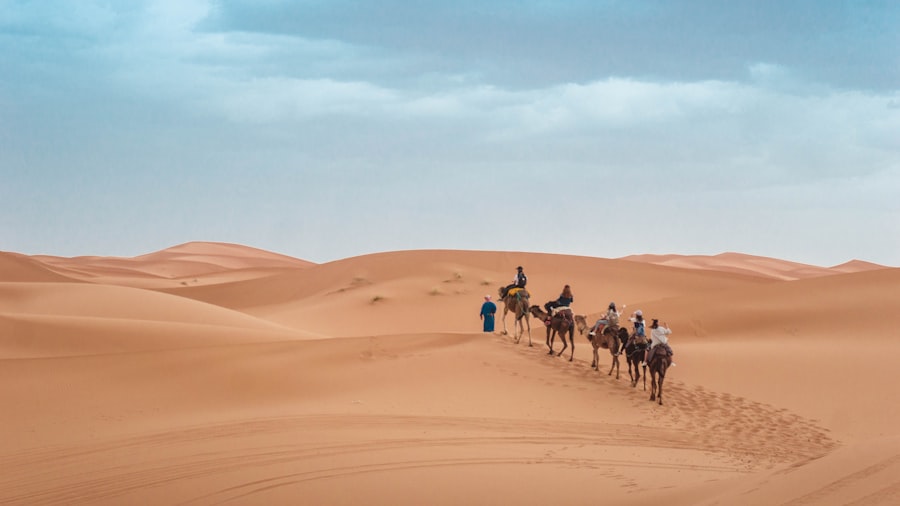
Upon reaching China, Marco Polo found himself in a land that was both astonishing and bewildering. He spent nearly two decades in the service of Kublai Khan, during which he traveled extensively throughout the empire. Polo’s accounts of China are filled with vivid descriptions of its cities, technologies, and customs.
He marveled at the grandeur of Hangzhou, which he described as one of the most beautiful cities in the world, with its intricate canals and vibrant marketplaces. His observations about Chinese society included details about paper money, coal as a fuel source, and advanced agricultural practices—elements that were largely unknown to Europeans at the time. In addition to China, Polo’s travels took him to India and Persia, where he encountered a rich tapestry of cultures and traditions.
In India, he noted the diversity of religions and languages, as well as the opulence of its courts. His descriptions of spices and textiles highlighted India’s significance as a center of trade. In Persia, he observed the influence of Islamic culture on art and architecture, noting the intricate designs that adorned mosques and palaces.
These experiences not only broadened Polo’s horizons but also provided Europeans with a glimpse into the complexities of Asian societies.
The Great Khan and the Mongol Empire
Kublai Khan emerged as a pivotal figure in Marco Polo’s narrative. As the grandson of Genghis Khan, Kublai had expanded the Mongol Empire into China and established a new dynasty known as the Yuan Dynasty. Polo’s relationship with Kublai was marked by mutual respect; he served as an envoy for the Khan on various missions throughout Asia.
This position allowed him to witness firsthand the administrative prowess of Kublai’s government and its efforts to integrate diverse cultures within its vast territories. The Mongol Empire under Kublai Khan was characterized by its remarkable tolerance for different religions and cultures. Polo noted how Kublai encouraged trade and communication across his empire, fostering an environment where ideas could flourish.
The Pax Mongolica—a period of relative peace across Eurasia—facilitated trade along the Silk Road, allowing merchants like Polo’s family to thrive. This era not only enabled economic prosperity but also led to significant cultural exchanges that would shape both Eastern and Western civilizations.
Polo’s Return to Europe and the Impact of his Travels
After nearly 25 years in Asia, Marco Polo returned to Venice in 1295. His arrival was met with skepticism; many found it hard to believe that he had traveled so far and experienced such wonders. However, Polo’s detailed accounts soon captivated audiences across Europe.
The tales of his adventures ignited imaginations and fueled curiosity about distant lands. Polo’s travels had profound implications for European trade and exploration.
His descriptions of Asia’s wealth prompted merchants to seek new trade routes to access valuable goods such as silk, spices, and precious metals. This desire for direct access to Eastern markets ultimately contributed to the Age of Exploration in the 15th century when European powers began their quests for new territories. Figures like Christopher Columbus were influenced by Polo’s accounts; Columbus himself carried a copy of “The Travels of Marco Polo” on his voyages.
Controversies and Debates Surrounding the Book

Despite its popularity, “The Travels of Marco Polo” has not been without controversy. Scholars have debated the accuracy of Polo’s accounts for centuries. Some critics argue that he exaggerated or fabricated certain aspects of his journey, particularly regarding his time in China.
For instance, some historians question whether he actually visited certain cities or if he relied on secondhand accounts from other travelers. This skepticism has led to ongoing discussions about the reliability of travel narratives from this period. Moreover, there are discrepancies between Polo’s descriptions and historical records from China.
For example, while he wrote extensively about Kublai Khan’s court and its opulence, some historians argue that his portrayal may have been romanticized or influenced by his desire to impress European audiences. Despite these debates, many scholars acknowledge that Polo’s work remains an invaluable resource for understanding medieval Eurasian trade networks and cultural exchanges.
Legacy of The Travels of Marco Polo
The legacy of “The Travels of Marco Polo” extends far beyond its immediate impact on European exploration. The book has been translated into numerous languages and has inspired countless adaptations in literature, art, and popular culture. Its influence can be seen in works ranging from Renaissance paintings to modern films that depict adventure and exploration.
The narrative has become synonymous with discovery and curiosity about distant lands. Furthermore, Polo’s travels laid the groundwork for future explorers who sought to uncover new territories and cultures. His accounts provided a framework for understanding geography and trade routes that would be essential for subsequent expeditions.
The spirit of inquiry that characterized Polo’s journey continues to resonate today as modern explorers venture into uncharted territories—both physical and intellectual—seeking to expand our understanding of the world.
Modern Perspectives on Marco Polo’s Travels
In contemporary scholarship, Marco Polo’s travels are often viewed through various lenses—historical, cultural, and even post-colonial perspectives. Modern historians emphasize the importance of contextualizing Polo’s experiences within the broader framework of medieval Eurasian interactions. They explore how his narratives reflect not only his personal experiences but also the complex dynamics between different cultures during a time of significant change.
Additionally, recent research has sought to uncover more about Polo’s life beyond his travels. Scholars have examined his family background, social status in Venice, and how these factors may have influenced his perspectives on Asia. This multifaceted approach allows for a deeper understanding of how “The Travels of Marco Polo” fits into the larger narrative of global history—a narrative that continues to evolve as new discoveries are made about cross-cultural exchanges throughout history.
In conclusion, Marco Polo’s journeys remain a testament to human curiosity and resilience in exploring unknown realms. His detailed accounts have transcended time and continue to inspire generations to seek knowledge beyond their immediate surroundings.
If you are interested in exploring more about the historical figures and their adventures, you may want to check out this article on hellread.
This website offers a variety of articles on different topics, including travel, history, and culture. One article that caught my attention is “Hello World,” which delves into the impact of globalization on our world today. It provides a thought-provoking perspective on how interconnected our world has become, much like the travels of Marco Polo described in his famous book.
FAQs
Who was Marco Polo?
Marco Polo was a Venetian merchant, explorer, and writer who traveled extensively throughout Asia in the 13th century.
What is “The Travels of Marco Polo”?
“The Travels of Marco Polo” is a book that recounts Marco Polo’s experiences and observations during his travels in Asia, particularly in China, under the Mongol Empire.
When did Marco Polo travel to Asia?
Marco Polo traveled to Asia between 1271 and 1295, spending over 20 years exploring various regions and cultures.
What did Marco Polo accomplish during his travels?
During his travels, Marco Polo became one of the first Europeans to document his experiences in Asia, providing valuable insights into the customs, geography, and trade of the region.
How did Marco Polo’s travels impact European exploration?
Marco Polo’s accounts of his travels sparked interest in Asia and inspired future explorers, such as Christopher Columbus, to seek new trade routes and expand European exploration.
Is “The Travels of Marco Polo” considered a reliable historical source?
While there is some debate about the accuracy of certain details in Marco Polo’s accounts, his writings are generally considered to be an important historical source for understanding the cultures and societies of Asia during the 13th century.




