

The New Climate War, a term popularized by climate scientist Michael Mann, encapsulates the ongoing struggle against climate change and the various forces that seek to undermine efforts to combat it. This modern conflict is not merely about rising temperatures or melting ice caps; it is a battle of narratives, ideologies, and vested interests. The stakes are incredibly high, as the future of our planet hangs in the balance.
The urgency of the climate crisis has never been more pronounced, with extreme weather events becoming increasingly common and scientific consensus on the need for immediate action solidifying. Yet, despite overwhelming evidence, a concerted effort persists to sow doubt and confusion regarding climate science. This new war is characterized by a shift in tactics from outright denial of climate change to more insidious forms of misinformation and distraction.
The fossil fuel industry, along with certain political factions, has adapted its strategies to maintain the status quo while appearing to engage with climate issues superficially. This article will explore the multifaceted dimensions of this conflict, examining the role of fossil fuel interests, the tactics employed by climate change deniers, the importance of individual action, the necessity for systemic change, and the influence of political and corporate interests in shaping climate policy. Additionally, we will highlight the power of grassroots movements that are emerging as vital players in this ongoing struggle.
Key Takeaways
- The New Climate War presents a comprehensive analysis of the tactics used by climate change deniers and the importance of individual and systemic action in addressing climate change.
- The fossil fuel industry has played a significant role in funding climate denial campaigns and obstructing climate policy, prioritizing profits over the planet’s well-being.
- Climate change deniers employ tactics such as spreading misinformation, promoting false solutions, and attacking climate scientists to sow doubt and delay meaningful action on climate change.
- Individual action, such as reducing carbon footprint and advocating for sustainable practices, is crucial in the fight against climate change, but systemic change is also necessary to address the root causes of the crisis.
- Political and corporate interests often prioritize short-term economic gains over long-term environmental sustainability, highlighting the need for policy changes and corporate accountability in addressing climate change.
The Role of Fossil Fuel Industry in Climate Denial
The fossil fuel industry has played a pivotal role in perpetuating climate denial and delaying meaningful action against climate change. Historically, companies like ExxonMobil and Chevron have invested heavily in research that casts doubt on climate science while simultaneously funding organizations that promote skepticism about human-induced climate change. This strategy has been effective in creating a narrative that questions the validity of scientific consensus, thereby allowing these companies to continue their operations without significant regulatory constraints.
For instance, internal documents from ExxonMobil revealed that the company was aware of the potential catastrophic impacts of climate change as early as the 1970s but chose to prioritize profit over planetary health. Moreover, the fossil fuel industry has utilized its substantial financial resources to influence political discourse and policy-making. Lobbying efforts have resulted in significant tax breaks and subsidies for fossil fuel companies, which further entrench their position in the energy market.
This financial clout extends to media outlets as well, where advertising dollars can shape public perception and obscure the realities of climate change. By framing climate action as economically detrimental or unnecessary, these companies have successfully stymied progress toward renewable energy solutions. The result is a landscape where misinformation thrives, complicating public understanding and hindering collective action against climate change.
The Tactics of Climate Change Deniers

Climate change deniers employ a variety of tactics to undermine public trust in climate science and divert attention from urgent action. One prevalent strategy is cherry-picking data to support their claims while ignoring the broader context provided by comprehensive scientific research. For example, deniers may highlight short-term fluctuations in temperature or isolated weather events to argue against long-term trends observed by climatologists.
This selective use of information creates a misleading narrative that can confuse the public and policymakers alike. Another tactic involves promoting false equivalencies between credible scientific voices and fringe opinions. By presenting climate scientists alongside individuals with no relevant expertise who dispute established findings, deniers create an illusion of debate where none exists.
This tactic is often amplified through social media platforms, where misinformation can spread rapidly and reach vast audiences. Additionally, some deniers resort to ad hominem attacks against scientists, questioning their motives or integrity rather than addressing the scientific evidence itself. Such tactics not only undermine trust in experts but also contribute to a polarized environment where constructive dialogue becomes increasingly difficult.
The Importance of Individual Action in the Fight Against Climate Change
While systemic change is crucial for addressing climate change effectively, individual action remains an essential component of the broader movement. Personal choices regarding energy consumption, transportation, and waste management can collectively lead to significant reductions in carbon emissions. For instance, individuals can opt for public transportation or cycling instead of driving, thereby decreasing their carbon footprint while also promoting healthier lifestyles.
Similarly, adopting energy-efficient appliances and reducing water usage can contribute to lower overall energy demand. Moreover, individual actions can serve as powerful statements that influence societal norms and expectations around sustainability. When people prioritize eco-friendly practices—such as reducing single-use plastics or supporting local organic farms—they not only reduce their environmental impact but also inspire others to follow suit.
This ripple effect can create a cultural shift toward greater environmental consciousness and responsibility. Furthermore, individuals can engage in advocacy by supporting policies that promote renewable energy and sustainable practices at local, national, and global levels. By participating in community initiatives or joining environmental organizations, individuals can amplify their impact and contribute to a collective movement for change.
The Need for Systemic Change in Addressing Climate Change
While individual actions are important, they cannot substitute for systemic change that addresses the root causes of climate change. The current economic model, heavily reliant on fossil fuels and characterized by unsustainable consumption patterns, must be restructured to prioritize environmental sustainability. Transitioning to renewable energy sources such as solar, wind, and hydroelectric power is essential for reducing greenhouse gas emissions on a large scale.
Governments must invest in infrastructure that supports clean energy technologies while phasing out subsidies for fossil fuels. Additionally, systemic change requires rethinking urban planning and transportation systems to promote sustainability. Cities must prioritize public transit options and create pedestrian-friendly environments that reduce reliance on cars.
Implementing policies that encourage green building practices can also contribute to lower emissions from residential and commercial properties. Furthermore, addressing social inequalities is crucial; marginalized communities often bear the brunt of environmental degradation and climate impacts. Ensuring that these communities have access to resources and decision-making processes is vital for creating equitable solutions that benefit all members of society.
The Role of Political and Corporate Interests in Climate Policy
Political and corporate interests significantly shape climate policy and often hinder progress toward meaningful action on climate change. Many politicians rely on campaign contributions from fossil fuel companies, creating conflicts of interest that can influence their stance on environmental regulations.
For example, during debates over climate legislation, lawmakers may downplay the urgency of addressing climate change due to pressure from industry lobbyists who fear regulatory constraints. Corporate interests also play a critical role in shaping public perception of climate issues through strategic messaging campaigns. Companies may engage in “greenwashing,” where they present themselves as environmentally friendly while continuing practices that harm the planet.
This tactic can mislead consumers into believing they are making sustainable choices when they are not. Additionally, corporations may fund research that supports their business models while disregarding studies that highlight the need for systemic change. As a result, public discourse around climate policy can become skewed toward maintaining existing power structures rather than fostering innovative solutions.
The Power of Grassroots Movements in Tackling Climate Change
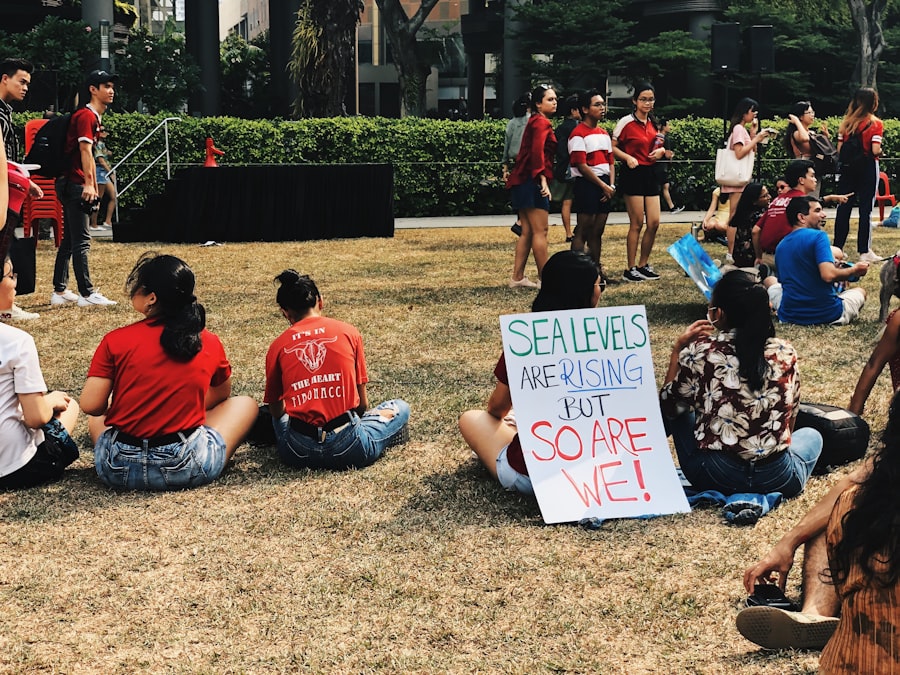
Grassroots movements have emerged as powerful forces in the fight against climate change, mobilizing communities around shared goals and demanding accountability from political leaders and corporations alike. These movements often arise from local concerns about environmental degradation or social justice issues related to climate impacts. For instance, organizations like Fridays for Future have galvanized youth activism worldwide, inspiring millions to advocate for urgent action on climate change through strikes and demonstrations.
Grassroots movements also emphasize inclusivity and intersectionality, recognizing that marginalized communities are disproportionately affected by climate change. By centering the voices of those most impacted—such as Indigenous peoples or low-income communities—these movements advocate for solutions that address both environmental sustainability and social equity. Additionally, grassroots organizations often engage in direct action campaigns that challenge corporate practices or demand policy changes at local levels.
This approach not only raises awareness but also fosters a sense of community empowerment and collective agency.
The Path Forward in the Climate War
The path forward in this new climate war requires a multifaceted approach that combines individual actions with systemic changes driven by grassroots movements and informed by scientific consensus. As we navigate this complex landscape filled with misinformation and vested interests, it is crucial to remain vigilant and committed to advocating for policies that prioritize sustainability over short-term gains. By fostering collaboration among diverse stakeholders—including scientists, activists, policymakers, and everyday citizens—we can build a more resilient future capable of addressing the challenges posed by climate change.
In this ongoing struggle, education plays a vital role in equipping individuals with the knowledge needed to make informed decisions about their actions and advocacy efforts. As awareness grows about the interconnectedness of social justice and environmental issues, we can work toward solutions that benefit both people and the planet. Ultimately, it is through collective action—rooted in solidarity and driven by a shared vision for a sustainable future—that we can hope to overcome the obstacles posed by entrenched interests and create meaningful change in our fight against climate change.
In a related article on hellread.
Mann’s book, The New Climate War. The article delves into the various strategies and tactics employed by climate change deniers and the importance of combating misinformation in order to address the pressing issue of global warming. Mann’s book serves as a valuable resource in understanding the challenges we face in the fight against climate change and the ways in which we can work towards a sustainable future.
FAQs
What is the main message of “The New Climate War” by Michael E. Mann?
The main message of “The New Climate War” is to expose the tactics used by vested interests to undermine efforts to combat climate change and to provide a roadmap for how to overcome these obstacles.
Who is Michael E. Mann?
Michael E. Mann is a prominent climate scientist and the director of the Earth System Science Center at Pennsylvania State University. He is best known for his work on reconstructions of past climate and the development of the “hockey stick graph” which shows the rapid increase in global temperatures in recent decades.
What are some of the tactics used by vested interests to undermine efforts to combat climate change?
Some of the tactics used by vested interests include spreading misinformation, promoting false solutions such as geoengineering, and engaging in “doomism” which is the idea that it is too late to do anything about climate change.
What are some of the solutions proposed in “The New Climate War”?
Some of the solutions proposed in “The New Climate War” include transitioning to renewable energy, implementing policies to reduce carbon emissions, and holding corporations and governments accountable for their role in exacerbating climate change.
Why is “The New Climate War” important?
“The New Climate War” is important because it sheds light on the tactics used to undermine efforts to combat climate change and provides a roadmap for how to overcome these obstacles. It also emphasizes the urgency of taking action to address climate change.




