
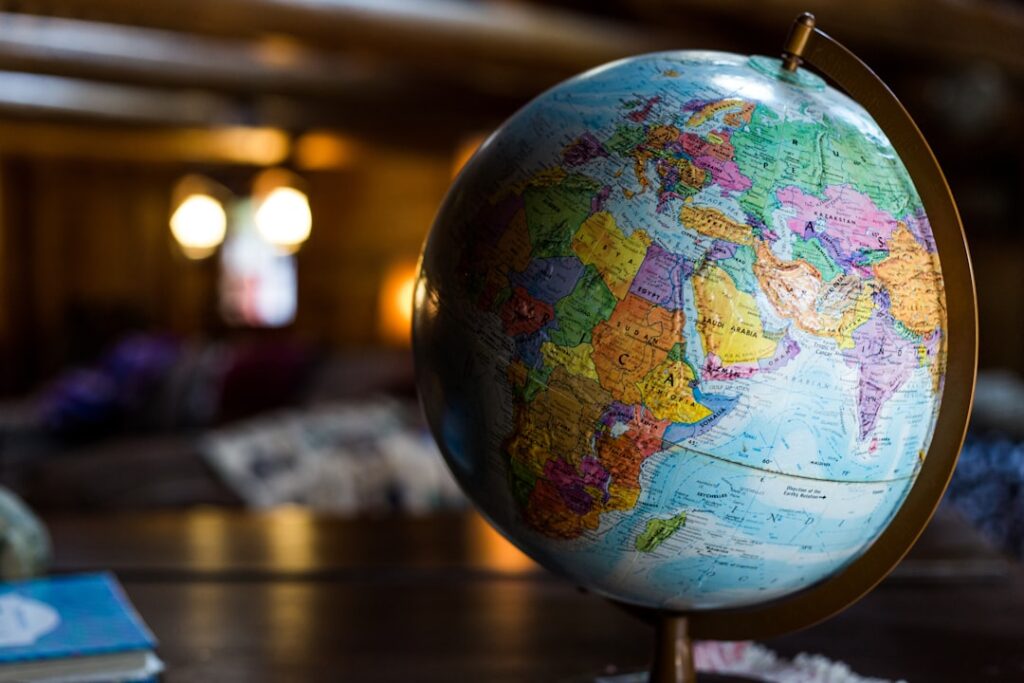
Richard Haass is a prominent figure in the realm of international relations, serving as the president of the Council on Foreign Relations (CFR) since 2003. His extensive career spans various roles, including serving as a diplomat, a government official, and an academic. Haass has been deeply involved in shaping U.S.
foreign policy, having worked in the State Department during the George H.W. Bush administration and played a significant role in the peace negotiations in Northern Ireland. His insights into global affairs are informed by both practical experience and scholarly analysis, making him a respected voice in discussions about international relations.
In his book “A World in Disarray: American Foreign Policy and the Crisis of the Old Order,” Haass articulates a compelling narrative about the current state of global affairs. He argues that the world is experiencing a profound transformation characterized by disorder and uncertainty, which poses significant challenges to American foreign policy. The book delves into the implications of this disarray for the United States and its role on the global stage.
Haass’s work is not merely an academic exercise; it is a call to action for policymakers to rethink their strategies in light of a rapidly changing international landscape.
Key Takeaways
- Richard Haass is a prominent American diplomat and author of the book “A World in Disarray.”
- The concept of a world in disarray highlights the challenges and uncertainties facing American foreign policy.
- The crisis of the old world order has led to increased global instability and the rise of new threats.
- The United States plays a crucial role in addressing the challenges of a disordered world and maintaining global stability.
- Haass proposes a more pragmatic and restrained approach to American foreign policy, focusing on diplomacy and international cooperation.
The concept of a world in disarray and its impact on American foreign policy
The World in Disarray”
The concept of a “world in disarray” aptly describes the multifaceted challenges that have arisen in recent years, including rising geopolitical tensions, economic instability, and the growing influence of non-state actors. This disarray is characterized by a departure from established norms and institutions that have historically governed international relations.
The Erosion of the Post-War Order
The post-World War II order, built on principles of cooperation and multilateralism, is increasingly being challenged by nationalism, populism, and authoritarianism. As a result, American foreign policy must navigate an environment where traditional alliances are strained, and new threats are emerging.
A Crisis of Confidence
The unpredictability of U.S. actions under different administrations has led to a crisis of confidence among partners who rely on American leadership. For instance, the withdrawal from agreements such as the Paris Accord and the Iran nuclear deal has raised questions about America’s commitment to global cooperation.
Undermining Multilateral Institutions
This shift not only affects bilateral relationships but also undermines multilateral institutions that depend on U.S. participation for legitimacy and effectiveness.
The crisis of the old world order and its implications for global stability

The old world order, characterized by a balance of power among major states and a commitment to collective security, is increasingly perceived as inadequate to address contemporary challenges. Haass argues that this crisis is not merely a temporary phase but rather a fundamental shift in how states interact with one another. The rise of emerging powers like China and India, coupled with the resurgence of Russia as a revisionist power, has disrupted the established hierarchy that once favored Western nations.
This shift has led to increased competition for influence and resources, resulting in heightened tensions in various regions. The implications for global stability are significant. As traditional power dynamics evolve, conflicts are becoming more frequent and complex.
For example, the South China Sea has emerged as a flashpoint for U.S.-China relations, with both nations asserting territorial claims that challenge international norms. Similarly, Russia’s actions in Ukraine and its influence in Eastern Europe have raised alarms about the potential for military confrontations. In this context, Haass emphasizes that the absence of a coherent strategy to navigate these challenges could lead to miscalculations and unintended consequences that threaten not only regional stability but also global peace.
The role of the United States in addressing the challenges of a disordered world
In light of these challenges, Haass contends that the United States must reassess its role in an increasingly disordered world. He argues that American foreign policy should not be solely reactive but rather proactive in shaping outcomes that align with U.S. interests and values. This requires a nuanced understanding of the complexities at play and an acknowledgment that unilateral actions may no longer suffice in addressing transnational issues such as climate change, terrorism, and pandemics. The United States has historically positioned itself as a leader in promoting democracy and human rights globally.
Engaging with adversaries through diplomacy while maintaining deterrence capabilities is essential for managing conflicts without escalating them into full-blown crises. For instance, diplomatic efforts to engage North Korea over its nuclear program illustrate how dialogue can coexist with pressure tactics to achieve desired outcomes.
Haass’s proposed solutions for American foreign policy in a world in disarray
Haass offers several concrete recommendations for recalibrating American foreign policy in response to the challenges posed by a disordered world. One key proposal is to strengthen alliances and partnerships with like-minded countries to create a united front against authoritarianism and aggression. By reinforcing existing alliances such as NATO while also forging new coalitions with emerging democracies, the United States can enhance its influence and effectiveness on the global stage.
Another critical aspect of Haass’s approach is the emphasis on multilateralism as a means to address global challenges collaboratively. He advocates for renewed engagement with international institutions such as the United Nations and World Trade Organization to ensure that they remain relevant and effective in addressing contemporary issues. This includes reforming these institutions to better reflect current geopolitical realities while also promoting shared values such as human rights and environmental sustainability.
Criticisms and controversies surrounding Haass’s analysis and recommendations

Limitations of International Institutions
Some scholars contend that Haass’s emphasis on multilateralism may overlook the limitations of international institutions in effectively managing conflicts or enforcing compliance among states. Critics argue that while cooperation is essential, it may not always be feasible given the divergent interests of states involved.
Challenges to Consensus-Building
They argue that Haass’s proposals may be overly optimistic about the potential for consensus-building in an increasingly polarized world. Additionally, there are concerns regarding the feasibility of strengthening alliances in an era marked by rising nationalism and isolationism within various countries, including the United States itself.
Uncertainty and Lack of Political Will
The unpredictability of domestic politics can undermine long-term commitments to international partnerships, leading to uncertainty about America’s reliability as an ally. Critics suggest that Haass’s recommendations may require more robust political will than currently exists within U.S.
The importance of rethinking and adapting American foreign policy in the modern era
Rethinking American foreign policy is not merely an academic exercise; it is essential for ensuring national security and promoting global stability in an era characterized by rapid change. As new challenges emerge—ranging from cyber threats to climate change—policymakers must adapt their strategies to address these issues effectively. This requires an understanding that traditional approaches may no longer suffice in navigating complex interdependencies among nations.
Moreover, adapting American foreign policy involves recognizing the importance of domestic factors that influence international relations. Public opinion, economic conditions, and social movements all play significant roles in shaping foreign policy decisions. Engaging with diverse stakeholders—including civil society organizations, businesses, and academia—can provide valuable insights into how policies can be crafted to resonate with broader societal values while also addressing pressing global challenges.
the future of American foreign policy in a world in disarray
The future of American foreign policy hinges on its ability to navigate a world marked by disarray while remaining true to its foundational principles of democracy, human rights, and international cooperation. As Richard Haass articulates in his work, this requires not only a reassessment of strategies but also a commitment to engaging with allies and adversaries alike through diplomacy and collaboration. In an era where uncertainty reigns supreme, American leadership will be tested as never before.
The choices made today will shape not only U.S. standing on the global stage but also the trajectory of international relations for generations to come. By embracing adaptability and foresight, American policymakers can work towards fostering a more stable and cooperative world order amidst the complexities of contemporary geopolitics.
In a related article titled “Hello World,” the author explores the current state of global affairs and the challenges facing American foreign policy. Drawing on themes from Richard Haass’s book “A World in Disarray: American Foreign Policy and the Crisis of the Old Order,” the article delves into the complexities of navigating a rapidly changing world. To read more about this thought-provoking analysis, check out the article here.
FAQs
What is the main focus of the article “A World in Disarray: American Foreign Policy and the Crisis of the Old Order” by Richard Haass?
The main focus of the article is on the challenges and disruptions facing the global order, particularly in the context of American foreign policy.
Who is the author of the article “A World in Disarray: American Foreign Policy and the Crisis of the Old Order”?
The author of the article is Richard Haass, who is the president of the Council on Foreign Relations and a prominent figure in the field of international relations.
What are some of the key points discussed in the article?
Some of the key points discussed in the article include the changing dynamics of global power, the impact of technological advancements on international relations, and the role of the United States in shaping the future of the global order.
What is the significance of American foreign policy in the context of the article?
The article emphasizes the significant role of American foreign policy in addressing the challenges and disruptions facing the global order, and the need for the United States to adapt to the changing international landscape.
What is the “crisis of the old order” referred to in the article?
The “crisis of the old order” refers to the challenges and disruptions facing the traditional international system, including the rise of new global powers, the impact of technological advancements, and the changing nature of global threats.




