
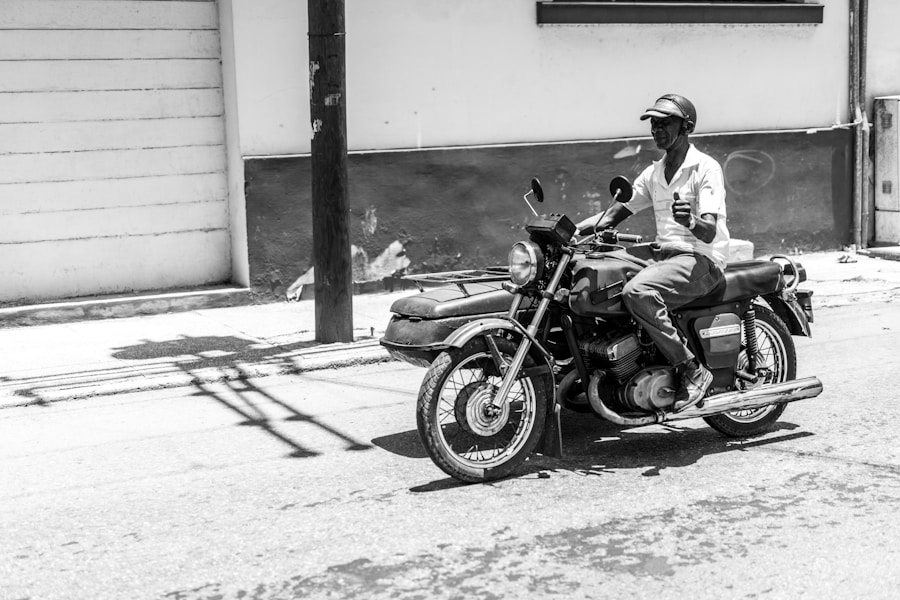
“The Motorcycle Diaries” is a compelling narrative that chronicles the transformative journey of a young Ernesto “Che” Guevara as he traverses South America on a motorcycle with his friend Alberto Granado. Written in the form of a diary, this work captures not only the physical landscapes of the continent but also the profound internal evolution of Guevara, who would later become a pivotal figure in the Cuban Revolution and a symbol of revolutionary movements worldwide. The diaries were penned during a period in the early 1950s when Guevara was still an aspiring medical student, and they provide a unique lens through which to view his burgeoning political consciousness and deepening empathy for the marginalized.
The significance of “The Motorcycle Diaries” extends beyond its autobiographical nature; it serves as a cultural artifact that reflects the socio-political climate of Latin America during the mid-20th century. The narrative is rich with observations about poverty, social injustice, and the struggles faced by indigenous populations, all of which would later inform Guevara’s revolutionary ideology. As readers delve into the pages of this work, they are invited to witness not just a road trip but a profound awakening that would shape the course of history.
Key Takeaways
- “The Motorcycle Diaries” is a memoir written by Ernesto “Che” Guevara, documenting his journey across South America with his friend Alberto Granado.
- The book provides a firsthand account of the poverty and social injustice experienced by the people of South America, shaping Guevara’s revolutionary ideology.
- Themes in “The Motorcycle Diaries” include the exploration of identity, the impact of poverty and inequality, and the search for social justice.
- The journey depicted in “The Motorcycle Diaries” had a profound impact on Che Guevara, shaping his political beliefs and leading him to become a key figure in the Cuban Revolution.
- The book is set against the backdrop of the 1950s, a time of political upheaval and social change in Latin America, providing insight into the cultural and historical context of the region.
Summary of The Motorcycle Diaries
“The Motorcycle Diaries” begins with Guevara and Granado embarking on an adventurous journey across South America in 1952. Their vehicle, a 1939 Norton 500 motorcycle named “La Poderosa” (The Powerful One), becomes a symbol of their youthful exuberance and dreams of exploration. The duo sets out from Buenos Aires, Argentina, with plans to travel through Chile, Peru, and beyond, seeking adventure and self-discovery.
As they navigate diverse landscapes—from the Andes mountains to the Amazon rainforest—their experiences are marked by encounters with various cultures and communities. Throughout their travels, Guevara meticulously documents their experiences in his diary, capturing vivid descriptions of the breathtaking scenery and the people they meet along the way. However, as the journey unfolds, it becomes increasingly clear that their adventure is not merely about exploration; it is also about witnessing the stark realities of life for many South Americans.
The duo encounters poverty-stricken communities, indigenous peoples facing oppression, and the stark contrasts between wealth and destitution. These observations profoundly impact Guevara, igniting a sense of social responsibility that would later define his political ideology.
Analysis of The Motorcycle Diaries’ Themes
One of the central themes in “The Motorcycle Diaries” is the exploration of identity and self-discovery. As Guevara travels through various regions, he grapples with his own sense of purpose and belonging. The journey serves as a catalyst for introspection, prompting him to question not only his personal aspirations but also his role in society.
This theme resonates deeply with readers, as it reflects a universal quest for meaning that transcends cultural boundaries. Another prominent theme is social justice and inequality. Throughout their travels, Guevara and Granado encounter numerous instances of exploitation and marginalization.
For instance, their visit to a leper colony in Peru reveals the harsh realities faced by those ostracized by society. Guevara’s interactions with the patients challenge him to confront his own privilege and privilege’s role in perpetuating systemic injustices. This theme is particularly poignant as it foreshadows Guevara’s later commitment to revolutionary activism and his belief in the necessity of fighting for the oppressed.
The Impact of The Motorcycle Diaries on Che Guevara’s Life
The experiences documented in “The Motorcycle Diaries” had a profound impact on Che Guevara’s life trajectory. The journey not only exposed him to the harsh realities faced by marginalized communities but also solidified his resolve to become an agent of change. The empathy he developed during this period would later inform his revolutionary activities in Cuba and beyond.
Moreover, the diary serves as a formative text that encapsulates Guevara’s evolving worldview. The reflections he penned during this journey reveal a young man grappling with complex moral questions about power, privilege, and responsibility.
These early insights laid the groundwork for his later writings and speeches, where he articulated his vision for a more equitable society. The motorcycle journey was not merely a physical expedition; it was a crucible that forged Guevara’s commitment to revolutionary ideals.
The Cultural and Historical Context of The Motorcycle Diaries
To fully appreciate “The Motorcycle Diaries,” it is essential to consider the cultural and historical context in which it was written. The early 1950s were marked by significant political upheaval across Latin America, characterized by widespread social inequality and authoritarian regimes. Many countries were grappling with issues related to colonial legacies, economic exploitation, and political repression.
In this environment, Guevara’s observations take on added significance as they reflect the struggles faced by ordinary people. Additionally, the post-World War II era saw a rise in anti-imperialist sentiments throughout Latin America. Many intellectuals and activists were inspired by global movements advocating for decolonization and social justice.
Guevara’s journey can be seen as part of this broader wave of consciousness-raising that sought to challenge oppressive systems and advocate for the rights of marginalized communities. His experiences resonate with the historical context of resistance against imperialism and exploitation, making “The Motorcycle Diaries” not just a personal narrative but also a reflection of collective struggles.
The Significance of The Motorcycle Diaries in Latin American Literature

“The Motorcycle Diaries” occupies a unique place within Latin American literature, serving as both an autobiographical account and a socio-political commentary. Its candid portrayal of Guevara’s journey resonates with themes prevalent in Latin American literary traditions, such as magical realism, social critique, and existential exploration. The diary format allows for an intimate connection between the author and reader, inviting them to engage with Guevara’s thoughts and emotions as he navigates complex landscapes—both literal and metaphorical.
Moreover, the work has inspired countless writers and artists across Latin America who seek to explore themes of identity, social justice, and resistance through their own narratives. By documenting his experiences in such a raw and honest manner, Guevara has paved the way for future generations to reflect on their own journeys within the context of broader societal struggles. “The Motorcycle Diaries” stands as a testament to the power of personal narratives in shaping collective consciousness and fostering empathy among readers.
The Legacy of The Motorcycle Diaries
The legacy of “The Motorcycle Diaries” extends far beyond its initial publication; it has become an enduring symbol of youthful idealism and revolutionary fervor. The text has inspired numerous adaptations, including films, documentaries, and theatrical productions that seek to capture Guevara’s spirit of adventure and commitment to social justice. These adaptations have introduced new audiences to Guevara’s story while also sparking discussions about his complex legacy as both a revolutionary icon and a controversial figure.
Furthermore, “The Motorcycle Diaries” continues to resonate with contemporary movements advocating for social change across Latin America and beyond. Activists often reference Guevara’s journey as a source of inspiration for their own struggles against inequality and oppression. The themes explored in the diaries—such as empathy for marginalized communities and the pursuit of justice—remain relevant today, making Guevara’s reflections timeless in their appeal.
The Reception of The Motorcycle Diaries in Popular Culture
Since its publication, “The Motorcycle Diaries” has garnered significant attention in popular culture, transcending its literary origins to become a cultural phenomenon. The 2004 film adaptation directed by Walter Salles brought renewed interest to Guevara’s story, introducing his journey to a global audience unfamiliar with his life before becoming an iconic revolutionary figure. The film captures both the beauty of South America’s landscapes and the emotional depth of Guevara’s transformation.
In addition to cinematic adaptations, “The Motorcycle Diaries” has inspired various artistic interpretations across different media—ranging from visual art to music—reflecting its enduring impact on popular culture. Che Guevara’s image has become synonymous with rebellion and resistance; T-shirts emblazoned with his likeness are worn worldwide as symbols of countercultural movements. This phenomenon illustrates how “The Motorcycle Diaries” has transcended its original context to become part of a larger narrative about youth activism, social justice, and the quest for identity in an increasingly complex world.
Through its exploration of personal growth against a backdrop of socio-political upheaval, “The Motorcycle Diaries” remains an essential text that continues to inspire individuals seeking meaning in their own lives while advocating for change in society at large.
If you enjoyed reading The Motorcycle Diaries by Ernesto Che Guevara, you may also be interested in exploring the article “Hello World” on Hellread.
This article delves into the themes of self-discovery and adventure, much like Guevara’s iconic journey across South America on his motorcycle. To read more about this captivating topic, check out the article here.
FAQs
What is The Motorcycle Diaries by Ernesto Che Guevara?
The Motorcycle Diaries is a memoir written by Ernesto “Che” Guevara, which recounts his travels across South America with his friend Alberto Granado on a motorcycle.
When was The Motorcycle Diaries published?
The Motorcycle Diaries was published in 1993, 31 years after Che Guevara’s death.
What is the significance of The Motorcycle Diaries?
The Motorcycle Diaries is significant because it provides insight into the formative experiences that shaped Che Guevara’s revolutionary ideology. It also offers a firsthand account of the social and economic injustices that Guevara witnessed during his travels.
What is the main theme of The Motorcycle Diaries?
The main themes of The Motorcycle Diaries include self-discovery, social injustice, and the impact of travel on personal and political development.
Has The Motorcycle Diaries been adapted into a film?
Yes, The Motorcycle Diaries was adapted into a film in 2004, directed by Walter Salles and starring Gael García Bernal as Che Guevara.




