
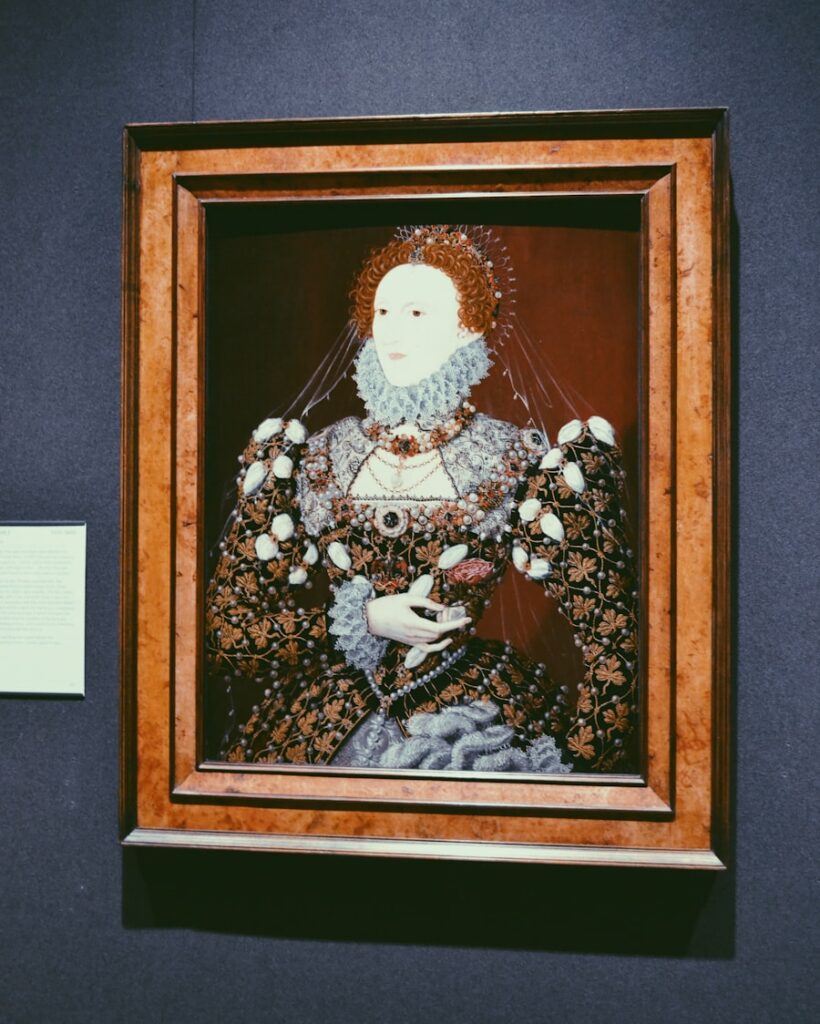
Elizabeth I, the daughter of King Henry VIII and Anne Boleyn, was born on September 7, 1533, at Greenwich Palace. Her early life was marked by the tumultuous political landscape of Tudor England, characterized by her father’s notorious marital escapades and the subsequent religious upheaval. Following her mother’s execution in 1536, Elizabeth was declared illegitimate, a status that would haunt her throughout her life.
Despite this, she received an exceptional education, which was unusual for women of her time. Her tutors included notable scholars such as Roger Ascham, who instilled in her a love for literature and languages. Elizabeth became proficient in Latin, Greek, French, and Italian, which would later serve her well in diplomatic relations.
Elizabeth’s formative years were spent in the shadow of her half-siblings, Edward VI and Mary
After the death of her father, the throne passed to Edward VI, who was a Protestant. Elizabeth’s education continued under the influence of Protestant reformers, which shaped her religious views. However, when Mary I ascended to the throne in 1553, Elizabeth faced persecution due to her Protestant faith.
She was imprisoned in the Tower of London for a time, reflecting the precarious position she held as a potential rival to Mary.
The combination of her rigorous education and personal experiences laid the groundwork for her future reign.
Key Takeaways
- Queen Elizabeth I was born in 1533 to King Henry VIII and Anne Boleyn, and received a comprehensive education in languages, history, and theology.
- Elizabeth ascended to the throne in 1558 after the death of her half-sister, Queen Mary I, and faced religious and political challenges due to her Protestant faith and gender.
- The Spanish Armada’s failed invasion in 1588 was a significant victory for Elizabeth and solidified England’s naval power.
- Elizabeth’s unmarried status led to her being known as the “Virgin Queen,” and she used this image to her advantage in diplomatic and political matters.
- Elizabeth was a great patron of the arts, supporting playwrights like William Shakespeare and fostering a flourishing cultural environment in England.
Accession to the Throne

Elizabeth I ascended to the throne on November 17, 1558, following the death of her half-sister Mary
Her accession marked a significant turning point in English history, as it heralded the beginning of the Elizabethan Era—a period characterized by cultural flourishing and relative stability after years of religious strife. Upon taking the crown, Elizabeth faced immediate challenges, including a divided nation still reeling from the Protestant Reformation and Catholic opposition. Her first act as queen was to restore Protestantism in England, which she accomplished through the Act of Supremacy and the Act of Uniformity in 1559.
These acts re-established the Church of England and set a moderate course that sought to appease both Catholics and Protestants.
Elizabeth’s accession was not merely a matter of political maneuvering; it was also a demonstration of her astute understanding of public sentiment. She presented herself as a unifying figure who could bridge the divides within her kingdom. Her famous speech at Tilbury in 1588, where she declared herself “a woman with a heart and stomach of a king,” exemplified her ability to inspire loyalty and confidence among her subjects.
This rhetoric was crucial in solidifying her position as a monarch who could lead England through turbulent times. Elizabeth’s early decisions set the tone for her reign, emphasizing diplomacy over warfare and establishing a legacy that would resonate for generations.
Religious and Political Challenges
Throughout her reign, Elizabeth I faced significant religious and political challenges that tested her leadership and resolve. The most pressing issue was the ongoing conflict between Catholics and Protestants, which had deep roots in English society. Elizabeth’s attempts to navigate this treacherous landscape were marked by a series of compromises aimed at maintaining peace while asserting her authority.
The Elizabethan Religious Settlement sought to create a middle ground that would satisfy both factions; however, it did not eliminate tensions entirely. The persistence of Catholic plots against her life, such as the Ridolfi Plot in 1571 and the Throckmorton Plot in 1583, underscored the precariousness of her position. In addition to internal strife, Elizabeth had to contend with external threats from Catholic powers, particularly Spain and France.
The rise of Catholicism on the European continent posed a direct challenge to her rule. The Pope’s excommunication of Elizabeth in 1570 further legitimized attempts by Catholic factions to overthrow her. This excommunication not only galvanized Catholic opposition within England but also encouraged foreign intervention.
Elizabeth’s deft handling of these challenges involved a combination of military preparedness and diplomatic engagement. She supported Protestant causes abroad while simultaneously seeking alliances that would bolster England’s position against its Catholic adversaries.
The Spanish Armada
One of the most defining moments of Elizabeth I’s reign was the confrontation with Spain during the Spanish Armada in 1588. This monumental event was not merely a military engagement; it represented a clash of ideologies between Protestant England and Catholic Spain. King Philip II of Spain sought to restore Catholicism in England and viewed Elizabeth as an illegitimate ruler who needed to be removed from power.
The Spanish Armada was assembled with the intent of invading England and overthrowing Elizabeth, but it ultimately became a symbol of English resilience. The English fleet, though smaller than its Spanish counterpart, was bolstered by innovative tactics and superior naval technology. Under the command of Sir Francis Drake and Lord Howard of Effingham, the English forces employed agile ships and hit-and-run tactics that capitalized on their knowledge of local waters.
The defeat of the Armada not only thwarted Philip’s plans but also solidified Elizabeth’s reputation as a formidable leader. The victory was celebrated across England and marked a turning point in naval warfare, establishing England as a rising maritime power. The defeat also had profound implications for European politics, as it shifted the balance of power away from Spain and towards England.
The Virgin Queen
Elizabeth I’s identity as “The Virgin Queen” played a crucial role in shaping her public persona and political strategy. By remaining unmarried throughout her life, she cultivated an image of independence and authority that resonated with her subjects. This choice allowed her to avoid the pitfalls associated with marriage alliances that could compromise her sovereignty or embroil England in foreign conflicts.
Instead, she positioned herself as a mother figure to her nation, fostering loyalty among her subjects who viewed her as devoted solely to England. The concept of virginity also had significant cultural implications during Elizabeth’s reign. It became intertwined with notions of purity and virtue, which were essential to her image as a ruler.
Elizabeth often used this symbolism to reinforce her authority; for instance, she famously declared that she was married to her kingdom. This rhetoric not only elevated her status but also allowed her to navigate complex political landscapes without being beholden to a husband or foreign power.
Patronage of the Arts
Elizabeth I’s reign is often celebrated as a golden age for English literature and the arts, largely due to her enthusiastic patronage. The queen recognized the power of culture as a tool for political propaganda and national identity. She supported playwrights such as William Shakespeare and Christopher Marlowe, whose works explored themes of power, identity, and human experience that resonated with contemporary audiences.
The flourishing of drama during this period can be attributed not only to Elizabeth’s patronage but also to the establishment of public theaters like The Globe. Moreover, Elizabeth’s court became a vibrant center for artistic expression, attracting musicians, poets, and artists from across Europe. The queen herself was an accomplished musician and enjoyed performances at court, which further encouraged artistic endeavors.
This cultural renaissance extended beyond theater; it encompassed advancements in music, painting, and literature that reflected the complexities of Elizabethan society. The arts served as both entertainment and a means for social commentary during a time when political tensions were high.
Legacy and Impact
The legacy of Elizabeth I is multifaceted, encompassing political stability, cultural flourishing, and advancements in national identity that have endured through centuries. Her reign is often viewed as a high point in English history; she successfully navigated religious conflicts while fostering an environment where arts and sciences could thrive. The establishment of Protestantism under her rule laid the groundwork for future religious developments in England and influenced subsequent generations’ views on governance and faith.
Furthermore, Elizabeth’s impact extended beyond England’s borders; she played a pivotal role in shaping European politics during an era marked by religious conflict and colonial expansion. Her support for exploration led to significant voyages by figures like Sir Walter Raleigh and Sir Francis Drake, paving the way for England’s eventual colonial empire. The sense of national pride that emerged during her reign contributed to a burgeoning English identity that would influence future generations.
Controversies and Debates
Despite her many accomplishments, Elizabeth I’s reign was not without controversies that continue to spark debate among historians today. One significant area of contention revolves around her handling of religious dissenters; while she sought to establish a moderate Protestant church, many Catholics faced persecution during her rule. The execution of Mary Stuart (Mary Queen of Scots) in 1587 remains one of the most debated actions taken by Elizabeth; some argue it was necessary for national security while others view it as an act driven by personal rivalry.
Additionally, Elizabeth’s foreign policy decisions have been scrutinized for their long-term consequences. Her support for Protestant causes abroad often led to entanglements that strained resources and created animosities with powerful Catholic nations like Spain and France. Critics argue that these decisions set the stage for future conflicts that would plague England long after her death in 1603.
The complexities surrounding Elizabeth’s reign reflect not only her personal choices but also the broader socio-political dynamics at play during one of history’s most transformative periods. In summary, Elizabeth I remains one of history’s most enigmatic figures whose life encapsulates themes of power, identity, and resilience against adversity. Her reign left an indelible mark on England’s cultural landscape while navigating challenges that defined an era marked by change and uncertainty.
If you enjoyed reading The Life of Elizabeth I by Alison Weir, you may also be interested in exploring more historical biographies on Hellread.com. One article that caught my attention is “Hello World,” which delves into the life of another influential figure in history. You can check it out here. Happy reading!
FAQs
Who was Elizabeth I?
Elizabeth I was the Queen of England and Ireland from 1558 until her death in 1603. She was the daughter of King Henry VIII and Anne Boleyn, and she was the last monarch of the Tudor dynasty.
What were some key events in Elizabeth I’s life?
Some key events in Elizabeth I’s life include her ascension to the throne in 1558, the defeat of the Spanish Armada in 1588, and the execution of her cousin Mary, Queen of Scots in 1587.
What was Elizabeth I’s impact on England?
Elizabeth I’s reign is often referred to as the Elizabethan era, a time of great cultural and artistic achievement in England. She also established the Church of England as the country’s official religion and navigated England through a period of political and religious turmoil.
What was Elizabeth I’s relationship with other European powers?
Elizabeth I had a complex relationship with other European powers, particularly Spain. The Spanish Armada’s defeat in 1588 was a significant event in her reign and solidified England’s status as a major naval power.
What was Elizabeth I’s legacy?
Elizabeth I is remembered as one of England’s greatest monarchs. Her reign is often seen as a time of stability and prosperity, and she is celebrated for her intelligence, political acumen, and patronage of the arts.




