

“The Obstacle Is the Way,” authored by Ryan Holiday, is a compelling exploration of how challenges and adversities can serve as catalysts for personal growth and success. Drawing inspiration from ancient Stoic philosophy, Holiday presents a framework that encourages individuals to embrace obstacles rather than shy away from them. The book is not merely a self-help guide; it is a philosophical treatise that invites readers to reconsider their relationship with difficulties.
By reframing obstacles as opportunities, Holiday provides a roadmap for navigating life’s inevitable challenges with resilience and purpose. The title itself is a powerful assertion that encapsulates the essence of the book. It suggests that the very barriers we encounter can lead us to greater achievements if we adopt the right mindset.
Holiday’s work resonates with a wide audience, from entrepreneurs and athletes to anyone facing personal struggles. Through historical anecdotes and practical insights, he illustrates how the Stoic approach can be applied to modern life, making the ancient wisdom accessible and relevant to contemporary readers.
Key Takeaways
- The Obstacle Is the Way introduces readers to the concept of using obstacles as opportunities for growth and success.
- The Stoic Philosophy behind the book emphasizes the importance of maintaining a calm and rational mindset in the face of adversity.
- Key concepts and principles discussed in the book include the idea of turning obstacles into advantages, practicing perseverance, and focusing on what is within our control.
- Examples of individuals who have applied the teachings of the book include historical figures like Thomas Edison and modern leaders like Steve Jobs.
- Practical strategies for overcoming obstacles include practicing resilience, reframing challenges as opportunities, and maintaining a positive attitude.
The Stoic Philosophy behind the book
At the heart of “The Obstacle Is the Way” lies Stoicism, an ancient Greek philosophy that emphasizes rationality, self-control, and virtue as pathways to a fulfilling life. Stoicism teaches that while we cannot control external events, we can control our responses to them. This fundamental principle is woven throughout Holiday’s narrative, encouraging readers to cultivate an inner strength that allows them to face adversity with grace and determination.
The Stoics believed that obstacles are not merely hindrances but essential components of the human experience that can lead to personal development. Holiday draws on the teachings of prominent Stoic philosophers such as Marcus Aurelius, Seneca, and Epictetus, illustrating how their insights remain relevant in today’s fast-paced world. For instance, Marcus Aurelius famously stated, “The impediment to action advances action.
What stands in the way becomes the way.” This perspective shifts the focus from viewing obstacles as negative forces to recognizing them as integral to our journey. By embracing this Stoic mindset, individuals can transform their approach to challenges, viewing them as opportunities for growth rather than insurmountable barriers.
Key concepts and principles discussed in the book

One of the central concepts in “The Obstacle Is the Way” is the idea of perception. Holiday emphasizes that our interpretation of events significantly influences our emotional responses and subsequent actions. By altering our perception of obstacles, we can change our experience of them.
This principle aligns with the Stoic belief that it is not the events themselves that disturb us but our judgments about those events. For example, when faced with a setback, instead of succumbing to despair, one can choose to view it as a chance to learn and adapt. Another key principle discussed in the book is action.
Holiday argues that taking decisive action in the face of adversity is crucial for overcoming obstacles. He highlights that many people become paralyzed by fear or uncertainty when confronted with challenges, but those who succeed are often those who act despite their fears. This notion echoes the Stoic idea of “amor fati,” or love of fate, which encourages individuals to accept their circumstances and take proactive steps toward improvement.
By focusing on what can be done rather than what cannot, individuals can navigate obstacles more effectively.
Examples of individuals who have applied the teachings of the book
Throughout “The Obstacle Is the Way,” Holiday provides numerous examples of historical figures who exemplified the principles of Stoicism in their lives. One notable figure is Thomas Edison, whose relentless pursuit of innovation led to groundbreaking inventions despite facing countless failures. Edison’s famous quote, “I have not failed.
I’ve just found 10,000 ways that won’t work,” encapsulates the essence of viewing obstacles as stepping stones rather than dead ends. His ability to persist in the face of adversity serves as a powerful reminder that setbacks can fuel creativity and determination. Another compelling example is that of Amelia Earhart, the pioneering aviator who broke barriers in a male-dominated field.
Earhart faced numerous challenges throughout her career, including skepticism from her peers and technical difficulties during flights. However, she embraced these obstacles as opportunities to prove herself and inspire others. Her tenacity and courage exemplify how individuals can harness their struggles to achieve remarkable feats.
By highlighting such figures, Holiday illustrates that the teachings of Stoicism are not merely theoretical but have been successfully applied by those who have changed the course of history.
Practical strategies for overcoming obstacles
In “The Obstacle Is the Way,” Holiday offers practical strategies for readers seeking to apply Stoic principles in their own lives. One effective strategy is journaling, which allows individuals to reflect on their thoughts and emotions regarding obstacles they face. By writing down their experiences, readers can gain clarity and perspective, helping them to reframe challenges in a more constructive light.
This practice aligns with Marcus Aurelius’s own habit of journaling, which he used as a tool for self-examination and growth. Another strategy involves cultivating mindfulness and presence in daily life. By focusing on the present moment rather than worrying about future uncertainties or dwelling on past failures, individuals can better navigate obstacles as they arise.
Mindfulness practices such as meditation or deep breathing exercises can help ground individuals in their experiences, allowing them to respond thoughtfully rather than react impulsively. This approach fosters resilience and equips individuals with the mental fortitude needed to tackle challenges head-on.
How the book can be applied to personal and professional challenges
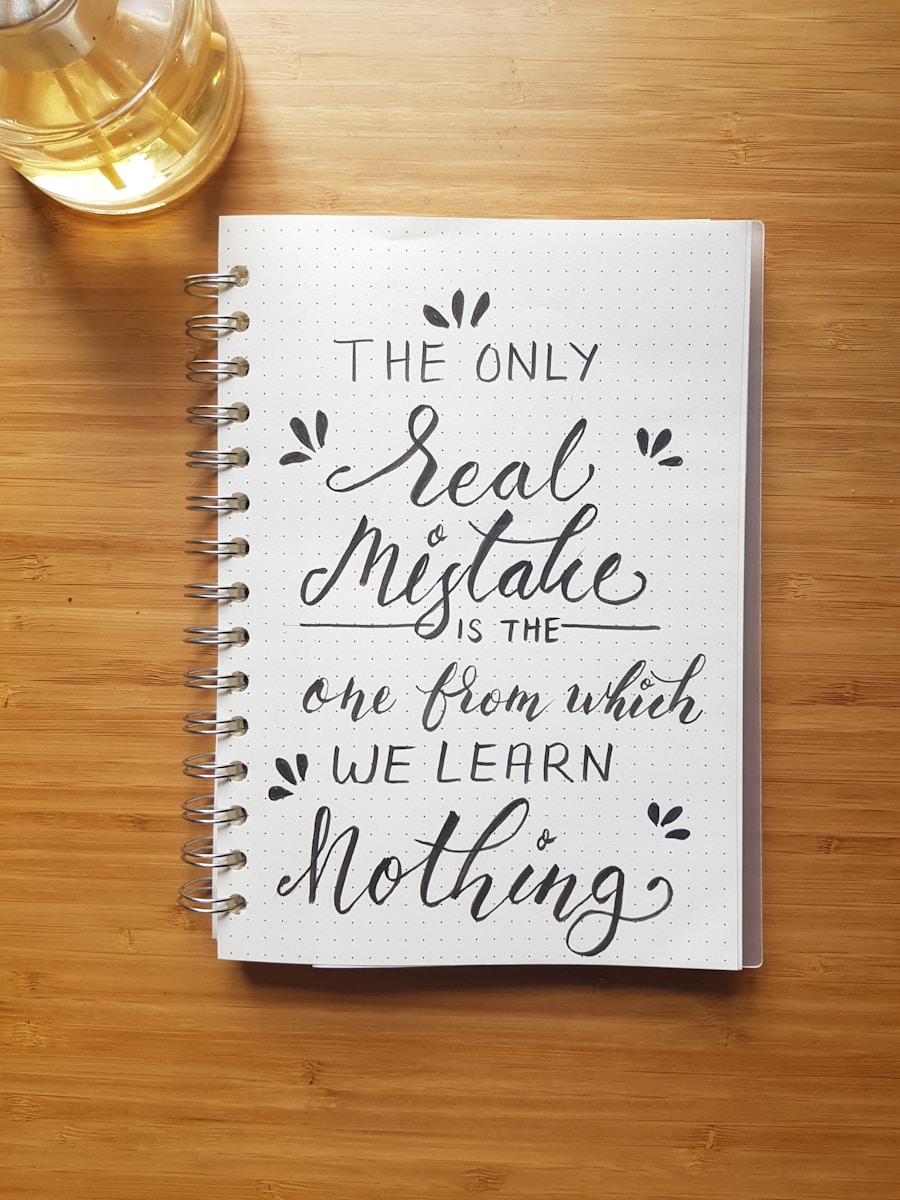
The teachings in “The Obstacle Is the Way” are applicable across various domains of life, including personal relationships and professional endeavors.
By adopting a Stoic mindset, they can learn to view these challenges as opportunities for growth and self-discovery.
For instance, someone facing a health crisis might use this experience to reevaluate their priorities and make positive lifestyle changes. In professional settings, employees often encounter obstacles such as project setbacks or workplace conflicts. By applying Holiday’s principles, they can approach these challenges with a proactive mindset.
Instead of viewing a failed project as a defeat, they can analyze what went wrong and use those insights to improve future efforts. This shift in perspective not only enhances individual resilience but also fosters a culture of innovation within organizations where challenges are seen as opportunities for learning and improvement.
Criticisms and controversies surrounding the book
Despite its popularity and positive reception among many readers, “The Obstacle Is the Way” has faced some criticisms. One common critique is that while Holiday’s interpretation of Stoicism is accessible and engaging, it may oversimplify complex philosophical concepts. Critics argue that reducing Stoicism to a series of actionable steps may dilute its depth and richness as a philosophical tradition.
Some purists contend that true Stoicism involves a more nuanced understanding of emotions and rationality than what is presented in Holiday’s work.
The idea that obstacles should be embraced at all costs may lead some individuals to overlook legitimate concerns or risks associated with certain challenges.
Critics caution against adopting an overly simplistic view that all obstacles are inherently beneficial without considering context or individual circumstances. This highlights the importance of critical engagement with philosophical texts and encourages readers to explore Stoicism in its entirety rather than relying solely on one interpretation.
Conclusion and final thoughts on The Obstacle Is the Way
“The Obstacle Is the Way” serves as a powerful reminder of the transformative potential inherent in adversity. Through its exploration of Stoic philosophy and practical strategies for overcoming challenges, Ryan Holiday invites readers to reframe their relationship with obstacles in both personal and professional contexts. While criticisms exist regarding its interpretation of Stoicism, the book’s core message resonates with many who seek resilience in an increasingly complex world.
By embracing obstacles as opportunities for growth, individuals can cultivate a mindset that empowers them to navigate life’s challenges with confidence and purpose. Whether through historical examples or practical applications, Holiday’s work encourages readers to recognize that within every obstacle lies the potential for profound personal development and achievement. As such, “The Obstacle Is the Way” remains a valuable resource for anyone seeking guidance on their journey through life’s inevitable trials and tribulations.
If you enjoyed reading The Obstacle Is the Way by Ryan Holiday, you may also be interested in checking out the article “Hello World” on hellread.com. This article may provide further insights and perspectives on overcoming obstacles and achieving success in life.
FAQs
What is the book “The Obstacle Is the Way” about?
The book “The Obstacle Is the Way” by Ryan Holiday is about the ancient philosophy of Stoicism and how it can be applied to overcome obstacles and challenges in life.
Who is the author of “The Obstacle Is the Way”?
The author of “The Obstacle Is the Way” is Ryan Holiday, a best-selling author and media strategist.
What are some key concepts discussed in “The Obstacle Is the Way”?
Some key concepts discussed in “The Obstacle Is the Way” include the idea of turning obstacles into opportunities, the importance of perseverance and resilience, and the application of Stoic principles in modern life.
How can “The Obstacle Is the Way” help readers in their personal and professional lives?
“The Obstacle Is the Way” offers practical advice and strategies for dealing with adversity, making it relevant to both personal and professional challenges. The book provides insights on how to approach obstacles with a positive mindset and turn them into advantages.
Is “The Obstacle Is the Way” based on historical or philosophical principles?
Yes, “The Obstacle Is the Way” is based on the principles of Stoicism, an ancient Greek philosophy that emphasizes self-control, resilience, and virtue. The book draws on the teachings of Stoic philosophers such as Marcus Aurelius, Seneca, and Epictetus.




