

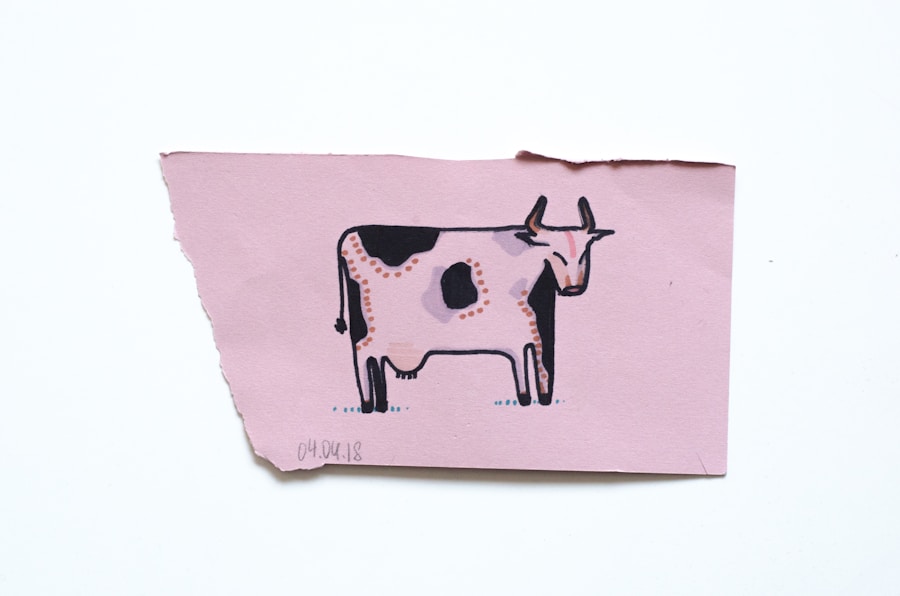
In the realm of marketing, the term “Purple Cow” has emerged as a powerful metaphor for businesses striving to stand out in an increasingly saturated marketplace. Coined by Seth Godin in his 2003 book, “Purple Cow: Transform Your Business by Being Remarkable,” the concept encapsulates the idea that in order to capture consumer attention, a product or service must be extraordinary—much like a purple cow would be in a field of ordinary brown and black cattle. This notion challenges traditional marketing strategies that rely heavily on conventional advertising methods, urging businesses to innovate and create offerings that are not just good, but remarkable.
The essence of the Purple Cow lies in its ability to disrupt the status quo. In a world where consumers are bombarded with advertisements and marketing messages at every turn, the need for differentiation has never been more critical. The Purple Cow serves as a reminder that merely being competent is no longer sufficient; businesses must strive to be exceptional.
This article delves into the intricacies of the Purple Cow concept, exploring its implementation, real-world examples, and the challenges businesses face in their quest for uniqueness.
Key Takeaways
- The concept of the Purple Cow, introduced by Seth Godin, emphasizes the importance of standing out in a crowded marketplace by being remarkable and unique.
- Implementing the Purple Cow in business involves creating products or services that are truly remarkable and worth talking about, rather than simply being “good enough.”
- Successful examples of Purple Cow marketing include companies like Apple, Tesla, and Airbnb, which have disrupted their industries with innovative and remarkable offerings.
- Challenges of standing out in a crowded marketplace include the need for constant innovation, the risk of failure, and the difficulty of maintaining a remarkable position over time.
- Innovation plays a crucial role in creating a Purple Cow, as it allows businesses to continuously develop new and remarkable offerings that capture consumers’ attention and drive demand.
The concept of the Purple Cow
At its core, the Purple Cow concept emphasizes the importance of being remarkable. Godin argues that traditional marketing approaches, which often rely on repetition and broad appeal, are becoming less effective in capturing consumer interest. Instead, he posits that businesses should focus on creating products or services that are inherently unique and memorable.
A Purple Cow is not just about being different; it’s about being so different that it compels people to talk about it, share it, and ultimately buy it. The metaphor of the Purple Cow also highlights the significance of visibility in marketing. In a landscape where countless brands vie for attention, standing out is paramount.
A purple cow would naturally draw the eye and spark curiosity, prompting people to engage with it. This principle can be applied to various aspects of business, from product design and branding to customer service and marketing strategies. The goal is to create something that not only meets consumer needs but also elicits a strong emotional response, fostering a sense of connection and loyalty.
Implementing the Purple Cow in business

To effectively implement the Purple Cow concept within a business framework, organizations must first cultivate a culture of innovation and creativity. This involves encouraging employees at all levels to think outside the box and challenge conventional wisdom. Companies can foster this environment by providing resources for brainstorming sessions, investing in research and development, and rewarding innovative ideas that align with the brand’s vision.
Moreover, businesses should conduct thorough market research to identify gaps in the market where they can introduce their Purple Cow. This requires a deep understanding of consumer behavior, preferences, and pain points. By identifying unmet needs or desires within their target audience, companies can develop products or services that not only stand out but also resonate deeply with consumers.
For instance, a company might discover that consumers are seeking eco-friendly alternatives to everyday products. By creating a sustainable product line that addresses this demand while also being visually striking or functionally superior, the company positions itself as a Purple Cow in its industry.
Examples of successful Purple Cow marketing
Numerous brands have successfully embraced the Purple Cow philosophy, transforming their marketing strategies and achieving remarkable results. One notable example is Apple, particularly with its introduction of the iPhone. When Apple launched the iPhone in 2007, it was not just another smartphone; it was a revolutionary device that combined a phone, an iPod, and an internet communicator into one sleek package.
The iPhone’s unique design, user-friendly interface, and innovative features set it apart from competitors, making it a true Purple Cow in the tech industry. Another compelling example is Dollar Shave Club, which disrupted the razor market with its subscription-based model. By offering high-quality razors at an affordable price delivered directly to consumers’ doors, Dollar Shave Club challenged the traditional retail model dominated by established brands like Gillette.
Their humorous and engaging marketing campaigns further amplified their uniqueness, making them a topic of conversation among consumers. The company’s viral video launch garnered millions of views and propelled it into mainstream recognition, showcasing how a remarkable approach can lead to significant market success.
Challenges of standing out in a crowded marketplace
While the pursuit of becoming a Purple Cow is enticing, businesses often encounter significant challenges in their quest for differentiation. One major hurdle is the inherent risk associated with innovation. Introducing a new product or service that deviates from established norms can be met with skepticism from consumers who are accustomed to traditional offerings.
Companies must navigate this uncertainty while ensuring that their innovations align with consumer expectations and preferences. Additionally, maintaining uniqueness over time can be difficult as competitors may quickly replicate successful ideas. Once a business establishes itself as a Purple Cow, it must continuously innovate to stay ahead of the curve.
This requires ongoing investment in research and development, as well as a commitment to understanding evolving consumer trends.
The role of innovation in creating a Purple Cow
The Power of Reimagination
This involves not only developing new products but also reimagining existing ones through fresh perspectives and creative thinking. For instance, companies like Tesla have redefined the automotive industry through innovative approaches to electric vehicles. By prioritizing sustainability while delivering high-performance cars with cutting-edge technology, Tesla has positioned itself as a leader in both innovation and environmental responsibility.
Innovative Marketing Strategies
Innovation extends beyond product development; it encompasses marketing strategies as well. Brands can leverage technology and data analytics to create personalized experiences for consumers, enhancing engagement and loyalty. By utilizing insights from consumer behavior, businesses can tailor their messaging and offerings to resonate more deeply with their audience, further solidifying their status as a Purple Cow.
The Ripple Effect of Innovation
Tesla’s commitment to pushing boundaries has not only attracted a loyal customer base but has also inspired other automakers to rethink their strategies in response to changing consumer demands. This ripple effect of innovation is a key characteristic of a Purple Cow, as it sets a new standard for the industry and drives progress.
The impact of the Purple Cow on consumer behavior
The presence of a Purple Cow significantly influences consumer behavior by fostering emotional connections between brands and their audiences. When consumers encounter products or services that stand out due to their uniqueness or remarkable qualities, they are more likely to engage with those brands on a deeper level. This emotional engagement often translates into brand loyalty, as consumers feel a sense of attachment to products that resonate with their values or aspirations.
Furthermore, remarkable offerings tend to generate word-of-mouth marketing more effectively than conventional products. Consumers are naturally inclined to share their experiences with others when they encounter something extraordinary. This organic promotion can lead to increased visibility and credibility for brands that successfully embody the Purple Cow philosophy.
For example, when customers rave about an innovative restaurant experience or an exceptional tech gadget, they inadvertently become brand ambassadors, amplifying the reach of the business without any additional marketing costs. Additionally, the impact of a Purple Cow extends beyond individual purchases; it can shape broader consumer trends and preferences. As remarkable products gain traction in the market, they often set new standards for quality and innovation within their respective industries.
Conclusion and key takeaways from Purple Cow
The concept of the Purple Cow serves as a powerful reminder for businesses striving for success in today’s competitive landscape. By embracing innovation and focusing on creating remarkable products or services, companies can differentiate themselves from competitors and capture consumer attention effectively. The journey toward becoming a Purple Cow requires not only creativity but also a willingness to take risks and adapt continuously.
As demonstrated by successful examples like Apple and Dollar Shave Club, standing out in a crowded marketplace is achievable through strategic thinking and an unwavering commitment to excellence. However, businesses must remain vigilant against complacency; maintaining uniqueness requires ongoing effort and responsiveness to evolving consumer needs. Ultimately, the lessons learned from the Purple Cow philosophy underscore the importance of being remarkable in every aspect of business—from product development to customer engagement—ensuring that brands not only survive but thrive in an ever-changing market landscape.
If you enjoyed reading Purple Cow by Seth Godin, you may also be interested in checking out this article on Hellread titled “Hello World.” This article delves into the concept of standing out in a crowded marketplace, similar to the ideas presented in Purple Cow. To read more about this topic, you can visit


