
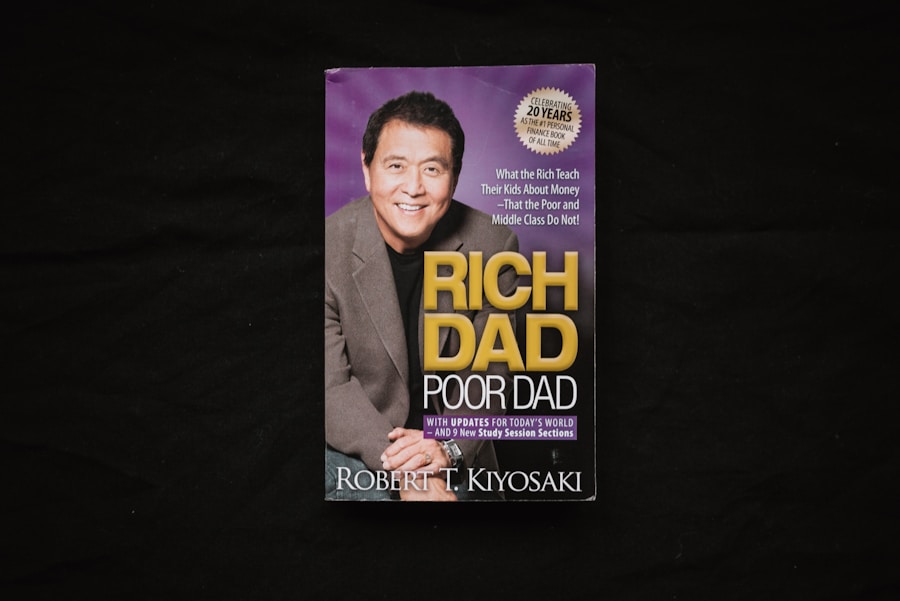
“Rich Dad Poor Dad,” authored by Robert Kiyosaki, has become a cornerstone in the realm of personal finance literature since its publication in 1997. The book is structured around Kiyosaki’s own life experiences, contrasting the financial philosophies of two father figures: his biological father, whom he refers to as “Poor Dad,” and the father of his childhood friend, “Rich Dad.” This duality serves as a narrative device to explore divergent attitudes toward money, work, and wealth accumulation. Kiyosaki’s insights challenge conventional wisdom about education and employment, advocating for a mindset that prioritizes financial literacy and entrepreneurial thinking.
The book’s appeal lies not only in its straightforward prose but also in its ability to resonate with readers from various backgrounds. Kiyosaki’s anecdotes and lessons are relatable, making complex financial concepts accessible to a broad audience. By sharing his journey from financial ignorance to enlightenment, Kiyosaki encourages readers to rethink their approach to money and wealth-building.
The principles outlined in “Rich Dad Poor Dad” have inspired countless individuals to take control of their financial destinies, making it a seminal work in the field of financial education.
Key Takeaways
- “Rich Dad Poor Dad” is a personal finance book that contrasts the financial philosophies of the author’s two father figures.
- Financial education is crucial for achieving financial success and independence.
- Assets put money in your pocket, while liabilities take money out of your pocket.
- The rich focus on acquiring assets and generating passive income, while the poor focus on working for money.
- Investing and creating passive income streams are powerful tools for building wealth and achieving financial freedom.
The Importance of Financial Education
Financial education is a recurring theme in “Rich Dad Poor Dad,” emphasizing that traditional schooling often neglects essential money management skills. Kiyosaki argues that while academic institutions focus on subjects like mathematics and science, they frequently overlook practical financial knowledge that is crucial for success in the real world. This gap in education can lead individuals to make poor financial decisions, perpetuating cycles of debt and financial insecurity.
Kiyosaki posits that understanding how money works is as vital as any formal education, if not more so. Moreover, Kiyosaki highlights the importance of seeking knowledge beyond the classroom. He encourages readers to engage with books, seminars, and mentors who can provide insights into wealth-building strategies.
By actively pursuing financial education, individuals can equip themselves with the tools necessary to navigate the complexities of personal finance. This proactive approach fosters a sense of empowerment, enabling people to make informed decisions about investments, savings, and expenditures. In essence, Kiyosaki advocates for a lifelong commitment to learning about money management as a pathway to financial independence.
The Difference Between Assets and Liabilities
One of the fundamental lessons in “Rich Dad Poor Dad” is the distinction between assets and liabilities. Kiyosaki defines assets as anything that puts money into your pocket, while liabilities are expenses that take money out of your pocket. This simple yet profound differentiation serves as a guiding principle for wealth accumulation.
Many individuals mistakenly believe that their homes are assets; however, Kiyosaki argues that unless a property generates income, it should be classified as a liability due to ongoing expenses such as mortgage payments, property taxes, and maintenance costs. Kiyosaki emphasizes the importance of building a portfolio of income-generating assets. This can include real estate investments, stocks, bonds, or businesses that produce cash flow.
By focusing on acquiring assets rather than liabilities, individuals can create a sustainable financial foundation that allows them to achieve their long-term goals. The shift in mindset from consumerism to asset accumulation is crucial for anyone seeking financial freedom. Understanding this distinction empowers individuals to make strategic choices about their finances, ultimately leading to greater wealth and security.
Kiyosaki delves into the contrasting mindsets of the rich and the poor throughout “Rich Dad Poor Dad.” He asserts that the wealthy tend to think differently about money and opportunities compared to those who struggle financially. The rich view challenges as opportunities for growth and learning, while the poor often see obstacles that deter them from pursuing their goals. This difference in perspective can significantly impact one’s financial trajectory.
Additionally, Kiyosaki highlights the importance of taking responsibility for one’s financial situation. The rich tend to take ownership of their choices and seek solutions rather than blaming external circumstances. This proactive attitude fosters resilience and adaptability in the face of setbacks.
In contrast, those with a poor mindset may feel victimized by their circumstances, leading to a cycle of inaction and stagnation. By cultivating a mindset akin to that of the wealthy—characterized by optimism, resourcefulness, and accountability—individuals can position themselves for success in their financial endeavors.
The Power of Investing and Passive Income
Investing is a central theme in “Rich Dad Poor Dad,” with Kiyosaki advocating for its role in building wealth over time. He emphasizes that working for money is not enough; instead, individuals should strive to make their money work for them through strategic investments. Kiyosaki introduces the concept of passive income—earnings derived from investments rather than active labor—as a key component of financial freedom.
This income stream allows individuals to enjoy greater flexibility and security in their lives. Kiyosaki provides various examples of investment vehicles that can generate passive income, such as rental properties, dividend-paying stocks, and business ventures. He encourages readers to educate themselves about these opportunities and take calculated risks to grow their wealth.
By prioritizing investments that yield passive income, individuals can create a self-sustaining financial ecosystem that supports their lifestyle without requiring constant effort. This shift from active income generation to passive income creation is essential for anyone seeking long-term financial stability.
Overcoming Fear and Taking Risks
Fear is often cited as one of the most significant barriers to financial success. In “Rich Dad Poor Dad,” Kiyosaki discusses how fear can paralyze individuals from taking necessary risks that could lead to wealth creation. He argues that fear of failure or loss often prevents people from pursuing opportunities that could ultimately benefit them financially.
To overcome this fear, Kiyosaki advocates for a mindset shift—viewing failure not as an endpoint but as a valuable learning experience. Kiyosaki shares personal anecdotes illustrating how he faced his fears when venturing into investments or entrepreneurial endeavors. He emphasizes that taking calculated risks is an integral part of achieving financial success.
By reframing fear as an opportunity for growth and learning, individuals can cultivate resilience and confidence in their decision-making processes. Embracing risk does not mean acting recklessly; rather, it involves assessing potential outcomes and making informed choices that align with one’s financial goals.
Applying the Lessons of Rich Dad Poor Dad in Real Life
The principles outlined in “Rich Dad Poor Dad” are not merely theoretical; they can be applied practically in everyday life. For instance, individuals can start by assessing their current financial situation—identifying assets and liabilities—and creating a plan to increase their asset base over time. This might involve setting specific savings goals or exploring investment opportunities that align with their risk tolerance and financial objectives.
Additionally, seeking out educational resources—such as books, online courses, or local workshops—can enhance one’s understanding of personal finance and investing strategies. Networking with like-minded individuals or joining investment clubs can also provide valuable insights and support on the journey toward financial independence.
Achieving Financial Freedom through the Principles of Rich Dad Poor Dad
The journey toward financial freedom is multifaceted and requires dedication, education, and a willingness to embrace change. “Rich Dad Poor Dad” serves as a powerful guide for those seeking to transform their relationship with money and build lasting wealth. By understanding the importance of financial education, differentiating between assets and liabilities, adopting a wealthy mindset, investing wisely, overcoming fear, and applying these principles in real life, individuals can pave their way toward achieving financial independence.
Kiyosaki’s insights resonate deeply with those who aspire to break free from traditional notions of work and income. The book encourages readers to take control of their financial destinies by fostering a proactive approach to learning about money management and investment strategies. Ultimately, the principles laid out in “Rich Dad Poor Dad” offer a roadmap for anyone willing to challenge their beliefs about wealth and take actionable steps toward realizing their financial dreams.
If you’re interested in personal finance and investing, you may also enjoy reading an article on Hellread.com titled “The Top 5 Books Every Investor Should Read.” This article provides a list of essential books for anyone looking to improve their financial literacy, including “Rich Dad Poor Dad” by Robert Kiyosaki. Check it out here!
FAQs
What is the book “Rich Dad Poor Dad” about?
The book “Rich Dad Poor Dad” by Robert Kiyosaki is a personal finance classic that discusses the differences in mindset and financial habits between the author’s “rich dad” and “poor dad.” It offers insights into building wealth and achieving financial independence.
Who is the author of “Rich Dad Poor Dad”?
The author of “Rich Dad Poor Dad” is Robert Kiyosaki, an entrepreneur, educator, and investor. He is also the founder of the Rich Dad Company, which provides financial education through books, seminars, and games.
What are some key lessons from “Rich Dad Poor Dad”?
Some key lessons from “Rich Dad Poor Dad” include the importance of financial education, the difference between assets and liabilities, the value of taking calculated risks, and the mindset shift required to achieve financial independence.
Is “Rich Dad Poor Dad” a bestseller?
Yes, “Rich Dad Poor Dad” has been a bestseller since its initial publication in 1997. It has sold millions of copies worldwide and has been translated into multiple languages.
What is the impact of “Rich Dad Poor Dad”?
“Rich Dad Poor Dad” has had a significant impact on the personal finance and self-help genres, inspiring readers to rethink their approach to money and wealth-building. It has also sparked discussions about financial literacy and the importance of financial education.




