

The Lean Startup methodology, pioneered by Eric Ries, has revolutionized the way entrepreneurs approach the development of new products and services. This innovative framework emerged from the need to create a more efficient and effective process for startups, particularly in an era where traditional business models often fell short in rapidly changing markets. The Lean Startup emphasizes a scientific approach to building businesses, focusing on minimizing waste and maximizing learning through iterative cycles of development.
By applying principles derived from lean manufacturing and agile development, startups can navigate uncertainty with greater agility and responsiveness. At its core, The Lean Startup is about understanding customer needs and validating ideas before committing significant resources. This approach is particularly relevant in today’s fast-paced business environment, where consumer preferences can shift dramatically overnight.
By prioritizing experimentation and feedback, entrepreneurs can avoid the pitfalls of building products that do not resonate with their target audience. The methodology encourages a culture of continuous improvement, where teams are empowered to pivot or persevere based on real-world data rather than assumptions or gut feelings.
Key Takeaways
- The Lean Startup is a methodology for developing businesses and products that aims to shorten product development cycles and rapidly discover if a proposed business model is viable.
- The principles of The Lean Startup include creating a minimum viable product, testing assumptions, and iterating based on customer feedback.
- The Build-Measure-Learn feedback loop is a key concept in The Lean Startup, where a company builds a minimum viable product, measures its success, and learns from the data to make improvements.
- Validated learning and minimum viable product are essential components of The Lean Startup, as they help businesses to test their assumptions and gather real-world data to make informed decisions.
- Innovation accounting is a way to measure progress in a Lean Startup by focusing on the actionable metrics that demonstrate how effectively a company is learning.
The Principles of The Lean Startup
The Lean Startup is built upon several foundational principles that guide entrepreneurs in their quest for sustainable business models. One of the most critical tenets is the idea of validated learning, which posits that startups should focus on acquiring knowledge through experimentation rather than relying solely on traditional business planning methods. This principle encourages entrepreneurs to test their hypotheses about customer needs and market demand through real-world experiments, allowing them to make informed decisions based on empirical evidence.
Another key principle is the concept of innovation accounting, which provides a framework for measuring progress in a startup environment.
Innovation accounting allows entrepreneurs to track their learning and growth through actionable metrics that reflect their progress toward achieving product-market fit.
This principle emphasizes the importance of setting clear goals and using data to assess whether a startup is moving in the right direction.
The Build-Measure-Learn Feedback Loop
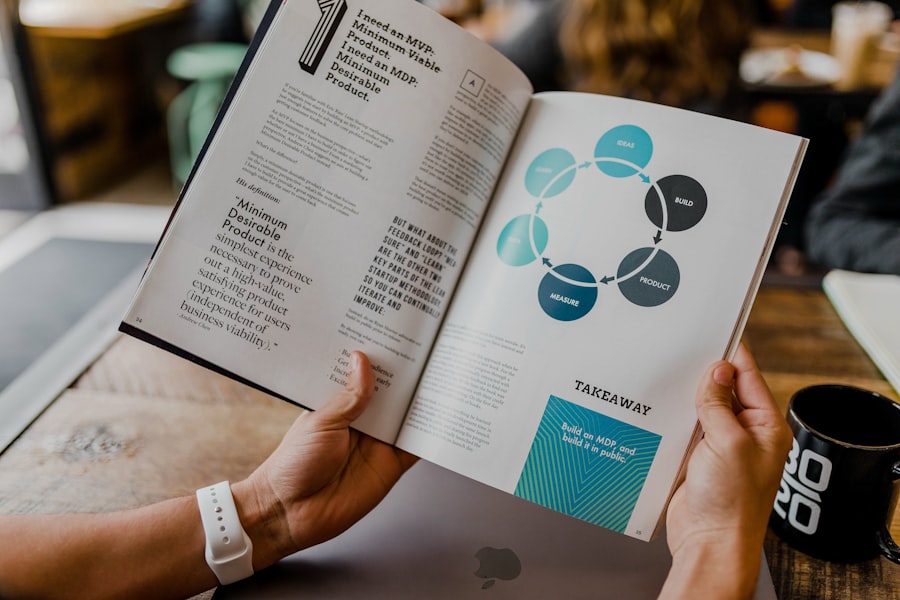
Central to The Lean Startup methodology is the Build-Measure-Learn feedback loop, a cyclical process that enables startups to iterate quickly and efficiently. The first phase, “Build,” involves creating a Minimum Viable Product (MVP) that embodies the core features necessary to test a specific hypothesis about customer needs. This MVP should be developed with speed and efficiency in mind, allowing entrepreneurs to gather feedback without investing excessive time or resources.
Once the MVP is built, the next step is “Measure.” In this phase, startups collect data on how customers interact with the product, focusing on key performance indicators that align with their hypotheses. This data collection can take various forms, including user surveys, analytics tools, and direct customer feedback. The goal is to gain insights into customer behavior and preferences, which will inform the next phase of the loop.
Finally, the “Learn” phase involves analyzing the data collected during the measurement stage to determine whether the initial hypotheses were validated or disproven. Based on these insights, entrepreneurs can decide whether to pivot—making a fundamental change to their product or strategy—or persevere with their current approach. This iterative process fosters a culture of experimentation and adaptability, enabling startups to respond effectively to market demands.
Validated Learning and Minimum Viable Product
Validated learning is a cornerstone of The Lean Startup methodology, emphasizing the importance of acquiring knowledge through systematic experimentation. This concept challenges traditional notions of business planning by advocating for a more dynamic approach to learning about customers and their needs. Instead of relying on extensive market research or lengthy business plans, validated learning encourages entrepreneurs to engage directly with their target audience through MVPs.
The Minimum Viable Product serves as a practical application of validated learning. An MVP is not merely a stripped-down version of a product; it is a carefully designed tool for testing specific hypotheses about customer behavior. For instance, Dropbox famously launched with a simple video demonstrating its file-sharing capabilities before developing a fully functional product.
This approach allowed them to gauge interest and gather feedback from potential users without investing heavily in development upfront. By focusing on validated learning through MVPs, startups can quickly identify what resonates with customers and what does not. This process reduces the risk of building products that fail to meet market demands and allows entrepreneurs to iterate based on real-world feedback.
As a result, validated learning becomes an essential mechanism for driving innovation and ensuring that products are aligned with customer needs.
Innovation Accounting
Innovation accounting is a critical aspect of The Lean Startup framework that addresses the unique challenges startups face in measuring progress. Traditional financial metrics often fall short in capturing the nuances of early-stage ventures, where uncertainty and experimentation are prevalent. Innovation accounting provides a structured approach to evaluating progress by focusing on actionable metrics that reflect learning and growth.
One of the key components of innovation accounting is establishing baseline metrics that serve as benchmarks for future performance. Startups can track metrics such as customer acquisition cost, retention rates, and engagement levels to assess whether their efforts are yielding positive results. By setting clear goals and measuring progress against these benchmarks, entrepreneurs can make informed decisions about whether to pivot or persevere.
Moreover, innovation accounting encourages startups to adopt a mindset of continuous improvement. By regularly reviewing their metrics and adjusting their strategies based on data-driven insights, entrepreneurs can refine their approaches and enhance their chances of success. This iterative process fosters accountability within teams and ensures that every decision is grounded in empirical evidence rather than assumptions.
The Lean Startup in Practice

Implementing The Lean Startup methodology in practice requires a shift in mindset and organizational culture. Companies that embrace this approach often find themselves better equipped to navigate uncertainty and respond to changing market conditions. A notable example is Airbnb, which initially struggled to gain traction in its early days.
By adopting lean principles, the founders focused on gathering feedback from users and iterating on their platform based on real-world insights. Airbnb’s journey exemplifies how The Lean Startup methodology can lead to transformative outcomes. Initially starting as a simple platform for renting air mattresses in their apartment, the founders learned from user interactions and gradually expanded their offerings based on customer preferences.
By continuously refining their product based on feedback, they were able to scale rapidly and establish themselves as a leader in the hospitality industry. Another example is Zappos, an online shoe retailer that embraced lean principles from its inception. Rather than investing heavily in inventory upfront, Zappos focused on creating an exceptional customer experience by testing various approaches to product offerings and fulfillment processes.
Through iterative experimentation and a commitment to customer feedback, Zappos was able to build a loyal customer base and achieve significant growth.
Overcoming Challenges with The Lean Startup
While The Lean Startup methodology offers numerous advantages, it is not without its challenges. One common obstacle entrepreneurs face is the temptation to rush through the Build-Measure-Learn feedback loop without fully understanding customer needs.
To overcome this challenge, startups must prioritize thorough customer engagement during the measurement phase, ensuring they gather meaningful insights before making significant changes. Another challenge lies in fostering a culture of experimentation within organizations. Many teams may be accustomed to traditional approaches that prioritize stability over innovation.
To address this issue, leaders must create an environment where failure is viewed as an opportunity for learning rather than a setback. Encouraging open communication and collaboration among team members can help cultivate a mindset that embraces experimentation and values data-driven decision-making. Additionally, startups may encounter resistance when attempting to pivot based on feedback received during the learning phase.
Stakeholders may have invested significant time and resources into a particular direction, making it difficult to shift gears even when data suggests a change is necessary. To navigate this challenge effectively, entrepreneurs should communicate transparently about the rationale behind pivots and involve stakeholders in the decision-making process.
Conclusion and Key Takeaways from The Lean Startup
The Lean Startup methodology has emerged as a powerful framework for entrepreneurs seeking to navigate the complexities of building successful businesses in uncertain environments. By emphasizing validated learning, innovation accounting, and iterative experimentation through the Build-Measure-Learn feedback loop, startups can minimize waste and maximize their chances of success. Key takeaways from The Lean Startup include the importance of engaging directly with customers through MVPs to validate assumptions about market needs.
Additionally, establishing actionable metrics through innovation accounting allows entrepreneurs to measure progress effectively while fostering a culture of continuous improvement within their organizations. Ultimately, The Lean Startup methodology empowers entrepreneurs to embrace uncertainty as an inherent part of the innovation process. By adopting this mindset and leveraging its principles, startups can position themselves for sustainable growth while remaining responsive to evolving market dynamics.
If you’re interested in learning more about startup strategies and innovation, you may want to check out the article “Hello World: A Beginner’s Guide to Entrepreneurship” on Hellread.com. This article provides valuable insights and tips for aspiring entrepreneurs looking to navigate the world of business. It complements the principles discussed in Eric Ries’ book The Lean Startup, offering additional perspectives on how to build a successful startup. You can read the article here.
FAQs
What is The Lean Startup by Eric Ries?
The Lean Startup is a book written by Eric Ries that outlines a methodology for developing businesses and products. It focuses on shortening product development cycles and rapidly discovering if a proposed business model is viable.
What are the key principles of The Lean Startup?
The key principles of The Lean Startup include the concept of validated learning, the build-measure-learn feedback loop, and the idea of a minimum viable product (MVP). It also emphasizes the importance of continuous innovation and a focus on customer feedback.
How does The Lean Startup methodology differ from traditional business approaches?
The Lean Startup methodology differs from traditional business approaches by prioritizing experimentation over elaborate planning, customer feedback over intuition, and iterative design over traditional “big design up front” development.
Who is the target audience for The Lean Startup?
The Lean Startup is primarily targeted at entrepreneurs, startup companies, and product development teams. However, its principles and methodologies can also be applied to established companies looking to foster a culture of innovation and agility.
What are some of the key takeaways from The Lean Startup?
Some key takeaways from The Lean Startup include the importance of testing assumptions, the value of rapid iteration, the need for continuous learning, and the emphasis on creating a sustainable business model through validated learning.




