

Data analytics is the systematic computational analysis of data, a process that transforms raw data into meaningful insights. It encompasses a variety of techniques and tools that allow organizations to interpret complex datasets, identify patterns, and make informed decisions based on empirical evidence. At its core, data analytics involves collecting data, cleaning it to remove inaccuracies, and applying statistical methods to extract valuable information.
This process can be applied across various domains, including business, healthcare, finance, and social sciences, making it a versatile and essential discipline in today’s data-driven world. The field of data analytics can be divided into several categories, including descriptive analytics, diagnostic analytics, predictive analytics, and prescriptive analytics. Descriptive analytics focuses on summarizing historical data to understand what has happened in the past.
Diagnostic analytics goes a step further by examining the reasons behind past outcomes. Predictive analytics uses statistical models and machine learning techniques to forecast future events based on historical data. Finally, prescriptive analytics provides recommendations for actions based on the analysis of data, helping organizations optimize their strategies and operations.
Key Takeaways
- Data analytics is the process of analyzing, interpreting, and visualizing data to uncover valuable insights and make informed business decisions.
- Data analytics is important because it helps businesses gain a competitive edge, improve operational efficiency, and better understand customer behavior.
- To get started with data analytics, one can begin by learning basic statistical concepts, familiarizing oneself with data visualization tools, and gaining proficiency in programming languages such as Python and R.
- Common tools and techniques for data analytics include SQL for data querying, Excel for data manipulation, and machine learning algorithms for predictive analysis.
- Common challenges in data analytics include data quality issues, privacy concerns, and the need for skilled professionals to interpret and communicate insights effectively.
The importance of Data Analytics
The significance of data analytics cannot be overstated in an era where data is generated at an unprecedented rate. Organizations that harness the power of data analytics can gain a competitive edge by making informed decisions that are backed by empirical evidence rather than intuition alone.
In healthcare, data analytics can help identify trends in patient outcomes, enabling providers to improve treatment protocols and enhance patient care. Moreover, data analytics plays a crucial role in risk management. By analyzing historical data and identifying potential risks, organizations can develop strategies to mitigate those risks before they materialize.
For example, financial institutions utilize data analytics to detect fraudulent transactions by analyzing patterns in transaction data. This proactive approach not only protects the organization’s assets but also enhances customer trust and confidence in their services.
How to get started with Data Analytics
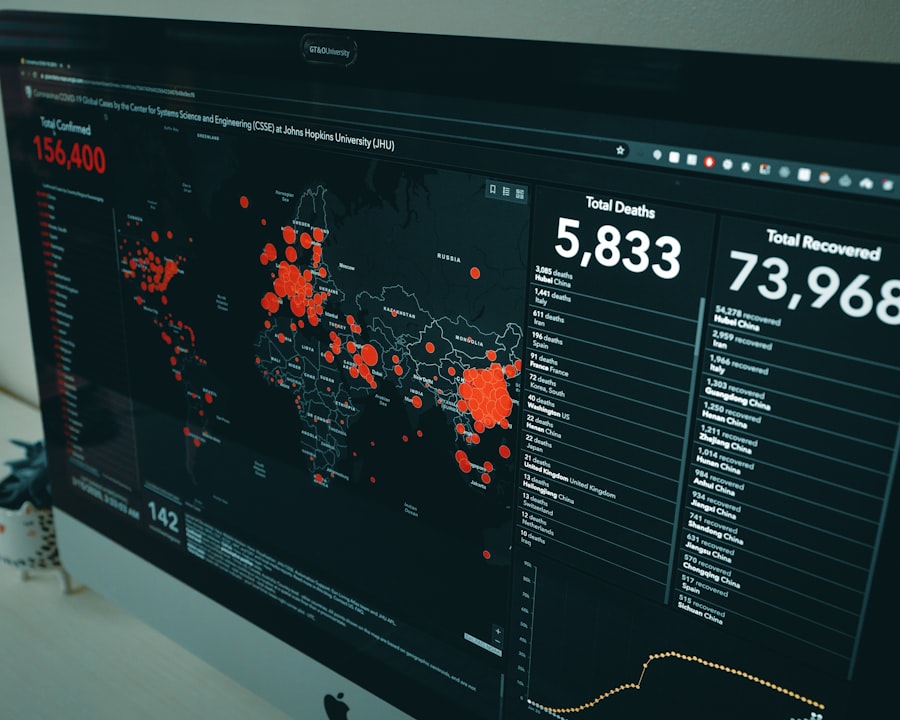
Embarking on a journey into data analytics requires a structured approach that begins with understanding the fundamental concepts and terminologies associated with the field. Aspiring data analysts should start by familiarizing themselves with basic statistics and probability theory, as these are foundational elements that underpin most analytical techniques. Online courses, textbooks, and tutorials can provide a solid grounding in these subjects.
Additionally, learning programming languages such as Python or R is essential, as they are widely used for data manipulation and analysis. Once the foundational knowledge is established, individuals should focus on practical experience by working on real-world projects. This could involve analyzing publicly available datasets or participating in online competitions such as those hosted by Kaggle.
Engaging in hands-on projects not only reinforces theoretical knowledge but also helps build a portfolio that showcases analytical skills to potential employers. Networking with professionals in the field through forums or local meetups can also provide valuable insights and mentorship opportunities.
Tools and techniques for Data Analytics
The landscape of data analytics is rich with tools and techniques designed to facilitate the analysis process. Popular programming languages like Python and R offer extensive libraries for data manipulation, statistical analysis, and visualization. For instance, Python’s Pandas library is widely used for data cleaning and preparation, while Matplotlib and Seaborn are popular for creating informative visualizations.
R, on the other hand, is favored for its statistical capabilities and has numerous packages like ggplot2 for advanced graphics. In addition to programming languages, there are several specialized software tools that cater to different aspects of data analytics. Tableau and Power BI are leading business intelligence tools that allow users to create interactive dashboards and visualizations without extensive coding knowledge.
These tools enable organizations to present their findings in a visually appealing manner, making it easier for stakeholders to grasp complex insights quickly.
Common challenges in Data Analytics
Despite its many advantages, data analytics is not without its challenges. One of the most significant hurdles is dealing with data quality issues. Inaccurate or incomplete data can lead to misleading conclusions and poor decision-making.
Organizations often struggle with cleaning and preprocessing their datasets to ensure accuracy and reliability. This process can be time-consuming and requires a keen eye for detail to identify anomalies or inconsistencies within the data. Another challenge lies in the interpretation of results.
Data analysts must not only analyze the data but also communicate their findings effectively to stakeholders who may not have a technical background. This requires a blend of analytical skills and communication prowess to translate complex insights into actionable recommendations. Additionally, as organizations increasingly rely on automated systems for decision-making, there is a growing concern about the ethical implications of using algorithms that may inadvertently perpetuate biases present in historical data.
Real-life applications of Data Analytics

Data analytics has found applications across various industries, demonstrating its versatility and impact on modern society. In retail, companies like Amazon leverage data analytics to personalize shopping experiences for customers by analyzing browsing history and purchase patterns. This targeted approach not only enhances customer satisfaction but also drives sales by recommending products that align with individual preferences.
In the realm of healthcare, predictive analytics is transforming patient care by enabling providers to anticipate health issues before they arise. For example, hospitals use data analytics to identify patients at risk of readmission based on historical health records and demographic information. By implementing preventive measures tailored to these high-risk patients, healthcare providers can improve outcomes while reducing costs associated with unnecessary hospitalizations.
Future trends in Data Analytics
As technology continues to evolve, so too does the field of data analytics. One notable trend is the increasing integration of artificial intelligence (AI) and machine learning (ML) into analytical processes. These technologies enable organizations to automate complex analyses and uncover insights from vast datasets more efficiently than traditional methods allow.
For instance, AI algorithms can identify patterns in consumer behavior that may not be immediately apparent through manual analysis. Another emerging trend is the growing emphasis on real-time analytics. As businesses seek to respond swiftly to market changes and customer demands, the ability to analyze data in real-time becomes paramount.
Technologies such as stream processing allow organizations to analyze incoming data streams instantly, facilitating timely decision-making that can significantly impact operational efficiency and customer satisfaction.
Resources for further learning about Data Analytics
For those looking to deepen their understanding of data analytics, numerous resources are available across various formats. Online platforms like Coursera, edX, and Udacity offer courses ranging from beginner to advanced levels taught by industry experts and academic institutions. These courses often include hands-on projects that provide practical experience alongside theoretical knowledge.
Books also serve as valuable resources for learning about data analytics. Titles such as “Data Science for Business” by Foster Provost and Tom Fawcett provide insights into how analytical techniques can be applied in real-world business scenarios. Additionally, engaging with online communities such as Stack Overflow or Reddit’s r/datascience can facilitate knowledge sharing among peers and provide answers to specific questions encountered during the learning process.
In conclusion, the field of data analytics is vast and continually evolving, offering numerous opportunities for individuals and organizations alike to harness the power of data for informed decision-making and strategic advantage. By understanding its principles, embracing its tools, and navigating its challenges, one can unlock the potential that lies within the ever-growing world of data.
If you are interested in learning more about data analytics, you may also want to check out the article “Hello World” on Hellread.com. This article provides a beginner-friendly introduction to programming and computer science concepts, which are essential for understanding data analytics. You can read the article here.
FAQs
What is data analytics?
Data analytics is the process of examining data sets in order to draw conclusions about the information they contain. It involves the use of various tools and techniques to analyze, interpret, and present data in a meaningful way.
Why is data analytics important?
Data analytics is important because it helps organizations make more informed business decisions, identify trends and patterns, and gain insights into customer behavior. It can also be used to improve operational efficiency and drive innovation.
What are the different types of data analytics?
There are three main types of data analytics: descriptive analytics, which focuses on summarizing historical data; predictive analytics, which uses data to make predictions about future outcomes; and prescriptive analytics, which recommends actions based on the insights gained from data analysis.
What are the key steps in the data analytics process?
The key steps in the data analytics process include defining the problem, collecting and preparing the data, analyzing the data using various techniques and tools, interpreting the results, and presenting the findings to stakeholders.
What are some common tools and technologies used in data analytics?
Common tools and technologies used in data analytics include programming languages such as Python and R, data visualization tools like Tableau and Power BI, and machine learning algorithms for predictive analytics. Database management systems like SQL are also commonly used for data storage and retrieval.




