
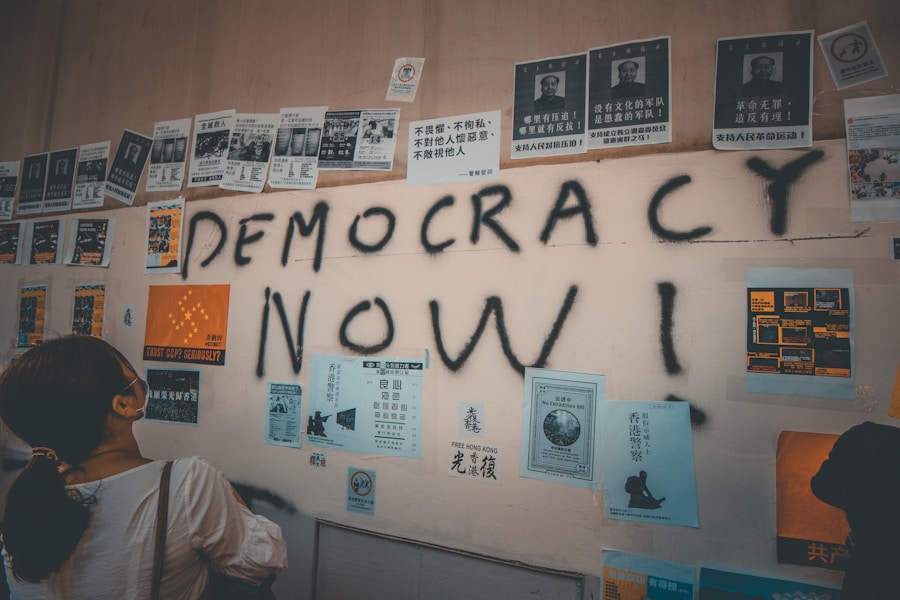
The phenomenon of democratic erosion has become a pressing concern in contemporary political discourse, as numerous nations grapple with the unsettling reality of declining democratic norms and practices. Democracies, once thought to be resilient and self-sustaining, are increasingly vulnerable to a variety of internal and external pressures that can lead to their disintegration. The term “democratic erosion” refers to the gradual decline of democratic institutions, norms, and practices, often initiated by elected leaders who exploit their power to undermine the very systems that brought them to office.
This process can be insidious, often occurring in stages that may not be immediately apparent to the public or even to political analysts. Understanding how democracies die requires a nuanced examination of the mechanisms through which democratic institutions can be weakened. It is not merely a matter of overt authoritarianism; rather, it often involves subtler forms of manipulation, such as the erosion of judicial independence, the curtailment of press freedoms, and the undermining of electoral integrity.
The interplay between these factors creates a complex landscape where citizens may find themselves increasingly disenfranchised, even as they continue to participate in elections and civic life. This article will explore the key indicators of democratic erosion, the role of political parties, case studies illustrating these dynamics, and strategies for safeguarding democracy in an era marked by polarization and uncertainty.
Key Takeaways
- Democracies can die when key indicators of democratic erosion are present, and it is important to understand these indicators to safeguard democracy.
- Political parties play a crucial role in protecting democracy by upholding democratic norms and institutions.
- Case studies of democratic erosion in various countries provide valuable insights into the warning signs and consequences of democratic backsliding.
- Norms, such as mutual toleration and institutional forbearance, are essential for sustaining democracy and preventing its erosion.
- Strategies for safeguarding democracy include strengthening democratic institutions, promoting political accountability, and fostering a culture of compromise and cooperation.
The Four Key Indicators of Democratic Erosion
Weakening Institutions
The first indicator of democratic erosion is the weakening of political institutions, particularly those that serve as checks on executive power. This can manifest in various ways, such as the dismissal or manipulation of judges, the undermining of electoral commissions, or the concentration of power within a single branch of government. For instance, in Hungary, Prime Minister Viktor Orbán has systematically dismantled checks and balances by appointing loyalists to key judicial positions and altering electoral laws to favor his party, Fidesz.
Decline in Civil Liberties
The second indicator is the decline in civil liberties, which encompasses the rights to free speech, assembly, and association. When governments begin to restrict these freedoms, they create an environment where dissent is stifled and opposition voices are marginalized. In Turkey, President Recep Tayyip Erdoğan’s government has cracked down on journalists, activists, and political opponents under the guise of national security.
Electoral Manipulation and Rise of Populism
The third indicator involves the manipulation of electoral processes, which can include gerrymandering, voter suppression tactics, or the use of state resources for partisan advantage. In the United States, various states have enacted laws that disproportionately affect minority voters, making it more difficult for them to participate in elections.
Populist leaders may initially gain support by promising to address the grievances of marginalized groups; however, they frequently resort to authoritarian measures once in power. The election of Jair Bolsonaro in Brazil exemplifies this trend, as his administration has sought to consolidate power while attacking institutions that serve as bulwarks against authoritarianism.
The Role of Political Parties in Protecting Democracy
Political parties play a pivotal role in safeguarding democracy by serving as intermediaries between citizens and the state. They are essential for mobilizing public opinion, facilitating political participation, and providing a platform for diverse viewpoints. However, when political parties become entrenched in their own interests or engage in divisive tactics, they can contribute to democratic erosion rather than its preservation.
A healthy party system is characterized by competition, accountability, and a commitment to democratic norms; when these elements are compromised, the entire democratic framework can be jeopardized. One significant aspect of political parties’ role in protecting democracy is their ability to foster coalitions and promote dialogue among different segments of society. In many democracies, parties that prioritize collaboration over confrontation can help bridge divides and mitigate polarization.
For example, in Germany, the tradition of coalition governments has encouraged parties to work together across ideological lines, fostering stability and consensus-building. This collaborative spirit is crucial for maintaining democratic norms and ensuring that diverse voices are heard within the political arena. Conversely, when political parties adopt adversarial stances that prioritize winning at all costs over democratic principles, they can exacerbate divisions within society.
The rise of hyper-partisanship in countries like the United States has led to an environment where compromise is viewed as weakness and loyalty to party ideology takes precedence over civic responsibility. This dynamic not only undermines public trust in political institutions but also creates fertile ground for demagogues who exploit divisions for their gain. Thus, political parties must recognize their responsibility not only to their constituents but also to the broader democratic framework in which they operate.
Case Studies of Democratic Erosion
Examining specific case studies provides valuable insights into the mechanisms and consequences of democratic erosion. One prominent example is Venezuela under Hugo Chávez and his successor Nicolás Maduro. Chávez’s rise to power was marked by promises of social reform and anti-establishment rhetoric; however, his administration quickly began to erode democratic institutions by undermining the judiciary and consolidating power within the executive branch.
The subsequent economic collapse and humanitarian crisis further exacerbated the situation, leading to widespread protests and international condemnation. Maduro’s regime has continued this trajectory by employing violent repression against dissenters while manipulating electoral processes to maintain control. Another illustrative case is Poland’s recent political developments under the Law and Justice Party (PiS).
Since coming to power in 2015, PiS has implemented a series of reforms aimed at increasing executive control over the judiciary and media. These actions have sparked significant protests both domestically and internationally, as citizens express their concerns about the erosion of democratic norms. The European Union has also intervened by initiating legal proceedings against Poland for violating fundamental democratic principles.
This case highlights how democratic erosion can provoke backlash from civil society and international actors who seek to uphold democratic values. These case studies underscore that democratic erosion is not confined to any single region or political context; rather, it is a global phenomenon that manifests in various forms. By analyzing these examples, we can better understand the warning signs of democratic backsliding and the importance of vigilance in protecting democratic institutions.
The Importance of Norms in Sustaining Democracy
Democratic norms are unwritten rules that govern political behavior and shape expectations within a society. These norms play a crucial role in sustaining democracy by fostering mutual respect among political actors and promoting adherence to democratic principles. When these norms are upheld, they create an environment conducive to cooperation and compromise; however, when they are violated or disregarded, the foundations of democracy can begin to crumble.
One key norm is respect for electoral outcomes. In healthy democracies, losing parties typically accept election results as legitimate and work within established frameworks to contest grievances. However, when leaders refuse to concede defeat or delegitimize electoral processes—often labeling them as “rigged” or “fraudulent”—they undermine public trust in democracy itself.
The aftermath of the 2020 U.S. presidential election serves as a stark example; former President Donald Trump’s refusal to accept the results led to widespread misinformation campaigns and culminated in the January 6 Capitol insurrection. This breach of norm not only threatened the peaceful transfer of power but also set a dangerous precedent for future elections.
Another important norm is the commitment to civil discourse and mutual respect among political opponents. In polarized environments where hostility prevails over dialogue, democratic institutions can become increasingly fragile. The breakdown of civil discourse can lead to an “us versus them” mentality that fosters division and animosity among citizens.
Countries like Brazil have experienced this dynamic firsthand; political polarization has escalated tensions between supporters and opponents of Bolsonaro’s government, resulting in violent confrontations and a deterioration of social cohesion.
Strategies for Safeguarding Democracy
In light of the challenges posed by democratic erosion, it is imperative for societies to adopt proactive strategies aimed at safeguarding democracy. One effective approach is enhancing civic education programs that promote awareness of democratic principles and encourage active participation among citizens. By equipping individuals with knowledge about their rights and responsibilities within a democracy, societies can foster a more informed electorate capable of holding leaders accountable.
Another critical strategy involves strengthening institutions that serve as checks on executive power. This includes bolstering judicial independence, ensuring free press protections, and safeguarding electoral integrity through transparent processes. For instance, countries like Canada have implemented robust mechanisms for monitoring elections and ensuring fairness through independent electoral commissions.
Such measures not only enhance public trust but also deter attempts at manipulation or coercion by those in power. Additionally, fostering cross-party dialogue and collaboration can help mitigate polarization and reinforce democratic norms. Initiatives aimed at bridging divides—such as bipartisan committees or community forums—can create opportunities for constructive engagement among diverse political perspectives.
By prioritizing dialogue over confrontation, societies can cultivate an environment where compromise becomes possible and mutual respect prevails.
The Impact of Polarization on Democratic Institutions
Polarization poses one of the most significant threats to democratic institutions in contemporary politics. As societies become increasingly divided along ideological lines, the ability to engage in constructive dialogue diminishes significantly. This polarization often manifests itself through extreme partisanship within legislative bodies, where cooperation becomes rare and gridlock ensues.
The impact of polarization extends beyond legislative dysfunction; it also erodes public trust in institutions perceived as biased or partisan. Citizens may begin to view courts or electoral bodies as extensions of political parties rather than impartial arbiters of justice or fairness.
This perception can lead to widespread disillusionment with democracy itself as individuals feel their voices are marginalized within an increasingly hostile political landscape. Moreover, polarization can exacerbate social tensions by fostering an “us versus them” mentality that vilifies opposing viewpoints. This dynamic not only hampers productive discourse but also increases susceptibility to extremist ideologies that thrive on division and resentment.
As seen in various contexts around the world—from Europe’s far-right movements to domestic terrorism incidents in the United States—polarization can have dire consequences for social cohesion and public safety.
The Future of Democracy in the 21st Century
As we navigate an era marked by unprecedented challenges to democracy worldwide, it is essential to remain vigilant against threats posed by democratic erosion. The interplay between weakening institutions, declining civil liberties, electoral manipulation, and rising populism underscores the fragility inherent within democratic systems. However, through concerted efforts aimed at strengthening civic education, reinforcing institutional checks on power, fostering dialogue across divides, and promoting respect for democratic norms, societies can work towards safeguarding their democratic futures.
The future of democracy in the 21st century will depend on our collective ability to confront these challenges head-on while remaining committed to upholding fundamental principles that underpin democratic governance. By recognizing both the vulnerabilities inherent within our systems as well as our shared responsibility for their preservation, we can strive towards a more resilient democracy capable of weathering adversity while remaining responsive to the needs and aspirations of all citizens.
If you’re interested in exploring more about the topic of democracy and its potential threats, you may want to check out an article on hellread.com that delves into the challenges facing democracies in the modern world. This article provides additional insights and perspectives that complement the themes discussed in How Democracies Die by Steven Levitsky and Daniel Ziblatt. It offers a thought-provoking analysis of the current state of democracy and the potential risks that could undermine its foundations.
FAQs
What is the book “How Democracies Die” about?
The book “How Democracies Die” by Steven Levitsky and Daniel Ziblatt explores the ways in which democracies can erode and ultimately collapse, drawing on historical examples and contemporary case studies.
Who are the authors of “How Democracies Die”?
The authors of “How Democracies Die” are Steven Levitsky and Daniel Ziblatt, both of whom are professors of government at Harvard University.
What are some key themes discussed in “How Democracies Die”?
Some key themes discussed in “How Democracies Die” include the erosion of democratic norms, the rise of authoritarian leaders, the role of political polarization, and the importance of institutional safeguards for democracy.
What are some examples of democracies that have collapsed, as discussed in the book?
The book discusses historical examples such as the collapse of democracy in interwar Europe, as well as contemporary case studies including the erosion of democratic institutions in countries like Venezuela and Hungary.
What are some recommendations for protecting democracies, as proposed in “How Democracies Die”?
The authors propose several recommendations for protecting democracies, including the importance of political parties and leaders upholding democratic norms, the need for institutional checks and balances, and the role of an informed and engaged citizenry in defending democracy.




