

“Long Walk to Freedom” is not merely an autobiography; it is a profound narrative that encapsulates the life journey of Nelson Mandela, a figure synonymous with the struggle against apartheid in South Africa. Published in 1994, the book offers an intimate glimpse into Mandela’s experiences, thoughts, and the socio-political landscape of his time. It serves as both a personal memoir and a historical document, chronicling the evolution of a man who would become a global symbol of resistance against oppression.
Through vivid storytelling, Mandela recounts his early years, his awakening to the injustices of apartheid, and his relentless pursuit of equality and justice for all South Africans. The title itself, “Long Walk to Freedom,” reflects the arduous journey Mandela undertook—not just for his own liberation but for the freedom of an entire nation. The narrative is rich with personal anecdotes, historical context, and philosophical reflections that resonate with universal themes of resilience, sacrifice, and hope.
As readers delve into Mandela’s life story, they are invited to witness the transformation of a young boy from a rural village into a leader who would change the course of history. The book is not only a testament to Mandela’s indomitable spirit but also an invitation to reflect on the broader implications of freedom and justice in society.
Key Takeaways
- “Long Walk to Freedom” is Nelson Mandela’s autobiography, detailing his life and struggle against apartheid in South Africa.
- Mandela was born in 1918 in a small village and received a Western education, which shaped his early views on equality and justice.
- Mandela became involved in the African National Congress and led nonviolent protests against the apartheid regime, which ultimately led to his imprisonment.
- After 27 years in prison, Mandela was released and went on to become the first black president of South Africa, leaving behind a legacy of reconciliation and forgiveness.
- The book highlights themes of resilience, perseverance, and the power of forgiveness, and has had a profound impact on the world’s understanding of apartheid and the fight for equality.
Early Life and Education of Nelson Mandela
Early Life and Upbringing
Mandela’s upbringing was steeped in the values of respect, community, and leadership, which would later influence his approach to activism and governance. His childhood experiences in a rural setting provided him with a unique perspective on the disparities faced by black South Africans under colonial rule.
Education and Political Awakening
Mandela’s educational journey began at a local mission school, where he excelled academically. He later attended the University of Fort Hare, one of the few institutions that admitted black students at the time. It was here that he first encountered political activism, joining the African National Congress (ANC) Youth League and becoming increasingly aware of the systemic injustices that plagued his country.
Perseverance and Commitment
Despite facing numerous challenges, including expulsion from Fort Hare for participating in a student protest, Mandela’s commitment to education remained unwavering. He eventually completed his degree through correspondence courses while working as a law clerk in Johannesburg.
Mandela’s Involvement in the Anti-Apartheid Movement
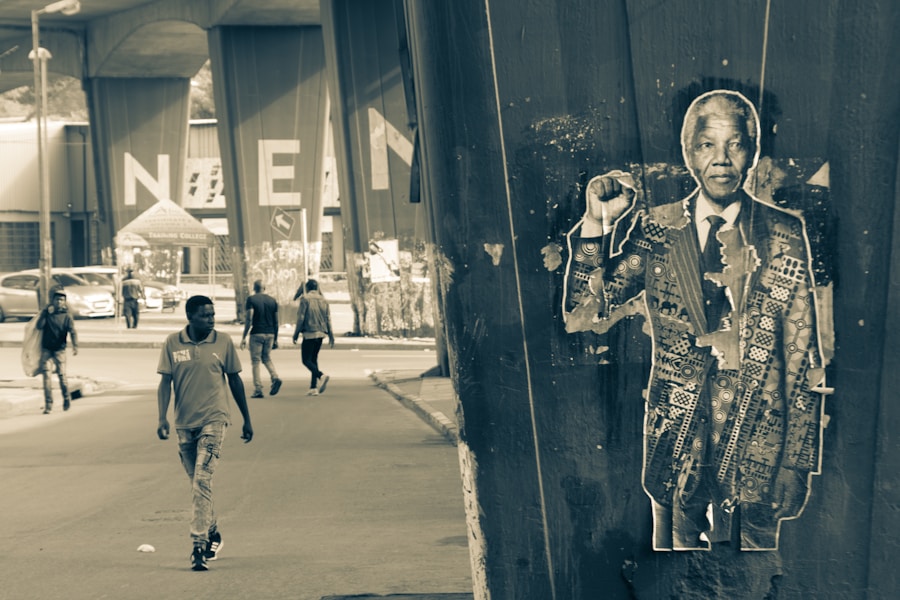
Mandela’s involvement in the anti-apartheid movement began earnestly in the 1940s when he joined the African National Congress (ANC). Initially, the ANC adopted a policy of non-violent resistance, inspired by Mahatma Gandhi’s principles. However, as the apartheid regime intensified its oppressive measures, Mandela and his colleagues recognized that more radical approaches were necessary.
This decision was not made lightly; it stemmed from a deep frustration with the government’s refusal to engage in meaningful dialogue regarding racial equality. Mandela’s activism during this period was characterized by both courage and strategic thinking.
He traveled extensively across South Africa and abroad to garner support for the anti-apartheid cause, forging alliances with various international organizations and leaders. His ability to articulate the plight of black South Africans resonated with many, leading to increased global awareness and condemnation of apartheid policies. Despite being labeled a terrorist by the South African government for his involvement in MK’s activities, Mandela remained steadfast in his belief that armed struggle was a necessary response to systemic violence.
His commitment to justice was unwavering, even as he faced increasing risks and challenges.
Imprisonment and Release
In 1962, Mandela was arrested for his anti-apartheid activities and subsequently sentenced to life imprisonment during the Rivonia Trial in 1964. His imprisonment became emblematic of the struggle against apartheid; he spent 27 years behind bars, primarily on Robben Island. The conditions were harsh—Mandela endured forced labor, limited visitation rights, and constant surveillance.
Yet, even within these confines, he emerged as a leader among inmates and continued to advocate for political change. His resilience during this period was remarkable; he used his time in prison to educate himself further and to strategize about future efforts for liberation. The global campaign for Mandela’s release gained momentum throughout the 1980s, with protests and calls for sanctions against South Africa becoming increasingly widespread.
International pressure mounted on the apartheid regime as more people recognized Mandela as a symbol of resistance rather than a criminal. Finally, on February 11, 1990, after years of negotiations and changing political tides within South Africa, Mandela was released from prison. His first steps into freedom were met with jubilation from supporters worldwide; he had become an icon of hope for millions who yearned for justice and equality.
The release marked not just a personal victory for Mandela but also a pivotal moment in South Africa’s history as it signaled the beginning of negotiations to dismantle apartheid.
Mandela’s Presidency and Legacy
Following his release from prison, Nelson Mandela played a crucial role in negotiating an end to apartheid and establishing multiracial elections in 1994. He became South Africa’s first black president after winning a historic election that symbolized a new era for the nation. During his presidency, Mandela focused on reconciliation rather than retribution; he understood that healing a divided nation required fostering unity among its diverse populations.
His leadership style emphasized dialogue and collaboration, which helped ease tensions between different racial groups. Mandela’s presidency was marked by significant achievements in various sectors, including education, healthcare, and economic reform. He championed policies aimed at addressing historical injustices while promoting social cohesion.
One of his most notable initiatives was the establishment of the Truth and Reconciliation Commission (TRC), which aimed to uncover human rights violations committed during apartheid while promoting forgiveness and healing among victims and perpetrators alike. This approach underscored Mandela’s belief that true freedom could only be achieved through understanding and acknowledging past wrongs.
Key Themes and Messages in Long Walk to Freedom

Resilience in the Face of Adversity
Mandela’s life story exemplifies the quality of resilience, the ability to endure hardship while remaining committed to one’s principles. Despite facing immense challenges, including imprisonment and personal loss, he never wavered in his pursuit of justice. His narrative encourages readers to reflect on their own struggles and find strength in adversity.
The Power of Forgiveness and Reconciliation
Another significant theme is the importance of forgiveness and reconciliation. Mandela understood that healing a fractured society required more than just political change; it necessitated a collective effort to confront past injustices while fostering mutual respect among all citizens.
Towards True Freedom and Understanding
This message is particularly relevant today as societies grapple with issues of inequality and division. Through his experiences, Mandela illustrates that true freedom is not merely the absence of oppression but also the presence of understanding and compassion among individuals.
Impact of Long Walk to Freedom on the World
The publication of “Long Walk to Freedom” had far-reaching implications beyond South Africa’s borders. It served as an inspiration for countless individuals engaged in struggles for justice worldwide. The book has been translated into numerous languages and has reached audiences across continents, reinforcing Mandela’s status as a global icon for peace and human rights.
It has been used as an educational tool in schools and universities to teach about apartheid, social justice movements, and leadership. Moreover, Mandela’s story has influenced contemporary movements advocating for civil rights and social change. Activists around the world have drawn parallels between their struggles and Mandela’s journey, using his principles as guiding lights in their quests for equality.
The book has also sparked discussions about leadership ethics—how leaders can navigate complex social landscapes while remaining true to their values. In this way, “Long Walk to Freedom” transcends its autobiographical nature; it becomes a universal narrative about humanity’s capacity for change.
Conclusion and Reflections on Nelson Mandela’s Life
Nelson Mandela’s life is a testament to the power of perseverance in the face of adversity. His journey from humble beginnings to becoming one of history’s most revered leaders illustrates not only personal growth but also societal transformation. “Long Walk to Freedom” captures this essence beautifully—offering insights into both Mandela’s character and the broader struggle for justice in South Africa.
As we reflect on Mandela’s legacy through his autobiography, we are reminded that the fight for freedom is ongoing; it requires vigilance, empathy, and an unwavering commitment to justice for all people. His life serves as an enduring reminder that change is possible when individuals dare to dream beyond their circumstances and work collectively towards a common goal. In this way, “Long Walk to Freedom” remains not just a personal account but also a call to action for future generations striving for equality and human dignity across the globe.
If you enjoyed reading Long Walk to Freedom by Nelson Mandela, you may also be interested in exploring the article Hello World on Hellread.com. This article delves into the concept of new beginnings and the excitement of embarking on a new journey, much like Mandela’s own journey towards freedom and equality. It offers a fresh perspective on embracing change and facing challenges with courage and determination.
FAQs
What is Long Walk to Freedom by Nelson Mandela?
Long Walk to Freedom is an autobiography written by Nelson Mandela, the former President of South Africa. The book chronicles Mandela’s life, from his childhood in a rural village to his years as a political activist and leader of the anti-apartheid movement.
When was Long Walk to Freedom published?
Long Walk to Freedom was first published in 1994, shortly after Nelson Mandela was elected as the first black President of South Africa.
What is the significance of Long Walk to Freedom?
Long Walk to Freedom is considered a significant historical document that provides insight into the struggle against apartheid in South Africa. It also offers a personal account of Mandela’s experiences and the challenges he faced during his years of imprisonment.
How does Long Walk to Freedom contribute to the understanding of Nelson Mandela’s life?
Long Walk to Freedom provides a detailed and personal account of Nelson Mandela’s life, including his political activism, imprisonment, and eventual presidency. The book offers readers a deeper understanding of Mandela’s character, beliefs, and the events that shaped his life.
Has Long Walk to Freedom received any awards or recognition?
Yes, Long Walk to Freedom has received numerous awards and accolades, including the Alan Paton Award in South Africa and the Nobel Peace Prize. The book has also been widely praised for its contribution to the understanding of South African history and the fight against apartheid.




