

Richard Feynman was one of the most significant physicists of the 20th century. He made major contributions to quantum mechanics and developed a distinctive approach to scientific research and teaching. Feynman excelled at explaining difficult scientific concepts in clear, understandable terms, which made him respected by both professional scientists and the general public.
His natural curiosity and engaging personality enabled him to advance physics while also connecting with broader intellectual and cultural interests. His influence extends beyond physics into philosophy, art, and education. Feynman’s career was defined by his commitment to understanding fundamental principles and exploring how the natural world operates.
He combined rigorous mathematical analysis with creative problem-solving approaches. His work in quantum electrodynamics produced theories that remain central to modern physics and have guided subsequent research directions. Feynman’s scientific output, combined with his distinctive personality and teaching methods, established him as a significant figure in 20th-century science whose impact continues to influence physicists and educators today.
Key Takeaways
- Richard Feynman was a renowned physicist known for his groundbreaking contributions to quantum mechanics and particle physics.
- He played a crucial role in the Manhattan Project during World War II, contributing to the development of the atomic bomb.
- Feynman was celebrated for his engaging teaching style and influential lectures, making complex science accessible to many.
- His work earned him the Nobel Prize in Physics and numerous other prestigious honors throughout his career.
- Feynman’s legacy continues to inspire both the scientific community and popular culture, as detailed in James Gleick’s biography.
Early Life and Education
Richard Phillips Feynman was born on May 11, 1918, in New York City to a Jewish family. His father, Melville Feynman, was a schoolteacher who instilled in Richard a love for learning and critical thinking from an early age. His mother, Lucille, encouraged his curiosity and creativity, fostering an environment where questioning and exploration were celebrated.
Growing up in the vibrant neighborhoods of New York, Feynman was exposed to a diverse array of ideas and cultures that would later influence his worldview. Feynman’s academic journey began at the Massachusetts Institute of Technology (MIT), where he enrolled in 1935. His time at MIT was marked by an intense engagement with mathematics and physics, leading him to develop a deep understanding of the principles that govern the physical world.
He earned his bachelor’s degree in physics in 1939 and continued his studies at Princeton University, where he completed his Ph.D. under the supervision of John Archibald Wheeler. It was during this period that Feynman began to formulate his own ideas about quantum mechanics, laying the groundwork for his future contributions to the field.
Feynman’s Contributions to Physics

Feynman’s most significant contributions to physics are encapsulated in his work on quantum electrodynamics (QED), a theory that describes how light and matter interact. In the late 1940s, he developed a revolutionary approach that utilized what are now known as Feynman diagrams—visual representations that simplify complex interactions between particles. These diagrams not only provided a clearer understanding of particle interactions but also allowed physicists to calculate probabilities associated with various processes in a more intuitive manner.
This innovative method transformed theoretical physics and became a standard tool used by physicists worldwide. In addition to QED, Feynman made substantial contributions to the field of particle physics and statistical mechanics. His work on the path integral formulation of quantum mechanics offered a new perspective on how particles behave at the quantum level, emphasizing the importance of all possible paths a particle can take rather than just a single trajectory.
This approach has had profound implications for various areas of physics, including quantum field theory and string theory. Feynman’s ability to think outside conventional frameworks allowed him to tackle some of the most challenging problems in physics, earning him recognition as one of the leading theoretical physicists of his time.
Feynman’s Personal Life and Relationships
Feynman’s personal life was as colorful and dynamic as his professional career. He was known for his adventurous spirit and zest for life, often engaging in activities that reflected his diverse interests beyond physics. Feynman had a passion for art, music, and even safe-cracking, which he pursued with the same enthusiasm he applied to his scientific endeavors.
His love for life was evident in his relationships as well; he married Arline Greenbaum in 1943, but their time together was tragically cut short by her battle with tuberculosis. This loss profoundly affected Feynman, shaping his outlook on life and death. Later in life, Feynman married Gweneth Howarth, with whom he shared a deep bond built on mutual respect and intellectual curiosity.
Their relationship exemplified Feynman’s belief in the importance of companionship and collaboration. He often spoke about how Gweneth encouraged him to explore new ideas and engage with different perspectives. This partnership not only enriched his personal life but also contributed to his professional growth, as they navigated the complexities of academia together.
Feynman’s Work on the Manhattan Project
Feynman’s involvement in the Manhattan Project during World War II marked a pivotal moment in his career and had far-reaching implications for both science and society. As part of this top-secret project aimed at developing atomic weapons, Feynman worked at Los Alamos Laboratory alongside some of the greatest scientific minds of the time, including J. Robert Oppenheimer and Enrico Fermi. His role primarily focused on theoretical calculations related to nuclear fission and the design of atomic bombs. Despite the gravity of the project, Feynman approached his work with a sense of curiosity and playfulness. He famously engaged in various side projects during his time at Los Alamos, including cracking safes and exploring the intricacies of security protocols within the laboratory. This lightheartedness contrasted sharply with the serious nature of their work but also highlighted Feynman’s ability to maintain perspective even in high-pressure situations. The experience profoundly impacted him; after witnessing the destructive power of nuclear weapons, he became an advocate for responsible scientific inquiry and ethical considerations in research.
Feynman’s Teaching and Lectures
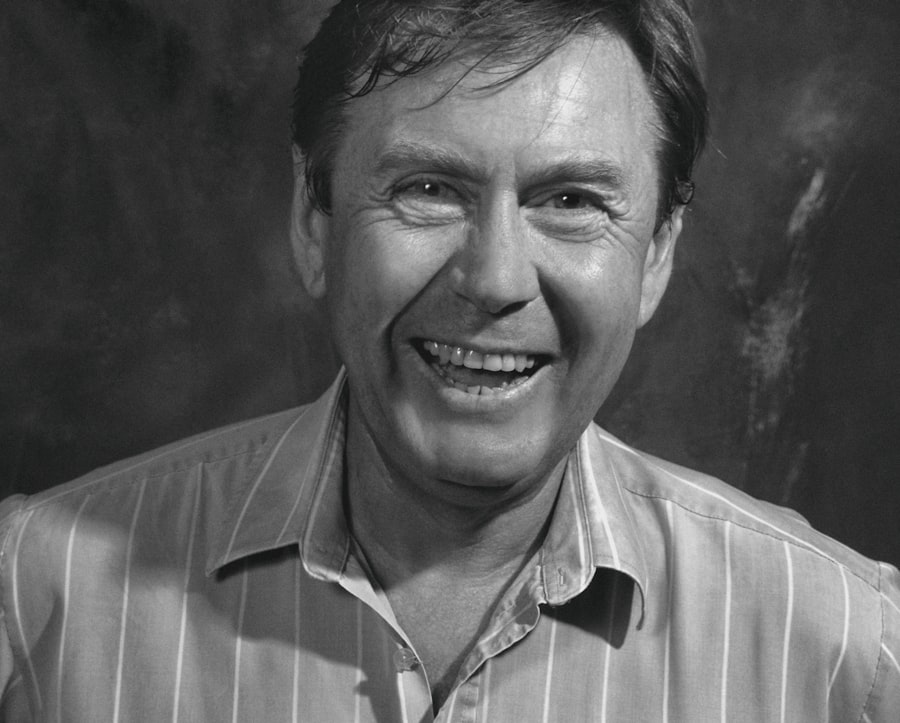
Feynman’s teaching style was legendary; he possessed an extraordinary ability to convey complex scientific concepts in an engaging and relatable manner. His lectures were characterized by enthusiasm, humor, and an emphasis on understanding rather than rote memorization. He believed that education should inspire curiosity and critical thinking rather than simply imparting knowledge.
This philosophy resonated with students at Caltech, where he taught for many years. One of Feynman’s most famous lecture series is captured in “The Feynman Lectures on Physics,” co-authored with Robert Leighton and Matthew Sands. This three-volume set has become a classic resource for students and educators alike, offering insights into fundamental principles of physics through clear explanations and thought-provoking examples.
Feynman’s ability to connect abstract concepts with real-world applications made these lectures not only informative but also enjoyable for learners at all levels.
Feynman’s Influence on Popular Culture
Feynman’s impact extended beyond academia into popular culture, where he became a symbol of scientific inquiry and intellectual curiosity. His charismatic personality and engaging storytelling made him a sought-after speaker at public events, where he captivated audiences with tales from his life as a physicist. Documentaries such as “The Pleasure of Finding Things Out” showcased his unique approach to science and education, further solidifying his status as a cultural icon.
Moreover, Feynman’s influence can be seen in various forms of media, including literature, film, and television. His life story inspired numerous biographies and documentaries that highlight not only his scientific achievements but also his philosophical musings on life, death, and the nature of knowledge. The character “Dr.
Richard Feynman” has appeared in fictional works as well, often embodying traits associated with genius—curiosity, creativity, and an unyielding quest for truth.
Feynman’s Nobel Prize and Other Honors
In 1965, Richard Feynman was awarded the Nobel Prize in Physics alongside Julian Schwinger and Sin-Itiro Tomonaga for their fundamental work in quantum electrodynamics. This prestigious recognition underscored the significance of their contributions to understanding electromagnetic interactions at the quantum level. The Nobel Prize not only validated Feynman’s groundbreaking research but also elevated his status within the scientific community.
Throughout his career, Feynman received numerous accolades beyond the Nobel Prize, including membership in prestigious organizations such as the National Academy of Sciences and the American Academy of Arts and Sciences. He was also honored with various teaching awards that recognized his exceptional ability to inspire students and foster a love for science among future generations. These honors reflect not only his scientific prowess but also his commitment to education and public engagement.
Feynman’s Later Years and Legacy
In his later years, Richard Feynman continued to engage with science while also exploring new interests such as painting and playing music. He remained active in academia until his health began to decline due to cancer, which ultimately led to his passing on February 15, 1988. Despite this personal struggle, Feynman maintained an optimistic outlook on life until the end, often reflecting on the beauty of existence and the importance of curiosity.
Feynman’s legacy endures through his contributions to physics, education, and popular culture. His innovative ideas continue to influence contemporary research in quantum mechanics and particle physics while inspiring countless individuals to pursue careers in science. The principles he championed—curiosity, creativity, and ethical responsibility—remain relevant today as society grapples with complex scientific challenges.
James Gleick’s Biography of Feynman
James Gleick’s biography “Genius: The Life and Science of Richard Feynman” offers an intimate portrait of this remarkable physicist’s life journey. Gleick meticulously chronicles Feynman’s early years, academic achievements, personal struggles, and lasting impact on science and culture. The biography delves into both Feynman’s professional milestones and personal anecdotes that reveal his character—his humor, resilience, and insatiable curiosity.
Gleick’s narrative captures not only Feynman’s scientific brilliance but also his philosophical musings on life’s mysteries. The book emphasizes how Feynman’s approach to science transcended mere calculations; it was about understanding the world through exploration and wonderment. By weaving together personal stories with scientific insights, Gleick provides readers with a comprehensive understanding of why Richard Feynman remains an enduring figure in both science and popular culture.
Feynman’s Impact on Science and Society
Richard Feynman’s impact on science is profound; he reshaped our understanding of quantum mechanics while inspiring generations through his teaching and public engagement efforts. His unique blend of intellect, creativity, and humor made complex scientific concepts accessible to all, fostering a culture of curiosity that continues to thrive today. Beyond academia, Feynman’s influence permeates popular culture—his life story serves as a testament to the power of inquiry and imagination.
As we reflect on Richard Feynman’s legacy, it becomes clear that he was more than just a brilliant physicist; he was a champion for intellectual exploration who encouraged others to embrace their curiosity about the universe. His contributions have left an indelible mark on both science and society—a legacy that will inspire future generations to seek knowledge with passion and wonderment.
In exploring the fascinating life and contributions of Richard Feynman, readers may find it enriching to delve into related topics that highlight his impact on science and culture. One such article that complements James Gleick’s “The Life of Richard Feynman” is available at this link, which discusses the broader implications of Feynman’s work and his unique approach to understanding the universe.
FAQs
Who is Richard Feynman?
Richard Feynman was a renowned American theoretical physicist known for his work in quantum mechanics, quantum electrodynamics, and particle physics. He was also a Nobel Prize laureate and a celebrated science educator.
Who is James Gleick?
James Gleick is an American author and journalist known for writing popular science books. He has written extensively on topics related to science and technology, including biographies of prominent scientists.
What is the book “The Life of Richard Feynman” about?
“The Life of Richard Feynman” by James Gleick is a biography that explores the personal and professional life of Richard Feynman, detailing his contributions to physics, his unique personality, and his impact on science and education.
When was “The Life of Richard Feynman” published?
The book was published in 2011.
What are some key themes in the biography?
Key themes include Feynman’s scientific achievements, his unconventional approach to problem-solving, his role in the Manhattan Project, his teaching style, and his curiosity and zest for life.
Did Richard Feynman receive any major awards?
Yes, Richard Feynman was awarded the Nobel Prize in Physics in 1965 for his fundamental work in quantum electrodynamics.
Is “The Life of Richard Feynman” suitable for readers without a scientific background?
Yes, James Gleick writes in an accessible style that makes the biography engaging and understandable for readers without a deep background in physics.
What sources did James Gleick use for the biography?
Gleick used a variety of sources including Feynman’s own writings, interviews, archival materials, and accounts from colleagues and family members.
Does the book cover Feynman’s personal life?
Yes, the biography covers both Feynman’s personal and professional life, including his relationships, hobbies, and personality traits.
Why is Richard Feynman considered an important figure in science?
Feynman is considered important for his groundbreaking contributions to quantum mechanics, his innovative teaching methods, and his ability to communicate complex scientific ideas to the public.




