

The act of writing has been valued throughout history as a means of expression and communication. From ancient civilizations recording thoughts on stone tablets to contemporary individuals using digital devices, writing’s core purpose remains consistent: it transforms thoughts into tangible form. When writing, abstract ideas become concrete words, enabling deeper reflection and understanding.
This process clarifies thinking and connects the internal mind with the external world, allowing people to express their deepest thoughts and ideas. Writing also functions as a therapeutic outlet for emotions. Journaling has become recognized as a beneficial practice that provides a safe environment for exploring thoughts and feelings.
The physical process of writing can create a sense of emotional release, as if transferring stress and anxiety from oneself to the page. This therapeutic aspect of writing is supported by research evidence; multiple studies demonstrate that expressive writing contributes to improved mental health outcomes, making it valuable for personal development and emotional health.
How Writing Things Down Can Reduce Mental Clutter
In our fast-paced world, the mind often becomes a chaotic repository of thoughts, tasks, and worries. This mental clutter can lead to feelings of overwhelm and anxiety, making it difficult to focus on what truly matters. Writing things down acts as a powerful antidote to this mental chaos.
By externalizing thoughts onto paper, individuals can declutter their minds, creating space for clarity and focus. This simple act allows for a more organized approach to life, where priorities can be clearly defined and addressed. For example, consider the common practice of maintaining a to-do list.
When tasks are written down, they no longer swirl around in the mind, competing for attention. Instead, they are neatly categorized and prioritized, allowing individuals to tackle them one by one. This not only reduces anxiety but also enhances productivity, as the act of crossing off completed tasks provides a sense of accomplishment.
Furthermore, the process of writing can help individuals identify patterns in their thinking and behavior, leading to greater self-awareness and improved decision-making.
Organizing Your Thoughts and Tasks Through Documentation
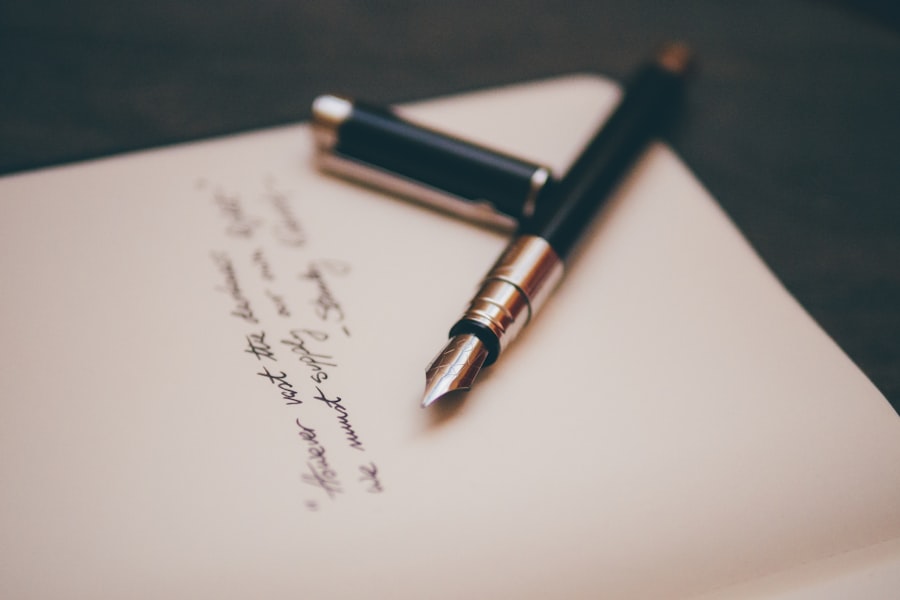
Documentation serves as a powerful organizational tool that can streamline both personal and professional life. By systematically recording thoughts, ideas, and tasks, individuals can create a structured framework that enhances clarity and efficiency. Whether through notebooks, digital apps, or spreadsheets, the act of documenting allows for easy retrieval of information and fosters a sense of order amidst the chaos of daily life.
In professional settings, documentation is crucial for project management and collaboration. For instance, teams often rely on shared documents to track progress, assign responsibilities, and outline goals. This not only ensures that everyone is on the same page but also minimizes misunderstandings that can arise from verbal communication alone.
In personal life, maintaining a journal or planner can help individuals keep track of appointments, deadlines, and personal goals. By organizing these elements in a tangible format, individuals can navigate their responsibilities with greater ease and confidence.
The Psychological Benefits of Writing Things Down
The psychological benefits of writing extend far beyond mere organization; they encompass emotional healing and cognitive enhancement as well. Engaging in regular writing practices has been shown to reduce stress levels and promote emotional resilience. When individuals articulate their thoughts and feelings on paper, they create distance from their emotions, allowing for reflection and processing.
This can be particularly beneficial during challenging times when emotions may feel overwhelming. Research has demonstrated that expressive writing can lead to significant improvements in mental health. For example, studies have found that individuals who engage in regular journaling report lower levels of anxiety and depression.
The act of writing provides an opportunity for self-exploration and understanding, enabling individuals to confront their fears and insecurities in a constructive manner. Additionally, writing can enhance cognitive functioning by improving memory retention and critical thinking skills. As individuals articulate their thoughts clearly on paper, they engage in deeper cognitive processing that reinforces learning and comprehension.
Time Management and Productivity: The Role of Documentation
Effective time management is essential for achieving personal and professional goals, and documentation plays a pivotal role in this process. By keeping detailed records of tasks, deadlines, and commitments, individuals can allocate their time more efficiently. A well-structured planner or digital calendar allows for better visualization of time constraints and priorities, enabling individuals to make informed decisions about how to allocate their resources.
For instance, consider the practice of time blocking—a technique where specific blocks of time are designated for particular tasks or activities. By documenting these time blocks in a planner or calendar, individuals can create a visual representation of their day that minimizes distractions and maximizes productivity. This method not only helps in managing time effectively but also fosters accountability; when tasks are documented with specific deadlines, individuals are more likely to follow through on their commitments.
Documenting Your Goals and Dreams for Greater Clarity

Setting goals is an essential aspect of personal development, but the process becomes significantly more effective when those goals are documented. Writing down aspirations transforms abstract dreams into concrete objectives that can be actively pursued. This practice not only clarifies what one truly desires but also serves as a motivational tool that keeps individuals focused on their path.
For example, many successful individuals advocate for the practice of creating vision boards or goal journals where they outline their short-term and long-term aspirations. By visually representing these goals through images or written affirmations, individuals create a constant reminder of what they are working towards. This documentation process fosters commitment; when goals are written down, they become more tangible and achievable.
Furthermore, regularly revisiting these documented goals allows individuals to track their progress and make necessary adjustments along the way.
The Practicality of Keeping Track of Important Information
In both personal and professional contexts, keeping track of important information is crucial for effective decision-making and problem-solving. Documentation serves as a reliable repository for vital data—whether it be contact information, meeting notes, or research findings—ensuring that individuals have access to the information they need when they need it. This practicality extends beyond mere convenience; it enhances efficiency by reducing the time spent searching for information.
For instance, professionals often rely on documentation tools such as project management software or note-taking applications to keep track of important details related to ongoing projects. By centralizing information in one accessible location, teams can collaborate more effectively and avoid miscommunication. In personal life, maintaining organized records—such as medical history or financial documents—can prove invaluable during critical moments when quick access to information is necessary.
How Writing Things Down Can Improve Communication
Effective communication is foundational to building relationships—both personal and professional—and writing plays a significant role in enhancing this skill. When individuals take the time to articulate their thoughts clearly on paper before engaging in conversation or correspondence, they are better equipped to convey their message effectively. This practice minimizes misunderstandings and ensures that key points are communicated succinctly.
In professional settings, written communication is often the primary mode through which ideas are shared—be it through emails, reports, or presentations. By documenting thoughts beforehand, individuals can organize their ideas logically and present them in a coherent manner. This not only enhances clarity but also demonstrates professionalism and attention to detail.
In personal relationships, taking the time to write down feelings or concerns before discussing them with loved ones can lead to more constructive conversations that foster understanding rather than conflict.
Documenting Your Progress and Achievements for Motivation
Tracking progress is an essential component of personal growth and development. By documenting achievements—no matter how small—individuals can cultivate a sense of accomplishment that fuels motivation. This practice serves as a reminder of how far one has come on their journey toward their goals.
For example, many people find success in maintaining achievement journals where they record milestones reached or challenges overcome. Reflecting on these documented successes can provide encouragement during times of self-doubt or stagnation. Additionally, celebrating achievements—whether through personal reflection or sharing with others—reinforces positive behavior and encourages continued effort toward future goals.
The Connection Between Writing Things Down and Memory Retention
The relationship between writing things down and memory retention is well-documented in cognitive psychology. Research indicates that the act of writing engages multiple cognitive processes that enhance learning and memory recall. When information is transcribed onto paper or typed into a digital format, it undergoes deeper processing than when simply heard or read passively.
For instance, students who take handwritten notes during lectures often demonstrate better retention of material compared to those who rely solely on digital devices for note-taking. The physical act of writing requires active engagement with the content—forcing individuals to synthesize information rather than merely transcribing it verbatim. This deeper level of engagement fosters better understanding and recall when it comes time to retrieve that information later.
Using Documentation to Create a Sense of Control and Empowerment
In an increasingly complex world filled with uncertainties, documentation offers individuals a sense of control over their lives. By actively recording thoughts, tasks, goals, and progress, individuals can navigate challenges with greater confidence and clarity. This sense of empowerment stems from the knowledge that they have taken proactive steps toward managing their circumstances.
For example, maintaining a daily planner allows individuals to visualize their commitments and responsibilities clearly. This not only reduces feelings of overwhelm but also instills a sense of agency; when individuals see their tasks laid out before them in an organized manner, they are more likely to approach them with determination rather than dread. Furthermore, documenting personal growth journeys—whether through journaling or goal tracking—reinforces the belief that change is possible through consistent effort and reflection.
In conclusion, the multifaceted benefits of writing things down extend far beyond mere organization; they encompass emotional well-being, cognitive enhancement, effective communication, and personal empowerment. By harnessing the power of documentation in various aspects of life—from managing tasks to articulating dreams—individuals can cultivate greater clarity, focus, and motivation on their journey toward success.




