

Gene Sharp, a prominent political theorist and activist, dedicated his life to the study and promotion of nonviolent action as a means of enacting social and political change. Born in 1928, Sharp’s intellectual journey led him to explore the dynamics of power and resistance, culminating in his seminal work, “From Dictatorship to Democracy.” This influential text has served as a guide for countless movements around the world, providing a framework for understanding how nonviolent strategies can effectively challenge oppressive regimes. As we delve into Sharp’s contributions, we recognize the profound impact his ideas have had on contemporary political movements and the enduring relevance of nonviolent action in our quest for justice.
Sharp’s work is rooted in the belief that power is not merely a function of coercion but is also derived from the consent of the governed. He argued that by withdrawing that consent through nonviolent means, individuals and groups could undermine even the most entrenched authoritarian systems. This perspective invites us to reconsider our understanding of power dynamics and encourages us to explore the potential of collective action grounded in nonviolence.
As we reflect on Sharp’s legacy, we are reminded of the transformative potential that lies within ordinary people when they unite for a common cause.
Key Takeaways
- Gene Sharp is a prominent figure in the study of nonviolent action and has written extensively on the topic.
- Nonviolent resistance has the power to challenge oppressive regimes and bring about political change.
- Civil disobedience plays a crucial role in nonviolent action by disrupting the status quo and drawing attention to injustices.
- Nonviolent action employs a variety of tactics and strategies, including protests, strikes, and boycotts, to achieve its goals.
- Nonviolent action has been shown to have a significant impact on authoritarian regimes, leading to their downfall or reform.
The Power of Nonviolent Resistance
Nonviolent resistance has proven to be a formidable force in challenging injustice and oppression throughout history. By employing tactics that eschew violence, movements can attract broader support and foster solidarity among diverse groups. This approach not only minimizes the risk of backlash from authorities but also cultivates an environment where dialogue and understanding can flourish.
As we examine various historical examples, we see how nonviolent resistance has empowered individuals to stand up against tyranny and demand their rights. One of the most compelling aspects of nonviolent resistance is its ability to mobilize large segments of society. When people come together in peaceful protest, they create a powerful visual representation of dissent that can resonate with those who may not have previously engaged with the cause.
This collective action can inspire others to join the movement, amplifying its impact and increasing pressure on those in power. As we consider the successes of movements like the Civil Rights Movement in the United States or the anti-apartheid struggle in South Africa, we recognize that nonviolent resistance can serve as a catalyst for profound societal change.
The Role of Civil Disobedience in Political Change
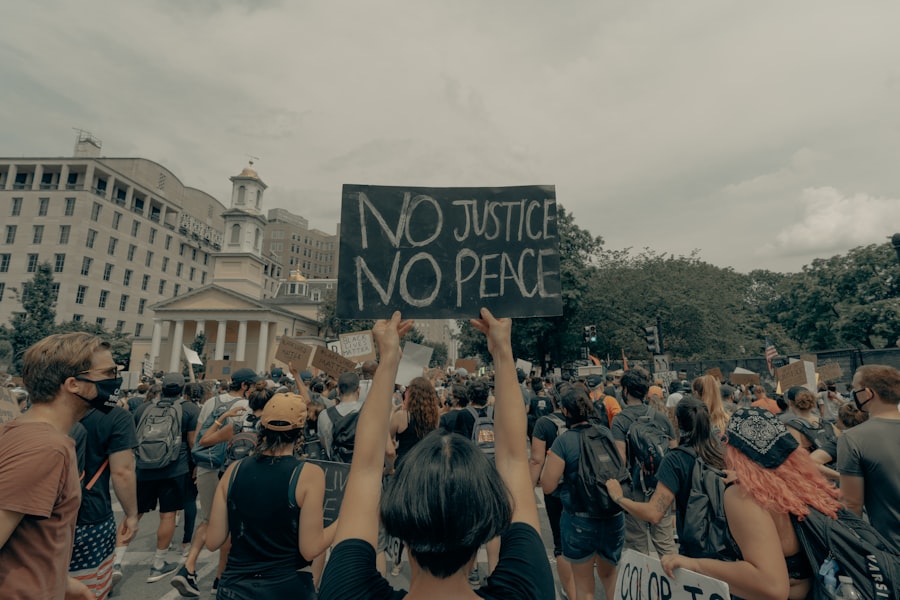
Civil disobedience occupies a central role in the landscape of nonviolent action, serving as a powerful tool for individuals and groups seeking to challenge unjust laws and policies. By deliberately breaking laws that are perceived as immoral or oppressive, activists draw attention to their cause and highlight the need for reform. This act of defiance is not undertaken lightly; it is often rooted in a deep sense of moral conviction and a commitment to justice.
As we explore the significance of civil disobedience, we see how it can serve as a catalyst for political change. The effectiveness of civil disobedience lies in its ability to provoke dialogue and reflection within society. When individuals engage in acts of nonviolent defiance, they force those in power to confront the legitimacy of their actions.
This confrontation can lead to increased public awareness and pressure for change, as citizens grapple with the ethical implications of unjust laws. Historical figures such as Mahatma Gandhi and Martin Luther King Jr. exemplified this principle, using civil disobedience to challenge systemic injustices and inspire others to join their cause.
As we reflect on their legacies, we recognize that civil disobedience remains a vital component of contemporary movements advocating for social justice.
The Tactics and Strategies of Nonviolent Action
The tactics and strategies employed in nonviolent action are diverse and adaptable, allowing movements to respond effectively to varying contexts and challenges. From peaceful protests and sit-ins to boycotts and strikes, these methods are designed to disrupt the status quo without resorting to violence. As we analyze these tactics, we see how they can be tailored to fit specific goals and circumstances, maximizing their impact while minimizing harm.
One key aspect of successful nonviolent action is strategic planning. Movements must carefully consider their objectives, target audiences, and potential responses from authorities. By anticipating challenges and developing creative solutions, activists can enhance their chances of success.
For instance, during the Civil Rights Movement, leaders like King and Rosa Parks employed a range of tactics that included grassroots organizing, legal challenges, and public demonstrations. This multifaceted approach allowed them to build momentum and sustain their efforts over time. As we reflect on these strategies, we are reminded that adaptability and creativity are essential components of effective nonviolent action.
The Impact of Nonviolent Action on Authoritarian Regimes
Nonviolent action has demonstrated its capacity to challenge and dismantle authoritarian regimes across the globe. By mobilizing citizens around shared grievances and aspirations for justice, these movements can erode the legitimacy of oppressive governments. As we examine historical examples such as the Velvet Revolution in Czechoslovakia or the Arab Spring uprisings, we see how nonviolent resistance can lead to significant political transformations.
The impact of nonviolent action on authoritarian regimes often extends beyond immediate political change; it can also foster a culture of resistance that empowers future generations. When citizens witness the success of nonviolent movements, they are more likely to believe in their own agency and capacity for change. This ripple effect can inspire ongoing activism and civic engagement, creating a more resilient society that values democratic principles.
As we consider the long-term implications of nonviolent action, we recognize its potential to reshape not only political landscapes but also societal norms around justice and equality.
The Ethical and Moral Dimensions of Nonviolent Action
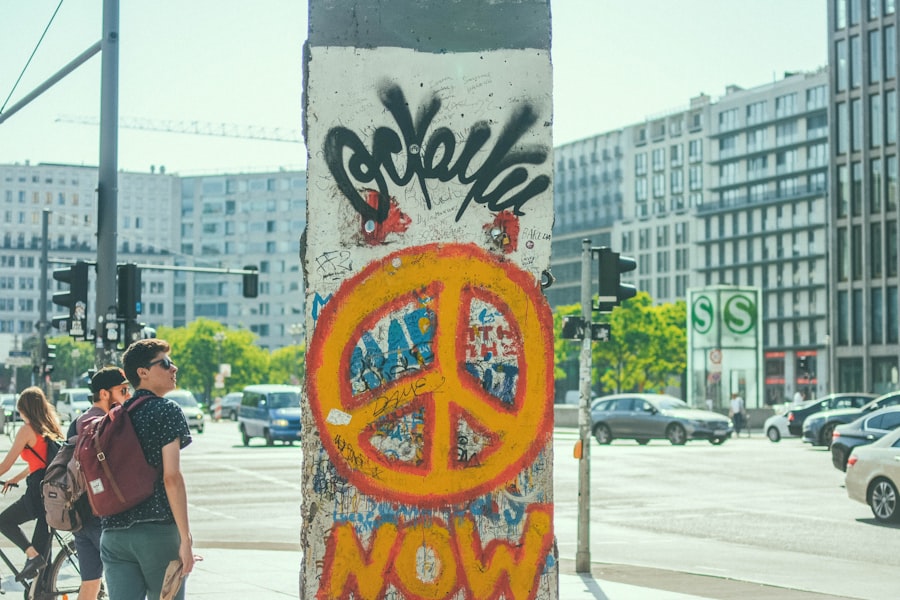
At its core, nonviolent action is deeply rooted in ethical and moral considerations. It challenges us to confront our values and beliefs about justice, power, and human dignity. By choosing nonviolence as a means of resistance, activists affirm their commitment to principles such as respect for life, empathy, and solidarity with those who suffer under oppression.
This moral foundation distinguishes nonviolent movements from violent ones, as they seek not only to achieve specific goals but also to embody a vision of a more just society. The ethical dimensions of nonviolent action also raise important questions about responsibility and accountability. Activists must grapple with the implications of their choices and consider how their actions align with their values.
This introspection can lead to deeper connections within movements, fostering a sense of shared purpose and commitment among participants.
The Global Influence of Gene Sharp’s Work
Gene Sharp’s contributions to the field of nonviolent action have resonated far beyond his lifetime, influencing movements across continents and cultures. His writings have provided activists with practical tools and theoretical insights that empower them to challenge oppressive systems effectively. From Eastern Europe during the fall of communism to recent uprisings in the Middle East, Sharp’s ideas have inspired countless individuals seeking justice through nonviolence.
Moreover, Sharp’s work has transcended geographical boundaries, demonstrating that the principles of nonviolent action are universally applicable. Activists from diverse backgrounds have drawn upon his teachings to craft strategies that resonate with their unique contexts while remaining grounded in shared values of justice and equality. As we consider the global influence of Sharp’s work, we recognize that his legacy continues to shape contemporary struggles for freedom and human rights.
The Future of Nonviolent Action in Political Movements
As we look toward the future, the relevance of nonviolent action remains undiminished in an increasingly complex global landscape. While challenges persist—ranging from authoritarianism to systemic inequality—the principles underlying nonviolence offer hope for transformative change. Movements around the world continue to adapt Sharp’s teachings to address contemporary issues such as climate justice, racial equality, and economic disparity.
In an era marked by rapid technological advancements and shifting social dynamics, nonviolent action will likely evolve alongside these changes. Digital platforms provide new avenues for organizing and mobilizing support while also presenting unique challenges related to surveillance and repression. As we navigate this evolving landscape, it is essential for activists to remain committed to the core tenets of nonviolence while embracing innovative strategies that resonate with younger generations.
In conclusion, Gene Sharp’s work on nonviolent action has left an indelible mark on political movements worldwide. By understanding the power of nonviolence, civil disobedience, strategic tactics, ethical considerations, and global influence, we can appreciate its enduring significance in our pursuit of justice. As we move forward together, let us draw inspiration from Sharp’s legacy as we continue to advocate for a more just and equitable world through nonviolent means.
Gene Sharp’s seminal work, “The Politics of Nonviolent Action,” explores the dynamics and strategies of nonviolent resistance, offering a comprehensive analysis of how such movements can effectively challenge oppressive regimes.
This article provides a fresh perspective on how Sharp’s theories continue to influence activists today. For further reading, you can access the article here.
FAQs
What is nonviolent action?
Nonviolent action refers to a method of protest or resistance that does not use physical violence. It can include tactics such as strikes, boycotts, civil disobedience, and noncooperation.
Who is Gene Sharp?
Gene Sharp was a political scientist and writer known for his extensive work on nonviolent action. He founded the Albert Einstein Institution, which focused on the study of nonviolent resistance and the promotion of nonviolent action in conflicts.
What is “The Politics of Nonviolent Action”?
“The Politics of Nonviolent Action” is a book written by Gene Sharp that outlines the theory and practice of nonviolent action. It provides a comprehensive analysis of the power dynamics and strategies involved in nonviolent resistance movements.
What are some examples of nonviolent action in history?
Some famous examples of nonviolent action include the civil rights movement in the United States, the Indian independence movement led by Mahatma Gandhi, and the anti-apartheid movement in South Africa. These movements utilized nonviolent tactics to challenge oppressive systems and bring about social and political change.
How effective is nonviolent action as a political strategy?
Nonviolent action has been shown to be an effective political strategy in many cases. Research by Gene Sharp and others has demonstrated that nonviolent resistance movements are often more successful and sustainable than violent ones, and can lead to significant social and political change.




