
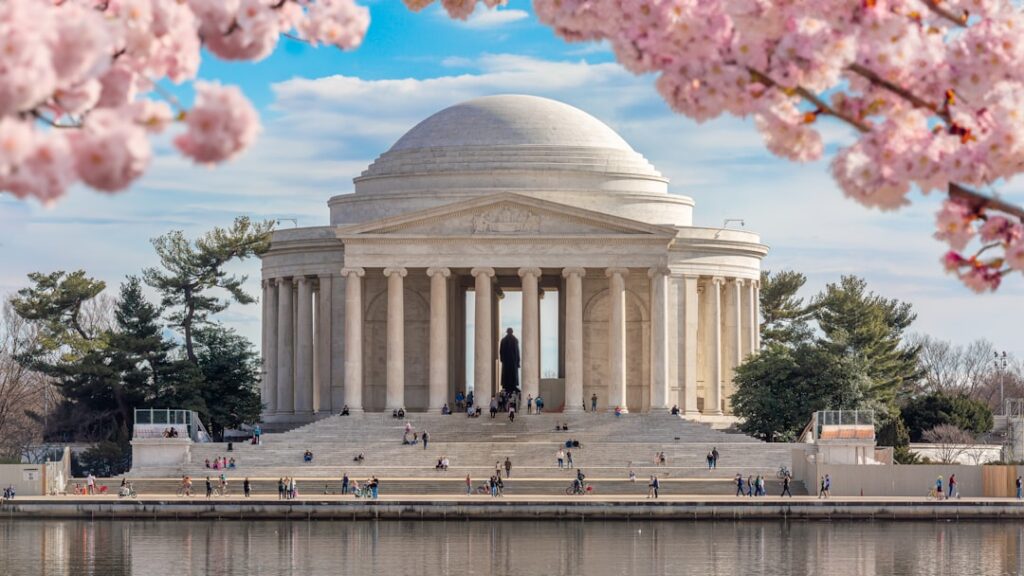
Thomas Jefferson was born on April 13, 1743, in Shadwell, Virginia, into a family of landowners. His father, Peter Jefferson, was a successful planter and surveyor, while his mother, Jane Randolph, belonged to one of Virginia’s prominent families. Growing up in the lush landscapes of the Virginia countryside, Jefferson was exposed to the ideals of the Enlightenment, which would later shape his philosophical outlook and political ideology.
His early education was overseen by private tutors, who instilled in him a love for learning and a curiosity about the world. By the age of nine, he was already studying Latin, Greek, and French, showcasing an intellectual prowess that would serve him well throughout his life. In 1760, Jefferson enrolled at the College of William and Mary in Williamsburg, where he further honed his academic skills.
He studied a wide range of subjects, including philosophy, mathematics, and law. It was during this time that he developed a keen interest in the works of Enlightenment thinkers such as John Locke and Montesquieu.
After graduating in 1762, he began studying law under George Wythe, one of the most respected legal minds in Virginia. This legal training would later prove invaluable as he navigated the complexities of American politics.
Key Takeaways
- Thomas Jefferson was born in Virginia in 1743 and received a classical education at the College of William and Mary.
- He served as the third President of the United States from 1801 to 1809 and is best known for drafting the Declaration of Independence.
- Jefferson’s role in writing the Declaration of Independence solidified his legacy as a champion of individual rights and democratic principles.
- As President, Jefferson’s major accomplishments included the Louisiana Purchase and the Lewis and Clark Expedition.
- Despite his advocacy for individual rights, Jefferson’s relationship with slavery and his views on race have been a subject of controversy and debate.
Political Career and Achievements
Jefferson’s political career began in earnest when he was elected to the Virginia House of Burgesses in 1769. His early involvement in politics coincided with growing tensions between the American colonies and Great Britain. Jefferson quickly emerged as a vocal advocate for colonial rights, opposing British taxation without representation.
His eloquence and persuasive writing skills garnered attention, leading to his appointment as a delegate to the Continental Congress in 1775. It was here that he began to play a pivotal role in shaping the future of the United States. One of Jefferson’s most significant achievements during this period was his authorship of the Declaration of Independence in 1776.
This document not only articulated the colonies’ grievances against King George III but also laid out a vision for a new nation founded on principles of liberty and equality. Jefferson’s ability to distill complex ideas into clear and compelling language resonated with both his contemporaries and future generations. Following the Revolutionary War, he continued to serve in various political capacities, including as the Governor of Virginia and as the United States Minister to France.
His diplomatic efforts helped to strengthen American ties with European nations and facilitated trade agreements that would benefit the fledgling nation.
Role in Writing the Declaration of Independence
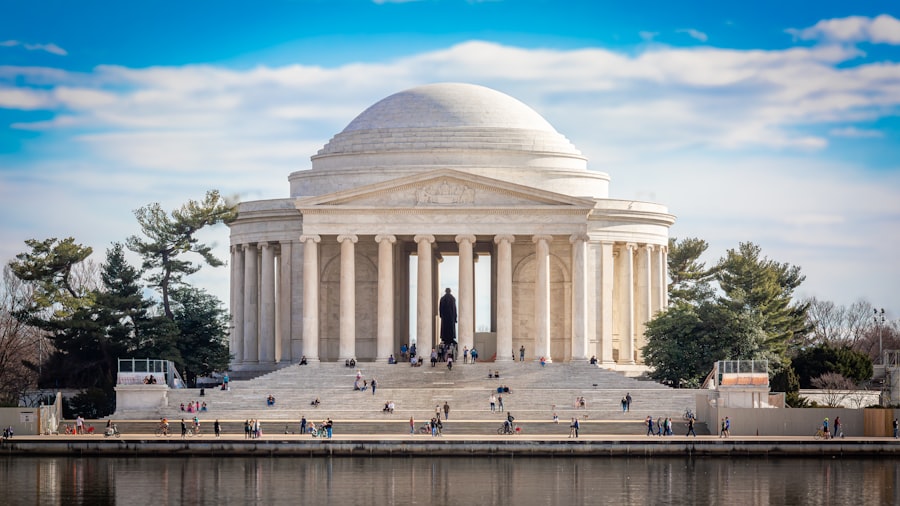
The Declaration of Independence stands as one of Jefferson’s most enduring legacies. Tasked with drafting this monumental document by the Continental Congress, he approached the assignment with a sense of urgency and purpose. Drawing inspiration from Enlightenment ideals, Jefferson articulated a vision of government that emphasized individual rights and the social contract.
The famous opening lines—”We hold these truths to be self-evident, that all men are created equal”—have become synonymous with American democracy. Jefferson’s writing process involved careful consideration of language and structure. He sought to create a document that would not only declare independence but also resonate with the hearts and minds of the American people.
His use of rhetorical devices, such as parallelism and repetition, added a lyrical quality to the text that has captivated readers for centuries. The Declaration was adopted on July 4, 1776, marking a turning point in American history. It served as a rallying cry for revolutionaries and laid the groundwork for future democratic movements around the world.
Presidency and Major Accomplishments
Jefferson’s presidency, which lasted from 1801 to 1809, was marked by significant accomplishments that shaped the trajectory of the United States. Upon taking office, he sought to implement his vision of a limited government that prioritized individual liberties and agrarian interests. One of his most notable achievements was the Louisiana Purchase in 1803, which doubled the size of the United States and opened vast territories for exploration and settlement.
This acquisition not only expanded American land but also provided opportunities for economic growth and westward expansion. In addition to territorial expansion, Jefferson championed educational reform during his presidency. He believed that an informed citizenry was essential for a functioning democracy and advocated for public education initiatives.
His commitment to education was evident in his establishment of the University of Virginia in 1819, which reflected his belief in the importance of higher learning for fostering civic virtue and leadership. Jefferson’s presidency also saw the reduction of national debt and a focus on fiscal responsibility, aligning with his vision of a government that operated efficiently without overreach.
Relationship with Slavery and Views on Race
Despite his contributions to the ideals of liberty and equality, Jefferson’s relationship with slavery remains a complex and troubling aspect of his legacy. He inherited enslaved individuals from his father and continued to own slaves throughout his life, managing them on his plantation at Monticello. While he expressed moral reservations about slavery in his writings—arguing that it was a “moral depravity”—he failed to take significant action against it during his lifetime.
This contradiction has led historians to grapple with Jefferson’s views on race and freedom. Jefferson’s writings reveal a belief in white superiority that complicates his legacy as an advocate for human rights. In his “Notes on the State of Virginia,” he articulated views that suggested African Americans were inherently inferior to whites in terms of intellect and moral capacity.
These beliefs were not uncommon among many Enlightenment thinkers of his time but stand in stark contrast to the principles espoused in the Declaration of Independence. The tension between Jefferson’s ideals and his actions regarding slavery continues to provoke debate among scholars and serves as a reminder of the complexities inherent in America’s founding narratives.
Contributions to American Literature and Architecture
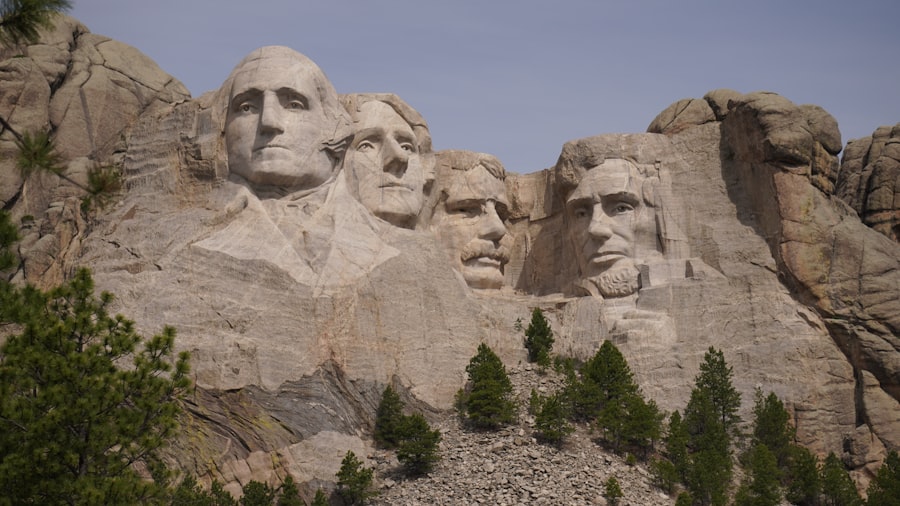
Beyond his political achievements, Jefferson made significant contributions to American literature and architecture that reflect his diverse interests and talents. As a writer, he produced numerous letters, essays, and reports that explored themes ranging from governance to philosophy. His correspondence with contemporaries such as John Adams and James Madison provides valuable insights into the political climate of early America.
In addition to his literary pursuits, Jefferson was an accomplished architect who designed several notable buildings, most famously his own home at Monticello. Influenced by classical architecture, Jefferson’s designs emphasized symmetry and proportion, embodying Enlightenment ideals of beauty and order.
He also played a key role in designing the University of Virginia campus, which reflects his vision for education as a cornerstone of democracy. The Rotunda at the university is particularly emblematic of Jefferson’s architectural philosophy, serving as both an academic building and a symbol of enlightenment thought.
Retirement and Later Years
After serving two terms as president, Jefferson retired from public life in 1809 but remained active intellectually and socially. He returned to Monticello, where he focused on agricultural experimentation and continued his lifelong pursuit of knowledge. During this period, he engaged in extensive correspondence with fellow intellectuals across Europe and America, discussing topics ranging from science to philosophy.
His passion for learning never waned; he amassed an impressive library that became one of the largest collections in America at the time. In addition to his intellectual pursuits, Jefferson remained committed to public service even after leaving office. He was instrumental in founding the University of Virginia in 1819, which reflected his belief in education as essential for democracy.
His vision for the university included an emphasis on academic freedom and secular education—principles that continue to resonate in modern educational institutions. Despite facing personal challenges later in life, including financial difficulties due to mismanagement at Monticello, Jefferson maintained an optimistic outlook on America’s future.
Legacy and Impact on American History
Thomas Jefferson’s legacy is multifaceted, encompassing his roles as a Founding Father, president, philosopher, architect, and educator. His contributions to American democracy are undeniable; he helped lay the groundwork for a nation built on principles of liberty and equality while simultaneously grappling with contradictions inherent in those ideals. The Declaration of Independence remains a foundational text that continues to inspire movements for civil rights around the globe.
However, Jefferson’s legacy is also marked by complexities that challenge simplistic interpretations of his life and work. His relationship with slavery raises important questions about moral consistency and the limits of Enlightenment thought when applied to issues of race. As historians continue to explore these themes, Jefferson’s impact on American history remains profound—serving as both an inspiration for democratic ideals and a cautionary tale about the challenges of living up to those ideals in practice.
His life invites ongoing reflection on how we reconcile our nation’s founding principles with its historical realities.
In exploring the intricate details of Thomas Jefferson’s life as depicted in “The Life of Thomas Jefferson” by Henry S. Randall, readers may find additional insights in a related article available on Hellread. This article delves into the broader historical context of Jefferson’s era, providing a nuanced understanding of his contributions and challenges. For those interested in expanding their knowledge on this subject, the article can be accessed through the following link: Related Article on Thomas Jefferson. This resource offers a complementary perspective that enriches the narrative presented by Randall.
FAQs
Who was Thomas Jefferson?
Thomas Jefferson was the third President of the United States, serving from 1801 to 1809. He was also one of the Founding Fathers of the United States and the principal author of the Declaration of Independence.
What were Thomas Jefferson’s major accomplishments?
Thomas Jefferson’s major accomplishments include the drafting of the Declaration of Independence, the founding of the University of Virginia, and the Louisiana Purchase, which doubled the size of the United States.
What were Thomas Jefferson’s political beliefs?
Thomas Jefferson was a proponent of limited government, individual rights, and the separation of church and state. He was a strong advocate for states’ rights and agrarianism.
What were Thomas Jefferson’s views on slavery?
Thomas Jefferson owned slaves and was conflicted about the institution of slavery. He believed that it was morally wrong, but he also struggled with the practical challenges of emancipation.
What was Thomas Jefferson’s role in the American Revolution?
Thomas Jefferson was a delegate to the Second Continental Congress and was chosen to draft the Declaration of Independence, which outlined the colonies’ grievances against the British monarchy and asserted their right to self-governance.
What was Thomas Jefferson’s legacy?
Thomas Jefferson’s legacy includes his contributions to the founding of the United States, his advocacy for individual rights and limited government, and his lasting impact on American political and intellectual thought.




