
“From the Holy Mountain: A Journey in Search of the Christian East” is a profound narrative penned by the British historian and travel writer William Dalrymple. Published in 1997, this work serves as both a travelogue and a historical exploration, chronicling Dalrymple’s journey through the Middle East, particularly focusing on the remnants of Christian communities that have existed in the region for centuries. The title itself evokes a sense of pilgrimage, suggesting a quest not only for geographical locations but also for understanding the spiritual and cultural landscapes that have shaped these communities.
Dalrymple’s writing is characterized by its rich detail and evocative prose, drawing readers into the complexities of faith, history, and identity. The book is structured around Dalrymple’s travels to various sites of significance to Christianity, including places like Mount Athos in Greece, Jerusalem, and the ancient cities of Syria and Lebanon. Each location serves as a backdrop for exploring the lives of contemporary Christians who inhabit these historically rich areas.
Through his narrative, Dalrymple weaves together personal anecdotes, historical accounts, and interviews with local inhabitants, creating a tapestry that highlights both the beauty and fragility of these communities. The journey is not merely physical; it is also an intellectual and spiritual exploration that invites readers to reflect on the enduring legacy of Christianity in a region often fraught with conflict.
Key Takeaways
- “From the Holy Mountain” is a travelogue written by William Dalrymple, documenting his journey through the Christian communities of the Middle East.
- Dalrymple’s journey takes him through Turkey, Syria, Lebanon, Israel, Palestine, and Egypt, where he explores the ancient Christian traditions and cultures of the region.
- The book provides historical and cultural insights into the Christian communities, shedding light on their rich heritage and the challenges they face in the modern world.
- Dalrymple also highlights the challenges and persecution faced by Christian communities in the Middle East, including discrimination, violence, and displacement.
- “From the Holy Mountain” offers reflections on faith and tradition, and its impact and legacy lie in its contribution to preserving the history and traditions of the Christian communities in the Middle East.
The Journey of William Dalrymple
Dalrymple’s journey begins in the shadow of Mount Athos, a monastic community in Greece that has been a bastion of Orthodox Christianity for over a millennium. His initial encounters with the monks provide a glimpse into a world where time seems to stand still, where ancient traditions are preserved amidst the encroaching modernity of the outside world. The monks’ dedication to their faith and their austere lifestyle serve as a stark contrast to the tumultuous political landscape surrounding them.
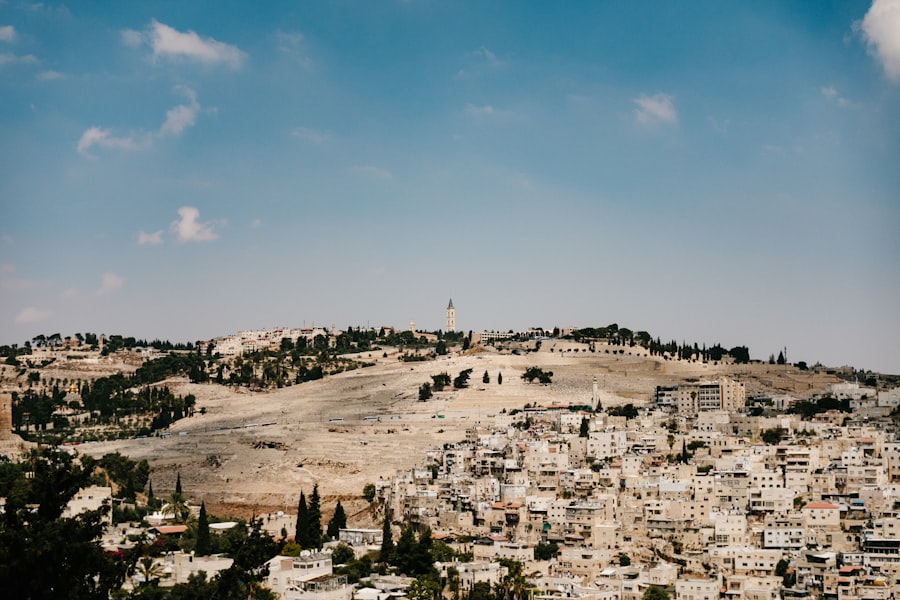
Dalrymple’s observations are not merely descriptive; they are infused with a sense of wonder and respect for the spiritual commitment he witnesses. As he travels further into the Middle East, Dalrymple’s narrative unfolds against a backdrop of historical significance. He visits Jerusalem, a city sacred to multiple faiths, where he encounters both the beauty of its religious sites and the tensions that arise from its contested status.
His interactions with local Christians reveal their deep-rooted connections to the land and their struggles to maintain their identity in an increasingly hostile environment. Each stop along his journey is meticulously documented, with Dalrymple’s keen eye for detail capturing the essence of each community he encounters. His writing invites readers to join him on this pilgrimage, experiencing the sights, sounds, and stories that define the Christian East.
Exploring the Christian Communities of the Middle East
Dalrymple’s exploration of Christian communities in the Middle East reveals a rich tapestry of faith and tradition that has persisted despite centuries of upheaval. He delves into the lives of various sects, including Greek Orthodox, Armenian Apostolic, and Maronite Christians, each with its own unique customs and practices. Through interviews and personal narratives, he brings to life the stories of individuals who embody these traditions, offering insights into their daily lives, rituals, and challenges.
For instance, he recounts his visit to an Armenian church in Jerusalem, where he witnesses a baptism ceremony that underscores the deep sense of community and continuity among its members. The author also highlights the historical significance of these communities, tracing their roots back to the early days of Christianity. He discusses how these groups have maintained their identities through centuries of foreign rule, persecution, and migration.
The resilience of these communities is evident in their commitment to preserving their languages, liturgies, and cultural practices. Dalrymple’s narrative emphasizes that these Christians are not merely relics of history; they are vibrant participants in the contemporary social fabric of the Middle East. Their stories challenge prevailing narratives that often overlook or simplify the complexities of religious identity in this region.
Historical and Cultural Insights
Dalrymple’s work is steeped in historical context, providing readers with a nuanced understanding of the cultural dynamics at play within Christian communities in the Middle East. He delves into the historical events that have shaped these communities, from the Byzantine Empire’s influence to the impact of Ottoman rule and modern geopolitical conflicts. By situating his narrative within this broader historical framework, Dalrymple illuminates how past events continue to resonate in contemporary society.
One particularly striking aspect of Dalrymple’s exploration is his attention to the architectural heritage left behind by these communities. He describes ancient churches adorned with intricate frescoes and mosaics that tell stories of faith and devotion. These structures are not merely physical spaces; they are repositories of memory and identity for generations of believers.
He underscores how these churches serve as symbols of resilience amid adversity, standing as testaments to the enduring presence of Christianity in a region often characterized by conflict.
Challenges and Persecution Faced by Christian Communities
Despite their rich history and cultural contributions, Christian communities in the Middle East face significant challenges that threaten their existence. Dalrymple does not shy away from addressing these issues head-on; rather, he brings them to light with sensitivity and depth. He recounts stories of persecution, displacement, and violence that have plagued these communities in recent decades.
The rise of extremist ideologies and sectarian violence has led to an alarming exodus of Christians from countries like Iraq and Syria, where they once thrived. In his travels through these regions, Dalrymple meets individuals who have been directly affected by such turmoil. He shares poignant accounts of families forced to flee their homes due to threats against their lives or religious beliefs.
These narratives serve as powerful reminders of the human cost associated with religious intolerance and conflict. Dalrymple’s empathetic portrayal encourages readers to confront uncomfortable truths about the fragility of religious minorities in an increasingly polarized world. Moreover, he explores how these challenges have prompted some communities to adapt in order to survive.
For instance, he discusses initiatives aimed at fostering interfaith dialogue and cooperation among different religious groups as a means of building resilience against external pressures. These efforts highlight the agency of local Christians as they navigate their complex realities while striving to maintain their faith and cultural heritage.
Reflections on Faith and Tradition
Throughout “From the Holy Mountain,” Dalrymple engages deeply with themes of faith and tradition, inviting readers to reflect on what it means to belong to a religious community in a rapidly changing world. His encounters with various Christian sects reveal diverse expressions of faith that are deeply rooted in local customs and histories. For example, he describes how certain rituals are infused with elements unique to specific cultures, illustrating how faith can be both universal and particular.
Dalrymple’s reflections extend beyond mere observation; he grapples with his own understanding of faith as he interacts with individuals who embody profound spiritual convictions. He contemplates questions about belief, doubt, and the role of tradition in shaping identity. His writing resonates with readers who may find themselves navigating similar questions within their own spiritual journeys.
By sharing his personal reflections alongside those of his subjects, Dalrymple creates a dialogue that transcends geographical boundaries. Moreover, he emphasizes the importance of preserving traditions as a means of fostering community cohesion. In an age marked by globalization and homogenization, Dalrymple argues for the value of maintaining distinct cultural practices that enrich human experience.
His narrative serves as a reminder that faith is not merely an abstract concept but is lived out through tangible expressions—be it through communal worship, festivals, or acts of charity.
Impact and Legacy of From the Holy Mountain
The impact of “From the Holy Mountain” extends far beyond its initial publication; it has become a seminal work that continues to resonate with readers interested in understanding the complexities of religious identity in the Middle East. Dalrymple’s meticulous research and engaging storytelling have inspired subsequent generations of writers and scholars to explore similar themes within their own works. His ability to blend personal narrative with historical analysis has set a standard for travel writing that seeks to illuminate rather than sensationalize.
Furthermore, Dalrymple’s work has contributed significantly to raising awareness about the plight of Christian communities facing persecution in various parts of the world. By bringing attention to their struggles and triumphs, he has fostered greater empathy among readers who may be unfamiliar with these issues. His narrative serves as a call to action for those who believe in the importance of preserving cultural diversity and protecting religious minorities.
In addition to its literary impact, “From the Holy Mountain” has also sparked discussions about interfaith dialogue and coexistence in regions marked by religious tension. Dalrymple’s emphasis on shared humanity resonates with those advocating for peacebuilding efforts among different faith communities. His work encourages readers to engage thoughtfully with questions surrounding faith, identity, and belonging—issues that remain relevant in today’s globalized society.
The Significance of William Dalrymple’s Work
William Dalrymple’s “From the Holy Mountain” stands as a testament to the power of storytelling in illuminating complex social realities. Through his journey across the Christian East, he offers readers an intimate glimpse into communities that have weathered centuries of change while remaining steadfast in their faith traditions. His ability to weave together personal experiences with historical context creates a rich narrative tapestry that invites reflection on broader themes such as identity, resilience, and coexistence.
The significance of Dalrymple’s work lies not only in its literary merit but also in its capacity to foster understanding across cultural divides. By shedding light on the experiences of marginalized communities, he challenges readers to confront uncomfortable truths about religious intolerance while celebrating the beauty found within diversity. In an era marked by division and conflict, “From the Holy Mountain” serves as both an invitation to explore unfamiliar landscapes and a reminder of our shared humanity—a call for empathy amidst complexity that resonates deeply within our interconnected world.
In “From the Holy Mountain,” William Dalrymple embarks on a captivating journey through the remnants of Byzantine Christianity in the Middle East, weaving together history, travel, and personal reflection. A related article that delves into similar themes of historical exploration and cultural insights can be found on Hellread. This article provides a contemporary perspective on the enduring legacy of ancient civilizations and their impact on modern society. For those interested in further exploring these themes, you can read more in this related article.
FAQs
What is “From the Holy Mountain” by William Dalrymple about?
“From the Holy Mountain” is a travel book written by William Dalrymple, published in 1997. The book follows Dalrymple’s journey through the Middle East, retracing the footsteps of two Byzantine monks in the 6th century.
What is the main focus of “From the Holy Mountain”?
The main focus of “From the Holy Mountain” is to explore the history, culture, and religious traditions of the Christian communities in the Middle East, particularly in the regions of Turkey, Syria, Lebanon, Israel, and Egypt.
What are some of the themes explored in “From the Holy Mountain”?
Some of the themes explored in “From the Holy Mountain” include the decline and persecution of ancient Christian communities in the Middle East, the impact of historical events and political changes on religious traditions, and the preservation of ancient monasteries and churches.
What is the significance of the title “From the Holy Mountain”?
The title “From the Holy Mountain” refers to the journey taken by the Byzantine monks in the 6th century, as well as William Dalrymple’s own journey through the same regions. It symbolizes the exploration of ancient Christian heritage and the spiritual significance of the places visited in the book.
How has “From the Holy Mountain” been received by critics?
“From the Holy Mountain” has received positive reviews from critics, who have praised Dalrymple’s vivid storytelling, historical insights, and the book’s exploration of the vanishing Christian communities in the Middle East. It has been recognized as an important work in the genre of travel literature and historical non-fiction.




