

Nevil Shute, an accomplished author and engineer, is best known for his novels that often intertwine themes of human resilience, technology, and the complexities of life. Among his notable works is “Slide Rule: Autobiography of an Engineer,” a compelling narrative that offers readers a glimpse into the life of a man who straddled the worlds of engineering and literature. Published in 1954, this autobiography not only chronicles Shute’s personal journey but also serves as a testament to the profound impact of engineering on his worldview and writing.
Through a blend of technical insight and personal anecdotes, Shute invites readers to explore the intricacies of his profession while reflecting on broader societal themes. In “Slide Rule,” Shute delves into his formative years, professional experiences, and the events that shaped his character and career. The book is not merely a recounting of his achievements; it is a thoughtful exploration of the challenges and triumphs he faced as an engineer during a time of significant technological advancement.
Shute’s ability to articulate complex engineering concepts in an accessible manner makes this autobiography a unique contribution to both the literary and engineering fields. As readers navigate through his life story, they are treated to a rich tapestry of experiences that highlight the interplay between technical expertise and creative expression.
Key Takeaways
- Nevil Shute was a renowned British author and aeronautical engineer, known for his novel “Slide Rule: Autobiography of an Engineer.”
- Shute’s early life and education in engineering laid the foundation for his successful career as an engineer and later as a writer.
- The inspiration behind “Slide Rule” came from Shute’s own experiences as an engineer, providing a unique perspective on the intersection of engineering and storytelling.
- Shute’s engineering career and experiences, including his work on airship design and aircraft production, greatly influenced his writing and the themes in “Slide Rule.”
- “Slide Rule” reflects Shute’s writing style and explores themes of innovation, problem-solving, and the impact of technology on society, making it a significant contribution to engineering literature.
Early life and education of Nevil Shute
Nevil Shute was born on January 17, 1899, in Ealing, London, into a family that valued education and intellectual pursuits. His father was a civil engineer, which undoubtedly influenced Shute’s early fascination with engineering and technology. Growing up in an environment that encouraged curiosity and innovation, he developed a keen interest in mechanics and design from a young age.
This early exposure laid the groundwork for his future endeavors in both engineering and writing. Shute’s formal education began at the prestigious St. Edward’s School in Oxford, where he excelled academically.
His aptitude for mathematics and science became evident during these formative years, leading him to pursue further studies at the University of Oxford. He enrolled in the engineering program at Balliol College, where he honed his technical skills and deepened his understanding of engineering principles. However, his academic journey was interrupted by World War I, during which he served as a pilot in the Royal Flying Corps.
This experience not only shaped his character but also provided him with firsthand knowledge of aviation technology, which would later influence his writing.
The inspiration behind Slide Rule: Autobiography of an Engineer
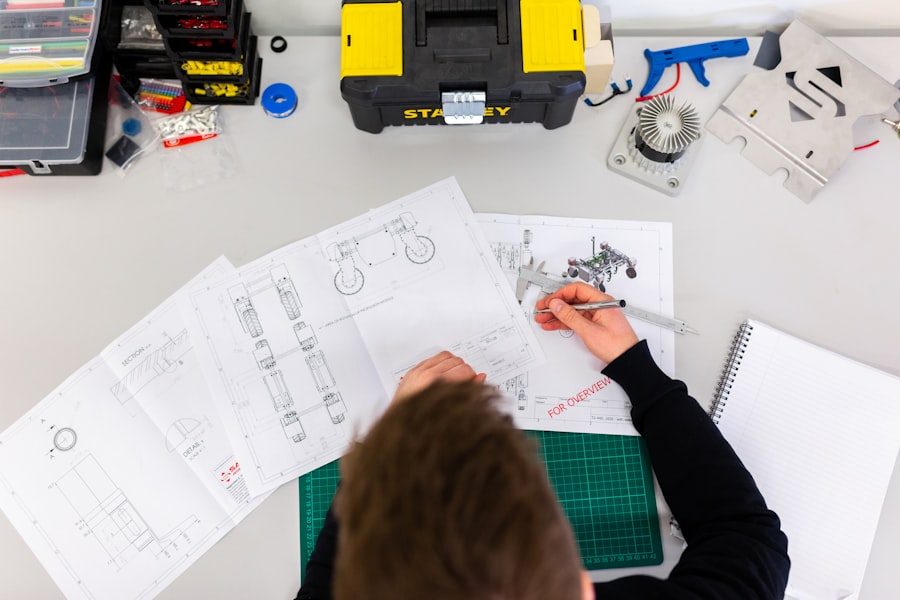
The inspiration for “Slide Rule” stemmed from Shute’s desire to document his experiences as an engineer while also reflecting on the broader implications of technology in society. After establishing himself as a successful author, he recognized the importance of sharing his unique perspective on engineering—a field often overlooked in literary circles. Shute aimed to bridge the gap between technical expertise and storytelling, providing readers with insights into the life of an engineer while also engaging them with relatable narratives.
In crafting “Slide Rule,” Shute drew upon his extensive career in aviation and engineering, particularly his work with the de Havilland Aircraft Company. His experiences during World War II, where he contributed to the development of military aircraft, served as a rich source of inspiration for the book. The challenges he faced during this tumultuous period not only shaped his professional identity but also influenced his philosophical outlook on life and technology.
By intertwining personal anecdotes with technical insights, Shute sought to convey the significance of engineering in shaping modern society.
Shute’s engineering career and experiences
Shute’s engineering career began in earnest after he graduated from Oxford, where he joined the de Havilland Aircraft Company as a junior engineer. His early work involved designing components for aircraft, which provided him with invaluable hands-on experience in the burgeoning field of aviation. As he progressed through the ranks, he became increasingly involved in more complex projects, including the design of the DH.88 Comet, an aircraft that would later gain fame for its record-breaking flights.
Throughout his career, Shute faced numerous challenges that tested his skills and resilience as an engineer. The transition from peacetime to wartime production during World War II posed significant obstacles, requiring rapid adaptation to changing demands and technological advancements. Shute’s ability to navigate these challenges not only solidified his reputation as a skilled engineer but also instilled in him a deep appreciation for the collaborative nature of engineering projects.
He often emphasized the importance of teamwork and communication in achieving successful outcomes, lessons that would resonate throughout his writing.
The impact of engineering on Shute’s writing
Engineering profoundly influenced Shute’s writing style and thematic choices. His technical background allowed him to approach storytelling with a unique perspective, blending factual accuracy with imaginative narrative techniques. In “Slide Rule,” Shute employs clear and concise language to explain complex engineering concepts, making them accessible to readers without technical expertise.
This ability to demystify engineering principles reflects his belief that technology should be understood by all, not just those within the field. Moreover, Shute’s experiences as an engineer informed the moral and ethical dilemmas explored in his fiction. He often grappled with questions about the role of technology in society and its potential consequences for humanity.
By weaving together personal stories with broader societal implications, Shute encourages readers to reflect on their relationship with technology and its impact on their lives.
Shute’s writing style and themes in Slide Rule

Accessible Storytelling
This accessibility is one of the hallmarks of his work; it allows him to convey intricate ideas while maintaining a conversational tone that resonates with a diverse audience.
Exploring Themes
The themes present in “Slide Rule” are multifaceted, encompassing not only the technical aspects of engineering but also the human experiences intertwined with them. Shute explores themes of innovation, perseverance, and ethical responsibility within the context of technological advancement. He reflects on how engineers must navigate moral dilemmas when their creations have far-reaching consequences for society.
Universal Reflections
Through personal anecdotes and reflections on historical events, Shute invites readers to consider the broader implications of their work—an exploration that transcends mere autobiography to touch upon universal truths about human existence.
The reception and legacy of Slide Rule: Autobiography of an Engineer
Upon its publication in 1954, “Slide Rule” received positive reviews from both literary critics and engineering professionals alike. Readers appreciated Shute’s ability to articulate complex engineering concepts while maintaining an engaging narrative style. The book was praised for its candidness; Shute did not shy away from discussing failures or setbacks in his career, which added authenticity to his story.
This honesty resonated with many aspiring engineers who found inspiration in his journey. The legacy of “Slide Rule” endures as it continues to be referenced in discussions about the intersection of engineering and literature. It has become a seminal work for those interested in understanding how technical expertise can inform creative expression.
The book is often included in academic curricula related to engineering ethics and communication, highlighting its relevance beyond mere autobiography. Shute’s reflections on the responsibilities of engineers serve as a reminder that technology must be approached with caution and consideration for its impact on society.
Shute’s influence on the engineering and literary communities
Nevil Shute’s contributions extend beyond “Slide Rule” into both engineering and literary communities. His ability to articulate complex ideas in an accessible manner has inspired countless engineers to embrace writing as a means of sharing their knowledge and experiences. By demonstrating that technical expertise can coexist with creative expression, Shute has encouraged professionals across various fields to explore storytelling as a way to communicate their insights.
In literature, Shute’s works have influenced generations of writers who seek to blend technical knowledge with narrative depth. His novels often feature protagonists who grapple with ethical dilemmas related to technology—an exploration that resonates with contemporary issues such as artificial intelligence and environmental sustainability. As society continues to navigate rapid technological advancements, Shute’s insights remain relevant, prompting discussions about the responsibilities of those who create and innovate.
Comparisons to other autobiographies of engineers
When comparing “Slide Rule” to other autobiographies written by engineers, several key distinctions emerge.
While other engineers may recount their accomplishments in isolation, Shute weaves together personal anecdotes that illustrate how his experiences shaped not only his career but also his worldview.
Additionally, unlike some autobiographies that may adopt a more formal tone or structure, “Slide Rule” maintains an engaging conversational style that invites readers into Shute’s life story. This approach allows for a more intimate connection between author and reader, fostering empathy and understanding for the challenges faced by engineers throughout their careers. In this way, “Slide Rule” stands out as a unique contribution within the genre of engineering autobiographies.
The intersection of engineering and storytelling in Slide Rule
The intersection of engineering and storytelling is a central theme in “Slide Rule.” Shute masterfully blends technical knowledge with narrative techniques to create a compelling autobiography that resonates with both engineers and general readers alike. By framing his experiences within relatable stories, he demonstrates how engineering is not merely about numbers or calculations; it is also about human experiences, relationships, and ethical considerations. Shute’s ability to convey complex ideas through storytelling serves as an important reminder that effective communication is essential within any profession—especially one as impactful as engineering.
He illustrates how narratives can humanize technical subjects, making them more approachable for those outside the field while simultaneously enriching the understanding of those within it. This intersection ultimately highlights the importance of storytelling as a tool for bridging gaps between disciplines.
Conclusion and final thoughts on Slide Rule: Autobiography of an Engineer
“Slide Rule: Autobiography of an Engineer” stands as a testament to Nevil Shute’s dual legacy as both an accomplished engineer and a gifted storyteller. Through this work, he invites readers into his world—a world where technology meets humanity—and encourages them to reflect on their own relationships with innovation and progress. The book’s enduring relevance speaks not only to Shute’s skillful writing but also to its exploration of timeless themes that continue to resonate today.
As we navigate an increasingly complex technological landscape, Shute’s insights remind us that behind every invention lies a story—a story filled with challenges, triumphs, ethical dilemmas, and human experiences. In this way, “Slide Rule” transcends its genre; it becomes a bridge between engineering and literature, inspiring future generations to embrace both disciplines with equal passion and curiosity.
If you enjoyed reading Slide Rule: Autobiography of an Engineer by Nevil Shute, you may also be interested in checking out this article on hellread.com that discusses the impact of engineering on society and the importance of innovation in the field. It provides a fascinating perspective on the role of engineers in shaping the world we live in today.
FAQs
What is the book “Slide Rule: Autobiography of an Engineer” about?
The book “Slide Rule: Autobiography of an Engineer” is a memoir by Nevil Shute, a British aeronautical engineer and novelist. It details his experiences as an engineer, including his work on airship design and his involvement in the development of early aircraft.
When was “Slide Rule: Autobiography of an Engineer” published?
“Slide Rule: Autobiography of an Engineer” was first published in 1954.
What are some of the key themes in “Slide Rule: Autobiography of an Engineer”?
Some of the key themes in “Slide Rule: Autobiography of an Engineer” include Shute’s experiences in the field of engineering, the challenges and triumphs of technological innovation, and the impact of engineering on society.
Is “Slide Rule: Autobiography of an Engineer” a work of fiction or non-fiction?
“Slide Rule: Autobiography of an Engineer” is a non-fiction memoir, recounting Nevil Shute’s real-life experiences as an engineer.
What is the significance of the title “Slide Rule” in the context of the book?
The title “Slide Rule” refers to the tool that engineers used for calculations before the widespread use of electronic calculators. It symbolizes the era in which Shute worked as an engineer and the precision and skill required in the field.




