

Elie Wiesel, a name synonymous with Holocaust literature, was born on September 30, 1928, in Sighet, a small town in Transylvania, which was then part of Romania. His early life was marked by a deep commitment to his Jewish faith and culture, which would later serve as a poignant backdrop for his literary works. Wiesel’s formative years were abruptly shattered when the Nazi regime began its systematic extermination of Jews during World War
Wiesel’s post-war life was dedicated to bearing witness to the atrocities he had experienced. After surviving the concentration camps, he settled in France and later moved to the United States, where he became a prominent author, professor, and human rights advocate. His literary contributions extend beyond “Night,” encompassing numerous works that explore themes of suffering, faith, and the moral responsibilities of individuals in times of crisis.
Wiesel’s eloquence and passion for justice earned him the Nobel Peace Prize in 1986, recognizing his efforts to combat indifference and promote human rights worldwide. Through his writings and public speaking engagements, Wiesel has left an indelible mark on literature and history, ensuring that the memories of those lost during the Holocaust are never forgotten.
Key Takeaways
Historical Context: The Holocaust
The Holocaust represents one of the darkest chapters in human history, characterized by the systematic genocide of six million Jews by the Nazi regime from 1941 to 1945. This atrocity was not an isolated event but rather the culmination of centuries of anti-Semitic sentiment in Europe. The rise of Adolf Hitler and the National Socialist German Workers’ Party (Nazi Party) in the early 1930s set the stage for widespread persecution.
The Nazis propagated a worldview that deemed Jews as racially inferior and a threat to society, leading to increasingly oppressive measures against them. The implementation of discriminatory laws, such as the Nuremberg Laws of 1935, stripped Jews of their rights and citizenship, isolating them from the rest of society. As World War II escalated, the Nazis escalated their campaign against Jews through mass deportations to concentration camps.
The infamous Auschwitz-Birkenau complex became a symbol of this horror, where millions were murdered in gas chambers or subjected to forced labor under brutal conditions. The Holocaust was not merely a series of isolated incidents; it was a meticulously planned and executed genocide that involved collaboration from various sectors of society, including government officials, military personnel, and ordinary citizens. The sheer scale and brutality of these events have led historians to study the Holocaust extensively, seeking to understand how such atrocities could occur and how humanity can prevent similar occurrences in the future.
Plot Summary: Night
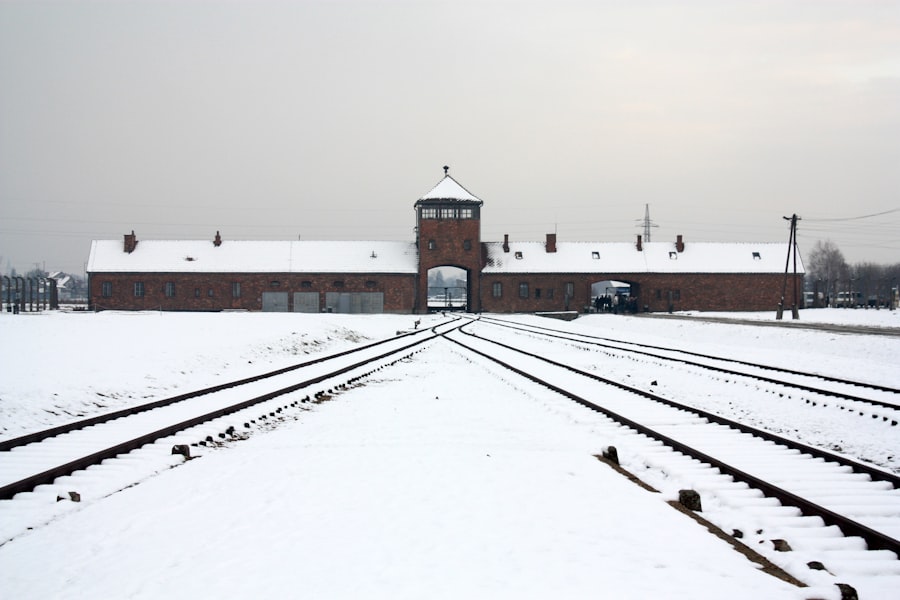
“Night” is a harrowing memoir that chronicles Elie Wiesel’s experiences during the Holocaust, particularly his time in Auschwitz and Buchenwald. The narrative begins in Sighet, where Wiesel describes his life as a young Jewish boy filled with faith and hope. However, this tranquility is shattered when the Nazis invade Hungary in 1944.
The gradual imposition of restrictions on Jewish life culminates in mass deportations to concentration camps. Wiesel’s family is torn apart as they are herded onto cattle cars bound for Auschwitz, where they are met with unimaginable brutality. The memoir details Wiesel’s struggle for survival amid the dehumanizing conditions of the camps.
He recounts the loss of his family members, particularly his father, who becomes a source of strength for him during their ordeal. As they endure starvation, forced labor, and constant fear of death, Wiesel grapples with his faith in God. The narrative reaches a poignant climax when he witnesses the execution of fellow prisoners and experiences profound despair.
Ultimately, “Night” is not just a recounting of events; it is an exploration of loss—loss of family, faith, and humanity itself. The memoir concludes with Wiesel’s liberation from Buchenwald in April 1945, but it leaves readers with an indelible sense of sorrow and reflection on the depths of human suffering.
Themes in Night
“Night” is rich with themes that resonate deeply with readers and provoke critical reflection on morality and humanity. One prominent theme is the struggle between faith and doubt. Throughout his ordeal, Wiesel grapples with his belief in God amidst the horrors he witnesses.
Initially clinging to his faith, he becomes increasingly disillusioned as he confronts the brutality inflicted upon innocent lives. This internal conflict raises profound questions about divine justice and human suffering—questions that have haunted theologians and philosophers for centuries. Another significant theme is the loss of identity and humanity.
As Wiesel and other prisoners are stripped of their names and reduced to mere numbers, their individuality is erased. This dehumanization is emblematic of the broader Nazi agenda to annihilate not just lives but also cultural identities. Wiesel’s poignant reflections on this loss serve as a powerful reminder of the importance of recognizing our shared humanity.
The memoir also explores themes of silence and complicity; Wiesel critiques not only those who perpetrated violence but also those who stood by in silence as atrocities unfolded. This theme serves as a call to action for readers to confront injustice wherever it may arise.
Characters in Night
The characters in “Night” are not merely fictional constructs; they represent real individuals whose lives were irrevocably altered by the Holocaust. Eliezer Wiesel serves as both the narrator and protagonist, embodying the struggle for survival while grappling with profound existential questions. His relationship with his father is central to the narrative; their bond provides moments of solace amid despair.
Wiesel’s father, Shlomo, is depicted as a figure of strength and resilience but also succumbs to the physical and emotional toll of their experiences. Other characters include fellow prisoners who illustrate various responses to suffering. For instance, Moishe the Beadle serves as a prophetic figure whose warnings about impending danger go unheeded by the community.
His character underscores the theme of denial that permeated Jewish society before the Holocaust. Additionally, Wiesel encounters individuals who exhibit both cruelty and compassion within the camps—guards who dehumanize prisoners and fellow inmates who risk their lives to help one another. These characters collectively enrich Wiesel’s narrative by highlighting the spectrum of human behavior under extreme duress.
Writing Style and Structure

Wiesel’s writing style in “Night” is characterized by its stark simplicity and emotional depth. The prose is unadorned yet powerful, reflecting the rawness of his experiences. This minimalist approach allows readers to engage directly with the horror without distraction from elaborate language or embellishments.
Wiesel employs short sentences and fragmented thoughts that mirror his psychological state during moments of trauma—an effective technique that immerses readers in his emotional turmoil. The structure of “Night” is linear yet fragmented, echoing the disjointed nature of memory itself. The narrative unfolds chronologically but often shifts between past recollections and present reflections, creating a sense of immediacy that enhances its impact.
This structure allows Wiesel to convey not only events but also their lasting emotional resonance. The use of first-person narration invites readers into Wiesel’s psyche, fostering an intimate connection that compels them to confront uncomfortable truths about humanity.
Reception and Impact of Night
Upon its publication in 1958, “Night” received critical acclaim for its unflinching portrayal of the Holocaust experience. However, it was not an immediate bestseller; its stark content challenged readers who were still grappling with the aftermath of World War
Wiesel’s candid exploration of suffering resonated with many readers who found solace in his honesty. Critics praised “Night” for its ability to evoke empathy while confronting uncomfortable truths about human nature. The memoir has sparked discussions about memory, trauma, and moral responsibility—conversations that remain relevant today as societies grapple with issues of genocide and intolerance.
Wiesel’s work has inspired countless individuals to engage in activism against injustice, reinforcing literature’s power to effect social change.
Night’s Legacy
The legacy of “Night” is profound and multifaceted. It stands as a testament not only to Wiesel’s personal journey but also to the collective memory of those who perished during the Holocaust. The memoir has played a crucial role in Holocaust education, serving as a primary text for understanding this dark chapter in history.
Its inclusion in school curricula has ensured that new generations confront these difficult truths while fostering discussions about tolerance and human rights. Moreover, “Night” has inspired numerous adaptations across various media forms—films, plays, and even musical compositions—each seeking to capture its essence while reaching broader audiences. These adaptations serve as reminders that while Wiesel’s narrative is deeply personal, its themes resonate universally across cultures and time periods.
The memoir continues to be referenced in contemporary discussions about genocide prevention and human rights advocacy, reinforcing its relevance in today’s world.
Night’s Adaptations
The enduring power of “Night” has led to several adaptations that seek to bring Wiesel’s story to new audiences through different mediums. One notable adaptation is the 2000 film directed by Laurence Fishburne, which captures key moments from Wiesel’s memoir while striving to remain faithful to its emotional core. The film format allows for visual storytelling that can evoke visceral reactions from viewers who may find it challenging to engage with written texts.
These adaptations often incorporate multimedia elements—such as projections or soundscapes—to enhance audience engagement and create an immersive experience that reflects the horrors depicted in “Night.” Each adaptation serves as a reminder that while literature can convey profound truths about human experience, other forms of art can also play a vital role in preserving memory and fostering empathy.
Analysis of Night
A deeper analysis of “Night” reveals its intricate layers and profound implications for understanding trauma and memory. One critical aspect is Wiesel’s exploration of silence—both personal silence in response to trauma and societal silence regarding atrocities committed against marginalized groups. This theme resonates powerfully today as individuals grapple with their own complicity or silence in confronting injustice within their communities.
By sharing his story so candidly, Wiesel challenges readers not only to remember but also to act against indifference in their own lives. This call to action transcends time; it urges each generation to confront its own moral dilemmas while fostering a culture that values empathy over apathy.
Night’s Enduring Importance
“Night” remains an essential work that transcends its historical context; it speaks universally about suffering, resilience, and moral responsibility. Elie Wiesel’s poignant narrative serves as both a personal testimony and a collective memory—a reminder that we must never forget those who suffered during one of history’s darkest periods. Its themes continue to resonate today as societies grapple with issues related to discrimination, violence, and human rights abuses.
The enduring importance of “Night” lies not only in its historical significance but also in its ability to provoke critical reflection on our shared humanity. As we engage with Wiesel’s words, we are compelled to confront uncomfortable truths about ourselves while fostering empathy for others’ experiences—an imperative that remains vital in our increasingly complex world.




