
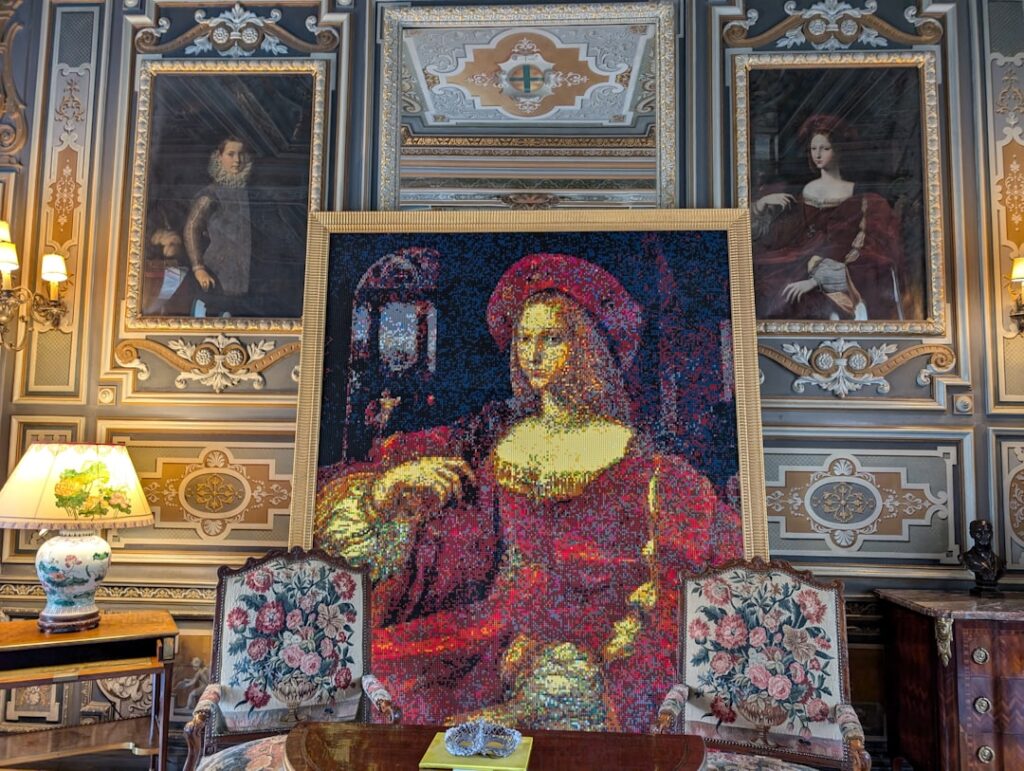
Catherine the Great, born in 1729 as Sophie Friederike Auguste von Anhalt-Zerbst, emerged as one of the most formidable rulers in Russian history. Her reign, which lasted from 1762 until her death in 1796, marked a significant turning point for Russia, transforming it into a major European power. Catherine’s life story is not merely one of royal ascent; it is a narrative woven with ambition, intellect, and a relentless pursuit of reform.
She is often remembered for her enlightened policies and her patronage of the arts, which helped to usher in a cultural renaissance in Russia. Her legacy is complex, characterized by both her achievements and the controversies that surrounded her rule. Catherine’s ability to navigate the treacherous waters of court politics, her strategic marriages, and her adeptness at consolidating power are all hallmarks of her extraordinary life.
As a female ruler in a male-dominated society, she defied the odds and established herself as a significant figure in world history, leaving an indelible mark on Russia and beyond.
Key Takeaways
- Catherine the Great was a powerful and influential empress of Russia during the 18th century, known for her political reforms and cultural contributions.
- She rose to power after marrying the future Emperor Peter III and later staged a coup to become the ruler of Russia.
- Catherine’s reign was marked by significant political reforms, territorial expansion, and modernization efforts.
- She was a patron of the arts and education, contributing to the cultural and intellectual development of Russia.
- Catherine’s personal life and relationships, including her numerous affairs, have been the subject of much controversy and speculation.
Early Life and Rise to Power
Catherine was born into a minor German princely family, which afforded her little in terms of political power or influence. Her early years were spent in Stettin (now Szczecin, Poland), where she received a rigorous education that included lessons in history, philosophy, and the arts. At the age of 15, she was chosen to marry the heir to the Russian throne, Grand Duke Peter, a decision that would ultimately alter the course of her life.
The marriage was fraught with difficulties; Peter was immature and often cruel, while Catherine found herself isolated in a foreign court. Despite these challenges, Catherine’s intelligence and political acumen began to shine through. She quickly learned the Russian language and immersed herself in the culture, gaining the favor of influential figures at court.
Her marriage to Peter was tumultuous, but it provided her with a unique opportunity to position herself as a potential leader. In 1762, after just six months of Peter’s reign as Emperor, Catherine orchestrated a coup d’état that resulted in his overthrow and subsequent death. This bold move not only secured her position as Empress but also demonstrated her remarkable ability to manipulate the political landscape to her advantage.
Reign as Empress of Russia
Catherine’s reign as Empress of Russia was marked by significant territorial expansion and modernization efforts. Upon ascending to the throne, she immediately set about consolidating her power and implementing reforms that would strengthen the state. One of her first acts was to establish a new legislative commission aimed at modernizing Russian law.
Although this commission ultimately failed to produce significant changes, it signaled Catherine’s commitment to Enlightenment ideals and her desire to improve governance. Under her rule, Russia expanded its borders significantly through military conquests and diplomatic maneuvers. The successful wars against the Ottoman Empire and the partitioning of Poland allowed Russia to gain vast territories and increase its influence in Eastern Europe.
Catherine’s foreign policy was characterized by pragmatism; she sought alliances that would benefit Russia while simultaneously expanding its reach. Her ability to navigate complex international relations solidified Russia’s status as a formidable power on the European stage.
Political Reforms and Achievements
Catherine’s political reforms were ambitious and reflected her Enlightenment ideals. She sought to modernize Russia’s administrative structure by decentralizing power and granting more autonomy to local governments. This was particularly evident in her establishment of provincial governments that allowed for greater local participation in governance.
While these reforms were met with resistance from traditionalists within the nobility, they laid the groundwork for a more efficient administrative system. In addition to administrative reforms, Catherine also focused on education and legal reform. She established schools for girls and promoted education for all social classes, believing that an educated populace was essential for a prosperous state.
Her efforts culminated in the founding of the Smolny Institute for Noble Maidens in 1764, which became one of the first state-financed educational institutions for women in Europe. Furthermore, Catherine’s legal reforms aimed at codifying laws and reducing corruption within the judicial system were significant steps toward modernizing Russian governance.
Cultural and Intellectual Contributions
Catherine the Great was not only a political leader but also a patron of the arts and an advocate for intellectual discourse. Her court became a hub for Enlightenment thinkers, attracting philosophers such as Voltaire and Diderot. Catherine corresponded with these intellectuals, engaging in discussions about governance, philosophy, and social issues.
Her commitment to Enlightenment principles was evident in her efforts to promote literature, theater, and the visual arts throughout Russia. Under her patronage, St. Petersburg flourished as a cultural center.
The construction of the Hermitage Museum began during her reign, which would later house one of the largest collections of art in the world. Additionally, she supported Russian literature by encouraging writers like Alexander Radishchev and Denis Fonvizin, who contributed to the burgeoning literary scene of the time.
Personal Life and Relationships
Assassination and New Beginnings
After his assassination, Catherine took several lovers throughout her reign, most notably Grigory Potemkin, who became both her confidant and a key political ally.
A Strategic Partnership
Their relationship was characterized by mutual respect and admiration; Potemkin played a crucial role in many of Catherine’s military campaigns and administrative reforms. Catherine’s relationships were often scrutinized by contemporaries and historians alike. While some viewed her romantic entanglements as scandalous, others recognized them as strategic alliances that bolstered her power.
Challenges and Controversies
Catherine’s reign was not without its challenges and controversies. One of the most significant uprisings during her rule was the Pugachev Rebellion (1773-1775), led by Yemelyan Pugachev, who claimed to be Peter III returned from the dead. This rebellion highlighted widespread discontent among serfs and peasants due to oppressive conditions under serfdom.
The revolt posed a serious threat to Catherine’s authority and forced her to confront the realities of social inequality within her empire. Additionally, Catherine faced criticism for her handling of serfdom, which continued to flourish under her rule despite her initial intentions to reform it. While she recognized the need for change, she ultimately prioritized maintaining the support of the nobility over addressing the plight of serfs.
This decision has led historians to debate whether Catherine truly embodied Enlightenment ideals or if she merely used them as a façade to legitimize her rule while perpetuating existing social hierarchies.
Legacy and Impact
Catherine the Great’s legacy is multifaceted; she is remembered as both an enlightened despot and a controversial figure whose policies had lasting effects on Russian society. Her efforts to modernize Russia laid the foundation for future reforms that would eventually lead to significant changes in governance and society. The expansion of Russian territory during her reign positioned Russia as a major player on the European stage, influencing geopolitics for centuries to come.
Moreover, Catherine’s patronage of the arts and commitment to education fostered a cultural renaissance that enriched Russian society. Her contributions to literature, art, and philosophy helped shape Russian identity during a pivotal period in its history. Despite the complexities of her reign—marked by both progress and oppression—Catherine remains an iconic figure whose impact continues to be felt today.
Robert K. Massie’s biography “Catherine the Great: Portrait of an Empress” offers an in-depth exploration of Catherine’s life and reign through meticulous research and engaging narrative style. Massie delves into both personal anecdotes and historical context, providing readers with a comprehensive understanding of Catherine’s character and motivations.
His portrayal captures not only her political acumen but also her vulnerabilities as a woman navigating a patriarchal society. Massie’s work stands out for its balanced approach; he does not shy away from discussing Catherine’s flaws or controversial decisions while simultaneously highlighting her achievements. The biography is rich with detail, drawing on primary sources such as letters and memoirs that illuminate Catherine’s thoughts and feelings throughout her life.
This depth allows readers to appreciate the complexities of her character beyond mere historical facts.
Critiques and Reception of the Book
The reception of Massie’s biography has been largely positive among historians and general readers alike. Critics have praised his ability to weave together personal narrative with broader historical themes, making Catherine’s story accessible without sacrificing scholarly rigor. However, some scholars have pointed out that Massie’s admiration for his subject may lead to an overly romanticized portrayal at times.
While Massie’s narrative is engaging, some critiques focus on his treatment of certain historical events or figures associated with Catherine’s reign. For instance, discussions surrounding serfdom may not delve deeply enough into its implications or consequences for Russian society at large. Nevertheless, Massie’s biography remains one of the most comprehensive accounts available, serving as both an introduction for those new to Russian history and a valuable resource for scholars seeking insight into Catherine’s life.
Conclusion and Reflection on Catherine the Great’s Life
Catherine the Great’s life is a testament to resilience, ambition, and intellect in an era when women were often relegated to subordinate roles within society. Her reign transformed Russia into a formidable empire while simultaneously fostering cultural growth that would resonate through generations. The complexities surrounding her rule—marked by both progressive reforms and entrenched social hierarchies—invite ongoing reflection on the nature of power and governance.
As historians continue to analyze Catherine’s legacy through various lenses—political, cultural, or feminist—the richness of her story endures. Her ability to navigate personal challenges while pursuing grand ambitions serves as an enduring source of inspiration for leaders today. In examining both her triumphs and failures, we gain valuable insights into not only Catherine’s character but also the broader dynamics at play within historical narratives shaped by gender, power, and societal change.
If you enjoyed reading Catherine the Great: Portrait of a Woman by Robert K. Massie, you may also be interested in exploring more historical biographies and non-fiction books on Hellread. Check out their website here for a wide range of articles and reviews on similar topics. You can also read their latest post titled “Hello World” here. Happy reading!
FAQs
Who was Catherine the Great?
Catherine the Great, born in 1729, was the Empress of Russia from 1762 until 1796. She was known for her intelligence, political savvy, and efforts to modernize Russia.
What is the book “Catherine the Great: Portrait of a Woman” about?
The book “Catherine the Great: Portrait of a Woman” by Robert K. Massie is a biography of Catherine the Great, focusing on her life, reign, and impact on Russian history.
What are some key aspects of Catherine the Great’s reign?
During her reign, Catherine the Great expanded the Russian Empire, promoted education and the arts, and implemented legal reforms. She also had a significant impact on European politics and culture.
What makes Catherine the Great an important historical figure?
Catherine the Great is considered one of the most successful and influential female rulers in history. Her reign marked a period of growth and modernization for Russia, and she left a lasting legacy in the fields of politics, culture, and diplomacy.
What is the author’s approach to portraying Catherine the Great in the book?
Robert K. Massie’s book offers a comprehensive and detailed portrayal of Catherine the Great, drawing on historical sources and personal correspondence to provide insight into her character, motivations, and impact on Russian history.




