
Elon Musk was born on June 28, 1971, in Pretoria, South Africa, to a Canadian mother, Maye Musk, and a South African father, Errol Musk. From a young age, he exhibited an insatiable curiosity and a penchant for technology. By the age of 12, he had already developed a video game called Blastar, which he sold for approximately $500.
This early entrepreneurial spirit was indicative of the path he would later take in his career. Growing up in a household that encouraged intellectual pursuits, Musk was often found reading books on science fiction and technology, which would later influence his vision for the future. Musk’s childhood was not without its challenges.
He faced bullying at school, which led him to become more introverted and focused on his studies. His parents divorced when he was just 10 years old, and this tumultuous period in his life shaped his resilience and determination. In pursuit of greater opportunities, Musk moved to Canada at the age of 17 to attend Queen’s University.
This decision was pivotal; it allowed him to escape the constraints of his upbringing and set the stage for his eventual move to the United States, where he would become a key player in the tech industry.
Key Takeaways
- Elon Musk’s early life was marked by his entrepreneurial spirit and determination, as he moved from South Africa to Canada and eventually to the United States to pursue his dreams.
- Tesla’s rise to prominence in the electric vehicle market was fueled by Musk’s vision for sustainable transportation and innovative technology.
- SpaceX has revolutionized space travel with its reusable rockets and ambitious goals of colonizing Mars, making Musk a key player in the future of space exploration.
- Musk’s vision for the future includes sustainable energy, interplanetary colonization, and artificial intelligence, shaping the way we think about technology and humanity’s future.
- Despite his success, Musk has faced challenges and controversies, including production delays at Tesla and controversial statements on social media, highlighting the complexities of his leadership.
The Rise of Tesla
Tesla, Inc., founded in 2003 by Martin Eberhard and Marc Tarpenning, initially focused on electric vehicle technology but struggled to gain traction in a market dominated by traditional automakers. Elon Musk joined the company in 2004 as an early investor and chairman of the board, bringing with him not only capital but also a visionary approach to sustainable energy. His leadership style and relentless pursuit of innovation transformed Tesla from a fledgling startup into a global powerhouse in the automotive industry.
Under Musk’s guidance, Tesla launched its first production vehicle, the Tesla Roadster, in 2008. This all-electric sports car showcased the potential of electric vehicles (EVs) and garnered significant media attention. However, the journey was fraught with challenges, including production delays and financial struggles.
Musk’s commitment to the vision of sustainable transportation kept the company afloat during these turbulent times. He famously invested his own money to keep Tesla operational when it faced bankruptcy, demonstrating his unwavering belief in the company’s mission. As Tesla continued to innovate, it introduced the Model S in 2012, which received critical acclaim for its performance and design.
This vehicle marked a turning point for Tesla, as it began to attract a broader audience beyond environmentally conscious consumers. The success of the Model S solidified Tesla’s reputation as a leader in electric vehicles and set the stage for subsequent models like the Model X and Model 3. Each new release brought advancements in technology, range, and affordability, further establishing Tesla as a formidable competitor in the automotive market.
SpaceX: Revolutionizing Space Travel
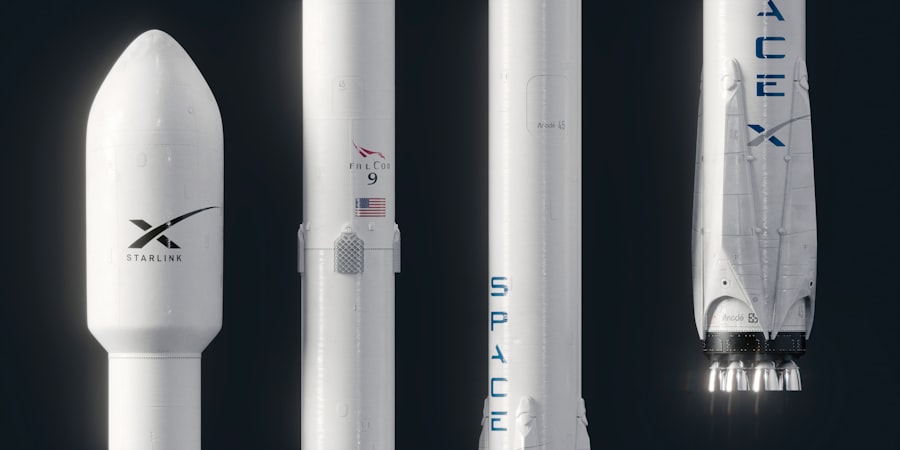
Founded in 2002, SpaceX (Space Exploration Technologies Corp.) was another ambitious venture by Elon Musk aimed at reducing space transportation costs and enabling the colonization of Mars. Musk’s vision for SpaceX was not merely about launching rockets; it was about making humanity a multi-planetary species. The company’s first significant achievement came in 2008 when its Falcon 1 rocket became the first privately developed liquid-fueled rocket to reach orbit.
SpaceX’s innovations did not stop there. The development of the Falcon 9 rocket revolutionized space travel by introducing reusability—a concept that drastically reduced costs associated with launching payloads into space. The first successful landing of a Falcon 9 booster in December 2015 marked a historic moment in aerospace engineering.
This achievement demonstrated that rockets could be reused multiple times, akin to commercial airliners, thereby transforming the economics of space travel. In addition to launching satellites and resupplying the International Space Station (ISS), SpaceX has made significant strides toward crewed spaceflight. The Crew Dragon spacecraft successfully transported astronauts to the ISS in May 2020, marking the first crewed launch from U.S.
soil since 2011. This milestone not only showcased SpaceX’s capabilities but also reignited interest in human space exploration. Musk’s long-term goal remains ambitious: establishing a self-sustaining city on Mars by 2050, which would require advancements in technology and infrastructure that SpaceX is actively pursuing.
Elon Musk’s Vision for the Future
Elon Musk’s vision extends far beyond electric cars and space travel; it encompasses a holistic approach to addressing some of humanity’s most pressing challenges. One of his primary goals is to combat climate change through sustainable energy solutions. Under his leadership, Tesla has expanded its product line to include solar energy products and energy storage solutions like the Powerwall and Powerpack.
These innovations aim to create a sustainable energy ecosystem that reduces reliance on fossil fuels. Musk is also a proponent of artificial intelligence (AI) but advocates for its responsible development. He co-founded OpenAI with the intention of ensuring that AI benefits all of humanity rather than posing existential risks.
His concerns about AI stem from its potential to surpass human intelligence and operate beyond our control. By promoting ethical AI development, Musk aims to mitigate risks while harnessing its transformative potential for good.
His Hyperloop concept envisions high-speed travel between cities using vacuum-sealed tubes, drastically reducing travel times and reshaping urban landscapes. Each of these projects reflects Musk’s commitment to innovation and his belief that technology can solve complex societal issues.
Challenges and Controversies
Despite his numerous successes, Elon Musk’s journey has not been without challenges and controversies. His management style has often been described as demanding and intense, leading to high employee turnover rates at both Tesla and SpaceX. Critics argue that this approach can create a toxic work environment, while supporters contend that it fosters innovation and drives teams to achieve extraordinary results.
Musk has also faced scrutiny for his public statements and behavior on social media platforms like Twitter (now X). His tweets have led to significant fluctuations in stock prices and have drawn regulatory attention from agencies like the Securities and Exchange Commission (SEC). In 2018, Musk tweeted about taking Tesla private at $420 per share, which resulted in an SEC lawsuit alleging securities fraud.
The case was settled with Musk stepping down as chairman for three years and paying a hefty fine. Additionally, Musk’s ambitious timelines for projects have often been criticized as overly optimistic or unrealistic. For instance, he has repeatedly promised timelines for the rollout of fully autonomous vehicles that have yet to materialize.
While his vision is undeniably transformative, these challenges highlight the complexities of leading innovative companies in highly competitive industries.
The Personal Side of Elon Musk
Elon Musk’s personal life is as multifaceted as his professional endeavors. He has been married multiple times and has several children from different relationships. His family life has often been under public scrutiny, particularly regarding his parenting style and work-life balance.
Musk’s interests extend beyond technology; he is known for his love of science fiction literature and video games. These interests have influenced his work and vision for the future.
For instance, his fascination with space exploration is reflected in his commitment to making life multi-planetary—a theme prevalent in many science fiction narratives. Additionally, he has made cameo appearances in popular culture, including films like “Iron Man” and television shows such as “The Big Bang Theory,” further solidifying his status as a cultural icon. Despite his immense wealth and success, Musk has maintained a relatively down-to-earth persona.
He often shares candid moments from his life on social media platforms, connecting with fans and followers on a personal level. This accessibility has endeared him to many who admire not only his achievements but also his willingness to engage with the public.
Lessons from Elon Musk’s Success
Elon Musk’s journey offers valuable lessons for aspiring entrepreneurs and innovators alike. One key takeaway is the importance of resilience in the face of adversity. Musk has encountered numerous setbacks throughout his career—financial struggles at Tesla, technical failures at SpaceX—but he has consistently demonstrated an ability to learn from these experiences and adapt accordingly.
His willingness to take risks and invest personally in his ventures underscores the significance of commitment when pursuing ambitious goals. Another lesson is the power of visionary thinking combined with practical execution. Musk’s ability to envision a future shaped by sustainable energy and interplanetary travel is matched by his relentless drive to turn these visions into reality.
He emphasizes the need for innovation not just for profit but as a means to address global challenges such as climate change and resource scarcity. Moreover, Musk’s approach highlights the importance of surrounding oneself with talented individuals who share a common vision. At both Tesla and SpaceX, he has built teams that are not only skilled but also passionate about their work.
This collaborative environment fosters creativity and drives progress toward shared objectives.
The Legacy of Elon Musk
Elon Musk’s legacy is still unfolding, but it is already marked by profound impacts on multiple industries—from automotive to aerospace to energy solutions. His relentless pursuit of innovation has catalyzed significant advancements in electric vehicles, making them more mainstream than ever before while challenging traditional automakers to adapt or risk obsolescence. In aerospace, SpaceX has redefined what is possible in space travel by making it more accessible and cost-effective.
The company’s achievements have inspired renewed interest in space exploration among governments and private entities alike, paving the way for future missions that could lead humanity beyond Earth. Musk’s influence extends into broader societal discussions about sustainability, technology ethics, and human potential. His advocacy for renewable energy solutions has sparked conversations about climate change action at both individual and governmental levels.
As he continues to push boundaries across various sectors, Elon Musk’s legacy will likely be characterized by an unwavering commitment to innovation that seeks not only profit but also progress for humanity as a whole. In summary, Elon Musk stands as a figure who embodies both ambition and controversy—a visionary whose contributions have reshaped industries while challenging societal norms about technology’s role in our lives. His journey serves as an inspiration for those who dare to dream big while navigating the complexities of entrepreneurship in an ever-evolving world.
If you’re interested in learning more about Elon Musk and his incredible journey, I highly recommend checking out the book “Elon Musk: Tesla, SpaceX, and the Quest for a Fantastic Future” by Ashlee Vance. This biography delves into Musk’s life, from his early days as an entrepreneur to his current role as the CEO of Tesla and SpaceX. It provides valuable insights into his vision for the future and the challenges he has faced along the way. For more fascinating reads on technology and innovation, you can also visit hellread.com.
FAQs
What is the book “Elon Musk: Tesla, SpaceX, and the Quest for a Fantastic Future” about?
The book “Elon Musk: Tesla, SpaceX, and the Quest for a Fantastic Future” by Ashlee Vance is a biography of Elon Musk, the entrepreneur and CEO of Tesla, SpaceX, and other companies. It provides an in-depth look at Musk’s life, career, and vision for the future.
Who is the author of “Elon Musk: Tesla, SpaceX, and the Quest for a Fantastic Future”?
The author of “Elon Musk: Tesla, SpaceX, and the Quest for a Fantastic Future” is Ashlee Vance, a technology reporter for Bloomberg Businessweek.
What are some of the key topics covered in the book?
The book covers Elon Musk’s early life, his founding of companies like Tesla and SpaceX, his vision for the future of space exploration and sustainable energy, and his leadership style.
Is the book based on interviews with Elon Musk?
Yes, the author conducted numerous interviews with Elon Musk, as well as with Musk’s family members, friends, and colleagues, to provide a comprehensive and balanced portrayal of Musk’s life and work.
What is the overall reception of the book?
The book has received generally positive reviews, with many readers praising its thorough research and engaging storytelling. It has also been a New York Times bestseller.




