

The field of User Experience (UX) design has gained significant traction over the past two decades, evolving from a niche discipline into a cornerstone of product development and digital strategy. “The UX Book,” authored by Rex Hartson and Pardha Pyla, serves as a comprehensive guide that delves into the principles, methodologies, and practices that define effective UX design. This book is not merely a theoretical exploration; it is a practical manual that equips designers, product managers, and stakeholders with the tools necessary to create user-centered products.
By emphasizing the importance of understanding users’ needs, behaviors, and contexts, “The UX Book” lays the groundwork for a design philosophy that prioritizes usability and satisfaction. The authors present a structured approach to UX design, breaking down complex concepts into digestible segments. They emphasize that UX is not just about aesthetics or functionality; it encompasses the entire journey a user experiences when interacting with a product.
This holistic view is crucial in today’s digital landscape, where users have myriad options at their fingertips. The book serves as both an academic resource and a practical guide, making it invaluable for both seasoned professionals and newcomers to the field. By exploring the principles outlined in “The UX Book,” readers can gain insights into how to create products that resonate with users on multiple levels.
Key Takeaways
- The UX Book provides a comprehensive overview of user experience (UX) design and its importance in product development.
- Understanding UX involves considering the user’s emotions, attitudes, and behaviors when interacting with a product or service.
- The process of UX design includes research, analysis, design, and testing to create a seamless and enjoyable user experience.
- Guidelines for ensuring a quality user experience include accessibility, usability, and desirability for the target audience.
- Implementing UX in product development involves collaboration between designers, developers, and stakeholders to prioritize user needs and goals.
Understanding User Experience (UX)
User Experience (UX) is a multifaceted concept that encompasses every aspect of a user’s interaction with a product or service. It includes not only the usability of the interface but also the emotional responses elicited during the interaction. A well-designed UX takes into account various factors such as accessibility, information architecture, and user satisfaction.
Understanding these elements is essential for creating products that not only meet functional requirements but also delight users. The emotional aspect of UX is particularly significant; it can influence user loyalty and brand perception in profound ways. To grasp the full scope of UX, one must consider the diverse range of users and their unique needs.
Different demographics may have varying expectations and preferences, which can significantly impact their experience. For instance, an elderly user may prioritize simplicity and clarity in navigation, while a tech-savvy millennial might seek advanced features and customization options. This diversity necessitates a user-centered design approach that involves extensive research and testing to ensure that products cater to a wide audience.
By understanding the nuances of user experience, designers can create more inclusive and effective solutions.
The Process of UX Design
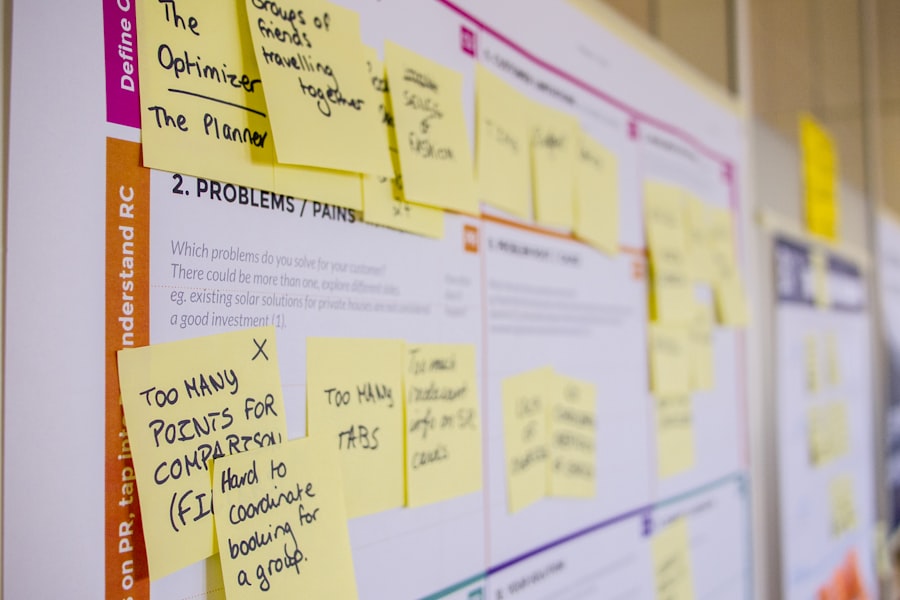
The process of UX design is iterative and often cyclical, involving several stages that guide designers from initial research to final implementation. The first stage typically involves user research, where designers gather insights about users through interviews, surveys, and observational studies. This foundational step is critical as it informs all subsequent design decisions.
By understanding users’ goals, pain points, and behaviors, designers can create personas that represent different segments of their target audience. Following user research, the next phase is ideation and prototyping.
These prototypes can range from simple sketches to interactive wireframes, allowing designers to explore various concepts without committing significant resources. Once prototypes are developed, they undergo usability testing to gather feedback from real users. This feedback loop is essential for refining designs and ensuring they align with user expectations.
Guidelines for Ensuring a Quality User Experience
Creating a quality user experience requires adherence to several key guidelines that help ensure usability and satisfaction. One fundamental principle is consistency across all elements of the product. Users should be able to predict how different parts of an interface will behave based on their previous interactions.
This predictability fosters familiarity and reduces cognitive load, allowing users to navigate more intuitively. For example, using consistent color schemes, typography, and button styles throughout an application can significantly enhance the overall experience. Another critical guideline is the importance of accessibility in UX design.
Ensuring that products are usable by individuals with varying abilities is not just a legal requirement in many jurisdictions; it is also a moral imperative. Designers should consider factors such as color contrast for visually impaired users, keyboard navigation for those who cannot use a mouse, and screen reader compatibility for users with disabilities. By prioritizing accessibility, designers can create inclusive experiences that cater to a broader audience while also enhancing usability for all users.
Implementing UX in Product Development
Integrating UX principles into product development requires collaboration across various teams within an organization. It is essential for designers to work closely with developers, product managers, and marketing teams to ensure that user experience considerations are embedded throughout the development lifecycle. This collaborative approach fosters a shared understanding of user needs and encourages cross-functional teams to prioritize UX in their decision-making processes.
One effective strategy for implementing UX in product development is adopting an Agile methodology. Agile emphasizes iterative development and continuous feedback, allowing teams to adapt quickly to changing user needs and market conditions. By incorporating regular user testing sessions into Agile sprints, teams can gather valuable insights that inform design decisions in real-time.
This approach not only enhances the quality of the final product but also fosters a culture of user-centered thinking within the organization.
Evaluating and Testing UX Designs

Heuristic Evaluations: Identifying Issues Early On
Heuristic evaluations involve experts reviewing the design against established usability principles to identify potential issues before involving actual users. This method can be particularly useful in the early stages of design when significant changes are still feasible.
User Testing Sessions: Gathering Direct Feedback
User testing sessions provide direct feedback from real users interacting with prototypes or live products. These sessions can be conducted in-person or remotely and often involve observing users as they complete specific tasks while thinking aloud about their experiences. This qualitative data offers invaluable insights into user behavior and preferences, allowing designers to identify pain points and areas for improvement.
Iterative Refinement through A/B Testing and User Feedback
Additionally, A/B testing allows teams to compare two versions of a design element to determine which performs better based on user engagement metrics. By employing these evaluation methods systematically, designers can refine their work iteratively and ensure that the final product delivers an optimal user experience.
The Role of UX in Business Success
The significance of UX extends beyond individual products; it plays a pivotal role in overall business success. Companies that prioritize user experience often see higher customer satisfaction rates, increased loyalty, and improved conversion rates. A positive UX can differentiate a brand in competitive markets where consumers have numerous choices at their disposal.
For instance, companies like Apple have built their reputation on delivering exceptional user experiences across their product lines, resulting in a loyal customer base willing to pay premium prices. Moreover, investing in UX can lead to substantial cost savings over time. By identifying usability issues early in the design process through rigorous testing and evaluation, organizations can avoid costly redesigns or fixes after launch.
Additionally, satisfied users are more likely to recommend products to others, leading to organic growth through word-of-mouth marketing. In this way, UX becomes not just a design consideration but a strategic business imperative that drives long-term success.
Conclusion and Future of UX Design
As technology continues to evolve at an unprecedented pace, the future of UX design promises exciting developments and challenges alike. Emerging technologies such as artificial intelligence (AI), virtual reality (VR), and augmented reality (AR) are reshaping how users interact with digital products. Designers will need to adapt their methodologies to accommodate these new paradigms while maintaining a focus on user-centered principles.
Furthermore, as societal awareness around issues like accessibility and inclusivity grows, UX designers will be tasked with creating experiences that cater to an increasingly diverse audience. This shift will require ongoing education and adaptation within the field as designers strive to meet the evolving expectations of users worldwide. Ultimately, the future of UX design will hinge on its ability to remain flexible and responsive to both technological advancements and human needs, ensuring that user experience remains at the forefront of product development strategies across industries.
If you’re interested in learning more about user experience design, you may want to check out this article on hellread.com. The article discusses the importance of creating a positive user experience and provides tips for improving the overall design of a website or app. It complements the principles outlined in The UX Book: Process and Guidelines for Ensuring a Quality User Experience by Rex Hartson and Pardha Pyla, offering additional insights and practical advice for creating user-friendly interfaces.
FAQs
What is the book “The UX Book” about?
The book “The UX Book: Process and Guidelines for Ensuring a Quality User Experience” by Rex Hartson and Pardha Pyla is a comprehensive guide to user experience (UX) design. It covers the process, methods, and guidelines for creating a quality user experience in interactive systems.
Who are the authors of “The UX Book”?
The authors of “The UX Book” are Rex Hartson and Pardha Pyla. Rex Hartson is a professor of Human-Centered Design and Engineering at the University of Washington, and Pardha Pyla is a senior user experience architect at Akamai Technologies.
What topics are covered in “The UX Book”?
“The UX Book” covers a wide range of topics related to user experience design, including the UX design process, user research, usability evaluation, interaction design, information architecture, and more. It also includes case studies and examples to illustrate the concepts and methods discussed.
Who is the target audience for “The UX Book”?
The book is intended for anyone involved in the design and development of interactive systems, including UX designers, usability professionals, product managers, software developers, and students studying UX design or related fields.
What makes “The UX Book” a valuable resource for UX designers?
“The UX Book” provides a comprehensive and practical guide to UX design, covering both the theoretical foundations and practical methods for creating a quality user experience. It also emphasizes the importance of involving users throughout the design process and provides guidance on how to do so effectively.




