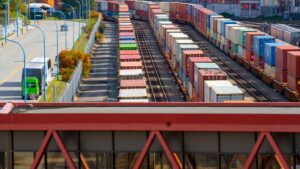
The logistics industry has undergone a profound transformation over the past few decades, primarily driven by advancements in technology. The integration of sophisticated software systems, real-time tracking capabilities, and automated processes has revolutionized how goods are transported, stored, and delivered. This technological evolution has not only enhanced operational efficiency but has also significantly improved customer satisfaction.
For instance, companies can now provide real-time updates to customers regarding their shipments, allowing for greater transparency and trust in the logistics process. The ability to track shipments in real-time has become a standard expectation among consumers, pushing logistics providers to adopt more advanced tracking technologies. Moreover, technology has enabled logistics companies to optimize their supply chain operations through enhanced communication and collaboration.
Cloud-based platforms facilitate seamless information sharing among various stakeholders, including suppliers, manufacturers, and retailers. This interconnectedness allows for better demand forecasting and inventory management, reducing the risk of stockouts or overstock situations. For example, companies like Amazon have leveraged technology to create a highly efficient supply chain that can respond quickly to changing consumer demands.
By utilizing advanced algorithms and machine learning, they can predict purchasing trends and adjust their inventory accordingly, ensuring that products are available when and where customers want them.
Key Takeaways
- Technology is revolutionizing logistics by enhancing efficiency and accuracy in operations.
- Automation and robotics streamline warehousing and distribution, reducing labor costs and errors.
- Big data analytics enable better decision-making and optimization in supply chain management.
- E-commerce growth drives innovation in last-mile delivery solutions to meet customer demands.
- Emerging technologies like AI, IoT, and blockchain are shaping the future of logistics with improved transparency and security.
Automation and Robotics in Warehousing and Distribution
Automation and robotics have emerged as game-changers in warehousing and distribution, significantly enhancing productivity and accuracy. Automated systems can handle repetitive tasks such as picking, packing, and sorting with remarkable speed and precision. For instance, companies like Kiva Systems (now part of Amazon Robotics) have developed autonomous mobile robots that navigate warehouses to retrieve items for orders.
These robots work alongside human workers, allowing for a more efficient workflow that minimizes the time spent on manual labor. The implementation of such technologies not only reduces operational costs but also mitigates the risk of human error, leading to higher accuracy in order fulfillment. In addition to mobile robots, automated storage and retrieval systems (AS/RS) have gained traction in modern warehouses.
These systems utilize computer-controlled systems to automatically place and retrieve loads from storage locations. For example, the use of AS/RS in large distribution centers allows for maximizing vertical space and optimizing storage density. This is particularly beneficial for companies with high inventory turnover rates, as it enables them to store more products in a smaller footprint while maintaining quick access to items.
As automation continues to evolve, we can expect even more sophisticated solutions that integrate artificial intelligence to further enhance decision-making processes within warehouses.
The Role of Big Data and Analytics in Supply Chain Management

Big data and analytics play a crucial role in modern supply chain management by providing insights that drive informed decision-making. The vast amounts of data generated throughout the supply chain—from procurement to delivery—can be harnessed to identify trends, forecast demand, and optimize operations. For instance, predictive analytics can analyze historical sales data alongside external factors such as market trends and seasonal fluctuations to forecast future demand accurately.
This capability allows companies to adjust their inventory levels proactively, reducing excess stock and minimizing carrying costs. Furthermore, big data analytics can enhance supplier relationship management by providing insights into supplier performance metrics. Companies can analyze data related to delivery times, quality issues, and pricing trends to make more informed decisions about which suppliers to engage with.
This data-driven approach fosters stronger partnerships with reliable suppliers while enabling companies to identify potential risks in their supply chain. For example, a manufacturer might use analytics to assess the reliability of its suppliers based on historical performance data, allowing them to mitigate risks associated with supply disruptions.
The Rise of E-commerce and Last-Mile Delivery Solutions
The exponential growth of e-commerce has fundamentally altered consumer expectations regarding delivery speed and convenience. As online shopping becomes increasingly prevalent, logistics providers are faced with the challenge of developing efficient last-mile delivery solutions that meet these demands. Last-mile delivery refers to the final leg of the shipping process, where goods are transported from a distribution center to the end consumer’s doorstep.
This segment of the supply chain is often the most complex and costly due to factors such as traffic congestion, varying delivery locations, and customer availability. To address these challenges, logistics companies are exploring innovative last-mile delivery solutions that leverage technology. For instance, some companies are experimenting with drone deliveries to expedite the shipping process in urban areas.
Drones can bypass traffic congestion and deliver packages directly to consumers’ homes within minutes of an order being placed. Additionally, crowd-sourced delivery models have emerged, where individuals can sign up to deliver packages in their local areas using their vehicles. This approach not only reduces delivery costs but also increases flexibility in meeting customer demands.
Digital Platforms and Marketplaces in Freight Transportation
Digital platforms and marketplaces have transformed freight transportation by streamlining the process of matching shippers with carriers. Traditionally, finding a suitable carrier involved time-consuming phone calls and negotiations; however, digital platforms have automated this process by providing a centralized marketplace where shippers can post their freight needs while carriers can bid on available loads. This shift has increased competition among carriers, leading to more competitive pricing for shippers.
Shippers can easily book truckloads through the app, while carriers can find available loads that match their routes. This model not only simplifies the booking process but also enhances transparency regarding pricing and availability.
Additionally, digital platforms often incorporate features such as real-time tracking and performance metrics, allowing shippers to monitor their shipments closely and make data-driven decisions regarding their logistics operations.
Blockchain Technology and its Application in Logistics

Blockchain technology has emerged as a promising solution for enhancing transparency and security within the logistics industry. By providing a decentralized ledger that records transactions across multiple parties, blockchain enables all stakeholders in the supply chain to access real-time information about the movement of goods. This transparency helps reduce fraud and errors while improving accountability among participants.
For instance, companies like IBM have developed blockchain solutions specifically tailored for supply chain management. IBM’s Food Trust platform allows food producers, distributors, and retailers to track the journey of food products from farm to table. By scanning QR codes on packaging, consumers can access detailed information about the origin of their food, including its production history and handling processes.
This level of transparency not only builds consumer trust but also enables companies to quickly identify sources of contamination or quality issues within their supply chains.
The Importance of Cybersecurity in a Digitally Transformed Logistics Industry
As logistics operations become increasingly digitized, the importance of cybersecurity cannot be overstated. The integration of technology into logistics processes exposes companies to various cyber threats that could disrupt operations or compromise sensitive data.
To mitigate these risks, logistics companies must prioritize cybersecurity measures across their digital infrastructure. This includes implementing robust firewalls, encryption protocols, and regular security audits to identify vulnerabilities within their systems. Additionally, employee training programs focused on cybersecurity awareness are essential for fostering a culture of vigilance against potential threats.
For example, employees should be educated about phishing attacks and safe online practices to minimize the risk of falling victim to cybercriminals.
The Future of Logistics: AI, IoT, and Machine Learning in Transportation and Inventory Management
Looking ahead, the future of logistics is poised for further transformation through the integration of artificial intelligence (AI), the Internet of Things (IoT), and machine learning technologies. AI algorithms can analyze vast amounts of data generated throughout the supply chain to optimize routing decisions for transportation vehicles or predict maintenance needs for equipment. For instance, AI-powered route optimization tools can consider real-time traffic conditions and weather patterns to determine the most efficient delivery routes.
The IoT plays a critical role in enhancing visibility across the supply chain by connecting devices and sensors that monitor various aspects of logistics operations. Smart sensors can track temperature-sensitive shipments or monitor inventory levels in real-time, providing valuable insights that enable proactive decision-making. For example, a pharmaceutical company could use IoT devices to ensure that temperature-sensitive medications remain within specified ranges during transit.
Machine learning further enhances these capabilities by enabling systems to learn from historical data patterns and improve over time. As logistics companies continue to adopt these advanced technologies, we can expect significant improvements in efficiency, cost savings, and overall service quality within the industry. The convergence of AI, IoT, and machine learning will undoubtedly shape the future landscape of logistics operations as companies strive for greater agility and responsiveness in an increasingly complex global marketplace.
In exploring the impact of technology on the logistics sector, a related article titled “The Future of Supply Chain Management” provides valuable insights into how digital tools are reshaping supply chain dynamics. This article complements the themes discussed in “The Digital Transformation of the Logistics Industry” by various authors, highlighting the importance of innovation in logistics. For more information, you can read the article [here](https://hellread.com/2024/12/04/hello-world/).
FAQs
What is digital transformation in the logistics industry?
Digital transformation in the logistics industry refers to the integration of digital technologies into all aspects of logistics operations. This includes the use of automation, data analytics, Internet of Things (IoT), artificial intelligence (AI), and cloud computing to improve efficiency, accuracy, and customer service.
Why is digital transformation important for logistics companies?
Digital transformation is important because it helps logistics companies optimize their supply chains, reduce operational costs, enhance real-time tracking and visibility, improve decision-making, and meet increasing customer expectations for faster and more reliable delivery services.
What are some common technologies used in the digital transformation of logistics?
Common technologies include IoT devices for tracking shipments, AI for predictive analytics and route optimization, blockchain for secure and transparent transactions, automation and robotics for warehouse management, and cloud-based platforms for data sharing and collaboration.
How does digital transformation impact supply chain management?
Digital transformation enhances supply chain management by providing real-time data, improving communication between stakeholders, enabling predictive maintenance, reducing delays through better route planning, and increasing overall transparency and accountability.
What challenges do logistics companies face during digital transformation?
Challenges include high initial investment costs, integration with legacy systems, data security concerns, resistance to change among employees, and the need for continuous training and upskilling to keep pace with evolving technologies.
Can digital transformation improve customer experience in logistics?
Yes, digital transformation can significantly improve customer experience by providing real-time shipment tracking, faster delivery times, personalized services, and more accurate delivery estimates, leading to higher customer satisfaction.
How does automation benefit logistics operations?
Automation streamlines repetitive tasks such as sorting, packing, and inventory management, reduces human error, increases operational speed, and allows human workers to focus on more complex activities, thereby improving overall productivity.
What role does data analytics play in logistics digital transformation?
Data analytics helps logistics companies analyze large volumes of data to identify patterns, forecast demand, optimize routes, manage inventory efficiently, and make informed strategic decisions to enhance operational performance.
Is digital transformation in logistics limited to large companies?
No, digital transformation benefits logistics companies of all sizes. While large companies may have more resources to invest, small and medium-sized enterprises can also adopt scalable digital solutions to improve their operations and competitiveness.
What future trends are expected in the digital transformation of logistics?
Future trends include increased use of AI and machine learning, greater adoption of autonomous vehicles and drones, enhanced blockchain applications for transparency, expanded use of 5G for faster communication, and more sustainable logistics practices driven by digital innovation.